

7 criteria for choosing one-on-one driving lessons in Mississauga
What one-on-one driving lessons are and why this checklist matters in Ontario
One-on-one driving lessons are private, in‑vehicle sessions between a single learner and a certified instructor. They focus on personalised coaching, real-time correction, and a lesson plan tailored to your experience and test goals. Private lessons differ from government-approved beginner driver education courses because BDE programs have a formal classroom component and prescribed in‑vehicle hours that support a structured curriculum. Use this checklist to compare private one-on-one instruction, multi-lesson packages, and BDE options so you can make a safe, MTO-aware choice.
When private lessons work best
Private one-on-one lessons suit learners who need focused, flexible coaching, want concentrated time on weak skills such as highway merging or parallel parking, or need a quick pre-test tune-up close to a road test.
When to consider a government-approved BDE
If you prefer a standardised program with classroom theory plus a guaranteed set of in‑vehicle hours, look at government-approved beginner driver education courses. The Ontario government describes approved programs as having a classroom portion plus in‑vehicle instruction and recommends features such as low student-to-teacher ratios in their guidance for new drivers (Getting Your Driver’s Licence).
1. Instructor credentials and proof of training
Why it matters: Instructor credentials affect safety, legal compliance, and how well you learn testable skills. Ask to see documentation and confirm the instructor meets local regulations.
What to check: request to view the instructor’s identification, proof of instructor certification or registration if they are part of a registered program, and confirmation of a valid driver’s licence. Ask whether the instructor has formal defensive driving training or additional coaching certificates.
Questions to ask now
- Can you show your instructor licence or registration and a government photo ID?
- Do you have training in defensive driving or test preparation?
- Are you insured to provide paid driving instruction?
Decision rule
Accept an instructor who produces a verifiable ID and either formal certification or clear written evidence of professional training, plus proof of insurance for instruction sessions. If an instructor cannot show these items, treat that as a reason to decline.
2. Lesson structure and alignment with Ontario testing standards
Why it matters: Lessons aligned to the Ministry of Transportation standards give you the best preparation for G2 and G road tests. Government-approved BDE courses specify classroom and in‑vehicle components so learners cover the full range of testable skills. Approved BDE programs in Ontario include a classroom portion and in‑vehicle instruction as part of their structure; the government also notes an additional 10 hours of flexible instruction time in approved courses (Government-approved driving schools).
What to check: ask for a sample lesson plan that maps sessions to specific test skills such as parallel parking, controlled stops, lane discipline, highway merging, and intersection rules. A good private instructor will show how each lesson progresses toward those competencies.
Questions to ask now
- Can you show a lesson-by-lesson plan that maps to G2 or G road test skills?
- How do you evaluate progress and decide when a student is test-ready?
Decision rule
Choose lessons that explicitly cover testable skills and include periodic assessments or mock-tests. If you need classroom theory, confirm whether the instructor includes or recommends an approved BDE or separate theory classes.
3. Vehicle condition, dual controls and insurance for lessons
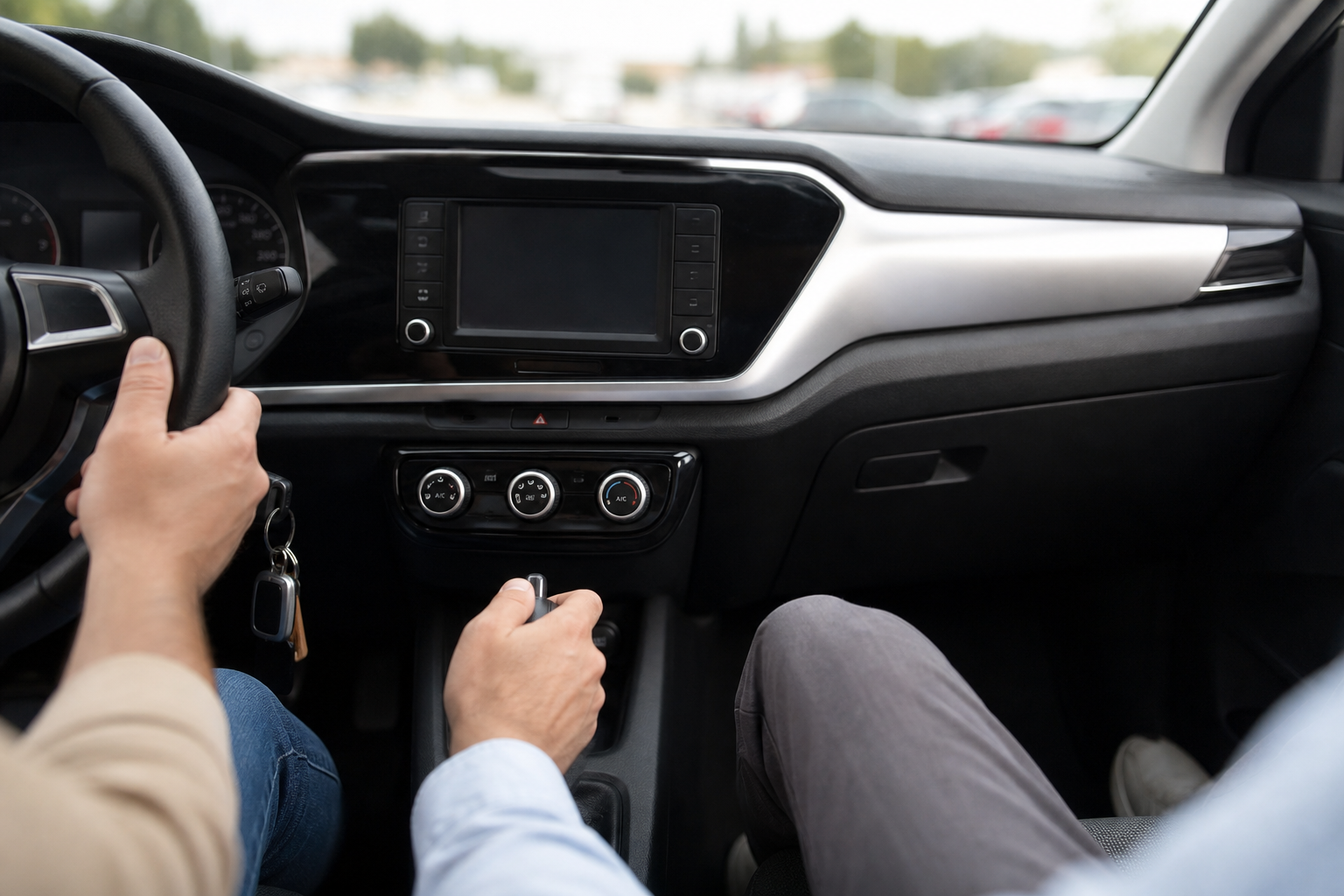
Why it matters: A safe, well-maintained training vehicle protects you during lessons and demonstrates professional standards. If you plan to use your own car for lessons or testing, confirm how insurance is handled. Instructors should be able to explain vehicle maintenance record checks and whether they use dual controls or other safety equipment.
Questions to ask now
- Is the training vehicle regularly serviced and inspected?
- Is the vehicle insured for driving instruction and test-day use?
- If I use my car, will you accept it for lessons and how will insurance be handled?
Decision rule
Proceed only if the instructor or school confirms insurance coverage for instruction or provides a written statement explaining who is covered during lessons. If you are asked to use your own vehicle, require proof of valid registration and insurance that allows an instructor to ride along.
4. How to evaluate pass-rate claims and local reviews
Why it matters: Many schools advertise high pass rates. Rather than accept a headline figure, verify whether the claim is recent and how it is measured. Local reviews are useful for spotting consistent themes such as patient coaching or first-attempt passes.
How to verify: ask for timebound figures, sample references, or anonymized outcomes. Check recent Google Business Profile reviews and look for repeated comments about the same instructor, punctuality, and exam-day support. For example, Khurana Driving School publishes many recent positive testimonials that mention instructor quality and first-attempt passes on their website and Google reviews (Khurana Driving School).
What to distrust
- Vague guarantees such as "we guarantee you will pass" without supporting evidence.
- Old reviews or a small number of testimonials that cannot be verified.
What to trust
- Recent, consistent reviews naming the instructor and describing specific outcomes.
- Verifiable references or documented pass-rate reporting over a stated period.
5. Flexible scheduling, intensive pre-test options and availability
Why it matters: You need lessons that fit your calendar, and some learners benefit from concentrated pre-test sessions. Ask whether the school offers evening and weekend lessons, day-before tune-ups, or mock tests that mimic the official exam route. Flexibility reduces stress and improves the chance you go to the test ready.
What to ask: confirm evening and weekend availability, their cancellation policy, how close to a booked road test you can still book a lesson, and whether they offer short intensive packages or mock-test sessions. If you want to try a short pre-test package first, many schools offer two-lesson or tune-up options you can use to assess fit; for example, consider a local two-lesson tune-up to test the instructor and scheduling before committing to a larger package (2 lessons).
Questions to ask now
- Do you run mock-tests and can you schedule a lesson the day before my test?
- What is your cancellation policy and how do you handle rescheduling near a test date?
Decision rule
Pick an instructor who matches your availability and offers at least one pre-test mock session. If your schedule is tight, prioritise schools that advertise evening and weekend slots and confirm a written booking policy.
6. Teaching style, confidence-building and language support
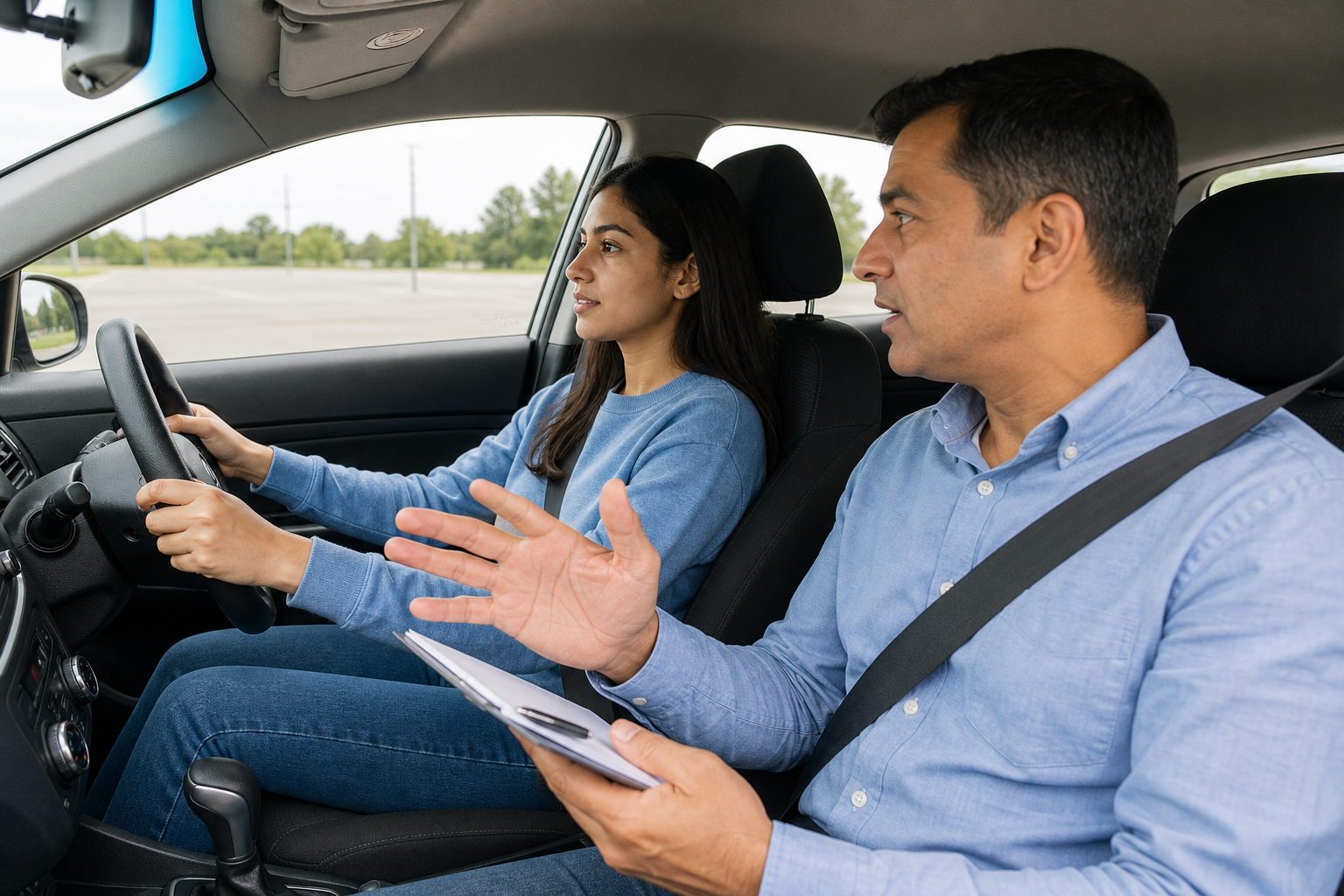
Why it matters: A calm, patient teaching style helps nervous drivers make steady progress. If English is not your first language, ask about multilingual instruction and culturally aware coaching. The right match reduces anxiety and speeds learning.
Questions to ask now
- How would you describe your teaching style with nervous learners?
- Do you teach in other languages or adapt lessons for newcomers to Ontario?
When to request a trial lesson
Request a single lesson or a short two-lesson package as a trial if you are unsure about fit. Use that session to evaluate tone, clarity of instruction, and whether the instructor builds confidence without rushing. Many local schools, including Khurana Driving School, highlight patient, personalised coaching and language support in testimonials (Khurana Driving School).
7. Price transparency, package design and decision criteria
Why it matters: Clear pricing and written terms protect you from unexpected costs. A good provider will explain per-lesson rates, package discounts, expiry dates, inclusions such as pick-up or test-day vehicle, and refund or cancellation rules.
Questions to ask now
- What is the per-lesson rate and do you offer discounted lesson packages?
- What is included in packages and do unused lessons expire?
- Do you provide a written agreement or receipt that lists terms?
Decision rule
Choose a school that provides clear written terms before payment and lists what is included in the package. If a provider refuses to put pricing and terms in writing, consider that a warning sign.
How to use this checklist and your next step in Mississauga
A simple four-step plan to decide quickly:
- Shortlist three instructors or schools that operate in Mississauga, Brampton, or the GTA and note simple trust signals such as recent reviews and evening/weekend availability.
- Run the seven checks on a 10-minute phone call. Ask the questions in the relevant sections above and request written confirmation for credentials, insurance, and pricing.
- Book a trial or a short tune-up such as a two-lesson package to assess teaching fit and scheduling; a two-lesson option is a low-commitment way to test an instructor before buying a larger package (2 lessons).
- If the trial goes well, schedule a mock test and a block of lessons that map to the MTO skill list. If not, move to the next shortlisted instructor.
Local trust signals to prioritise in Mississauga: recent, named Google reviews, visible responsiveness to booking enquiries, evening and weekend slots, and clear written terms. If you want an option today, you can use the two-lesson tune-up above to test fit before a full package.
Frequently asked questions
How many one-on-one lessons should I book before taking a G2 or G road test in Ontario?
There is no single answer. The government-approved beginner driver education structure includes classroom and a set of in‑vehicle hours, which can be a useful baseline for planning (Government-approved driving schools). Your instructor should assess your current skills and recommend a personalised number of lessons and a mock-test plan. Start with a trial or assessment lesson and ask for a written plan.
Are private one-on-one lessons the same as a government-approved BDE course?
No. Private one-on-one lessons are personalised in‑vehicle coaching. Government-approved BDE courses include specified classroom hours plus in‑vehicle time and follow a formally approved curriculum. Use the MTO guidance when you need structured classroom theory in addition to in‑vehicle practice (Getting Your Driver’s Licence).
What proof should I ask for to verify a driving instructor in Mississauga?
Ask for a photo ID, instructor licence or registration if applicable, proof of insurance for lessons, and a sample lesson plan. If the instructor represents a school, request the school’s business details and recent student references.
Can a driving school use my own car for the road test and lessons, and how should insurance be handled?
Yes, many schools use a learner’s car for lessons and testing, but you must confirm the car is legal to use, in good condition, and insured to cover instruction. Always require written confirmation of insurance arrangements and whether the instructor is covered while in your vehicle.
What should nervous drivers expect from their first one-on-one lesson and can language support be requested?
Expect a calm, stepwise introduction: a safety briefing, a short warm-up in a low-risk area, and a clear plan for the session. Tell the instructor about your anxieties up front and request a pace that feels comfortable. Many instructors offer multilingual support or will adapt explanations to your first language; ask about language options when you book.
Key sources: Ontario Ministry of Transportation guidance on getting your licence and government-approved driving schools (Getting Your Driver’s Licence, Government-approved driving schools). Local service and testimonial examples from Khurana Driving School (Khurana Driving School).


