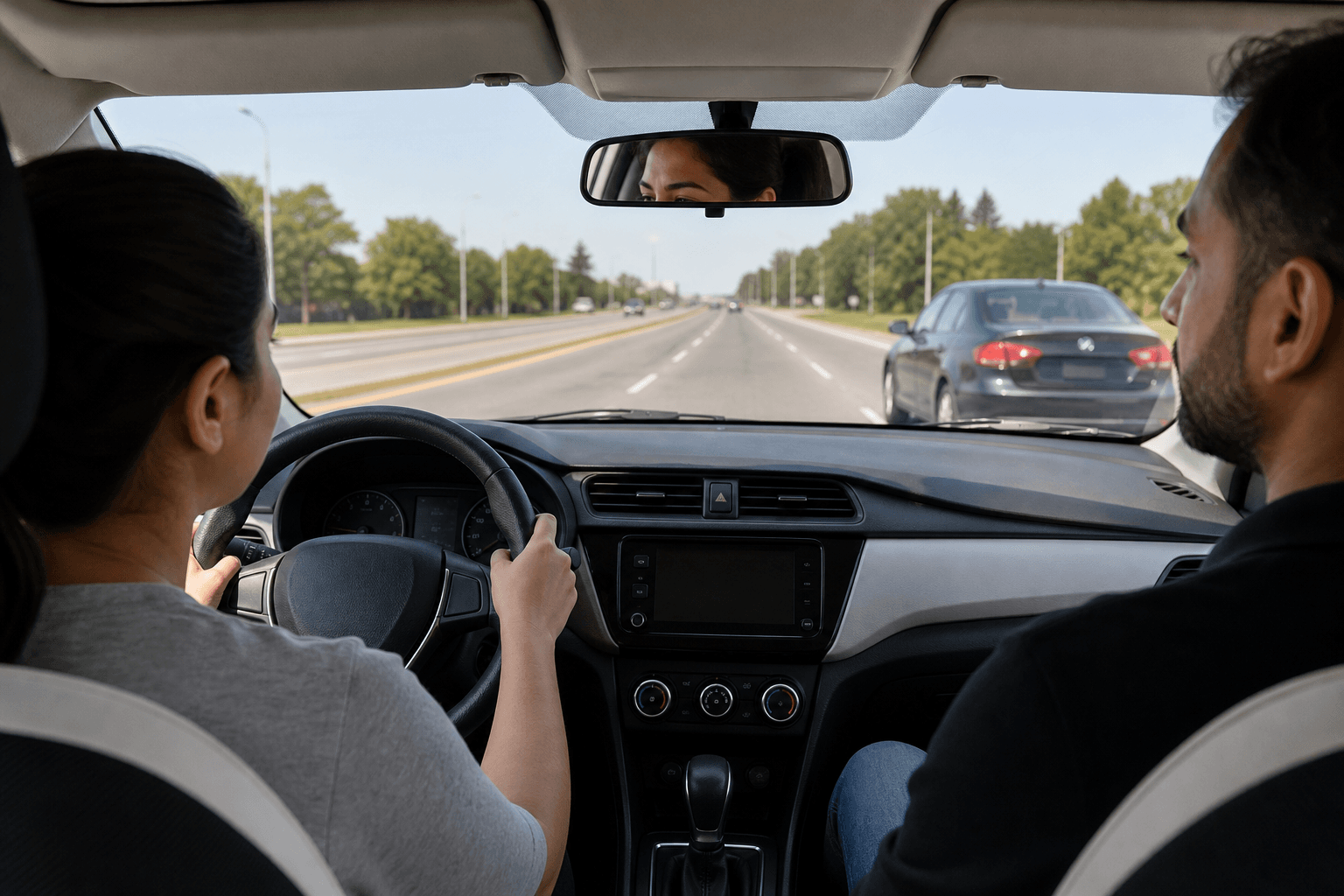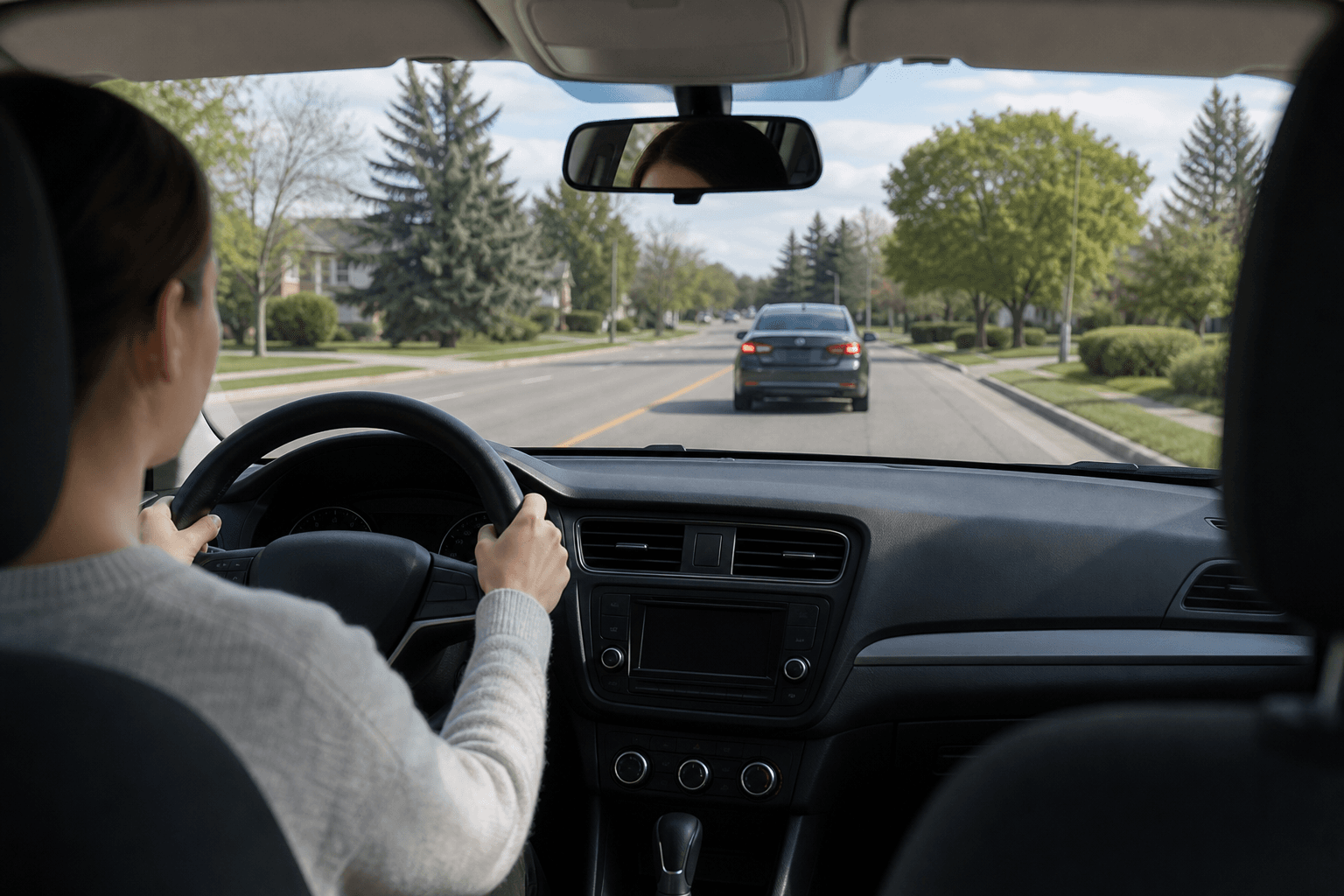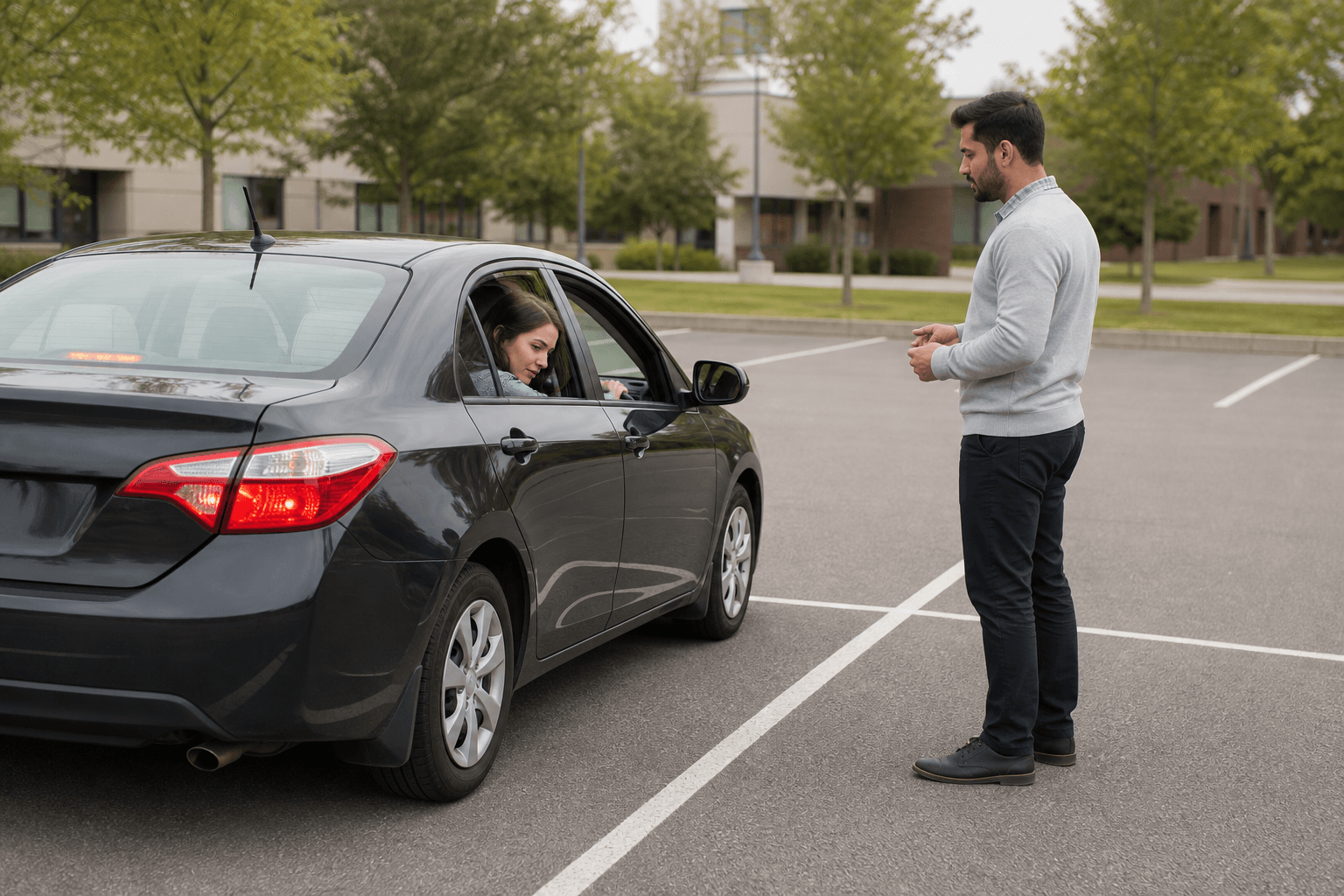

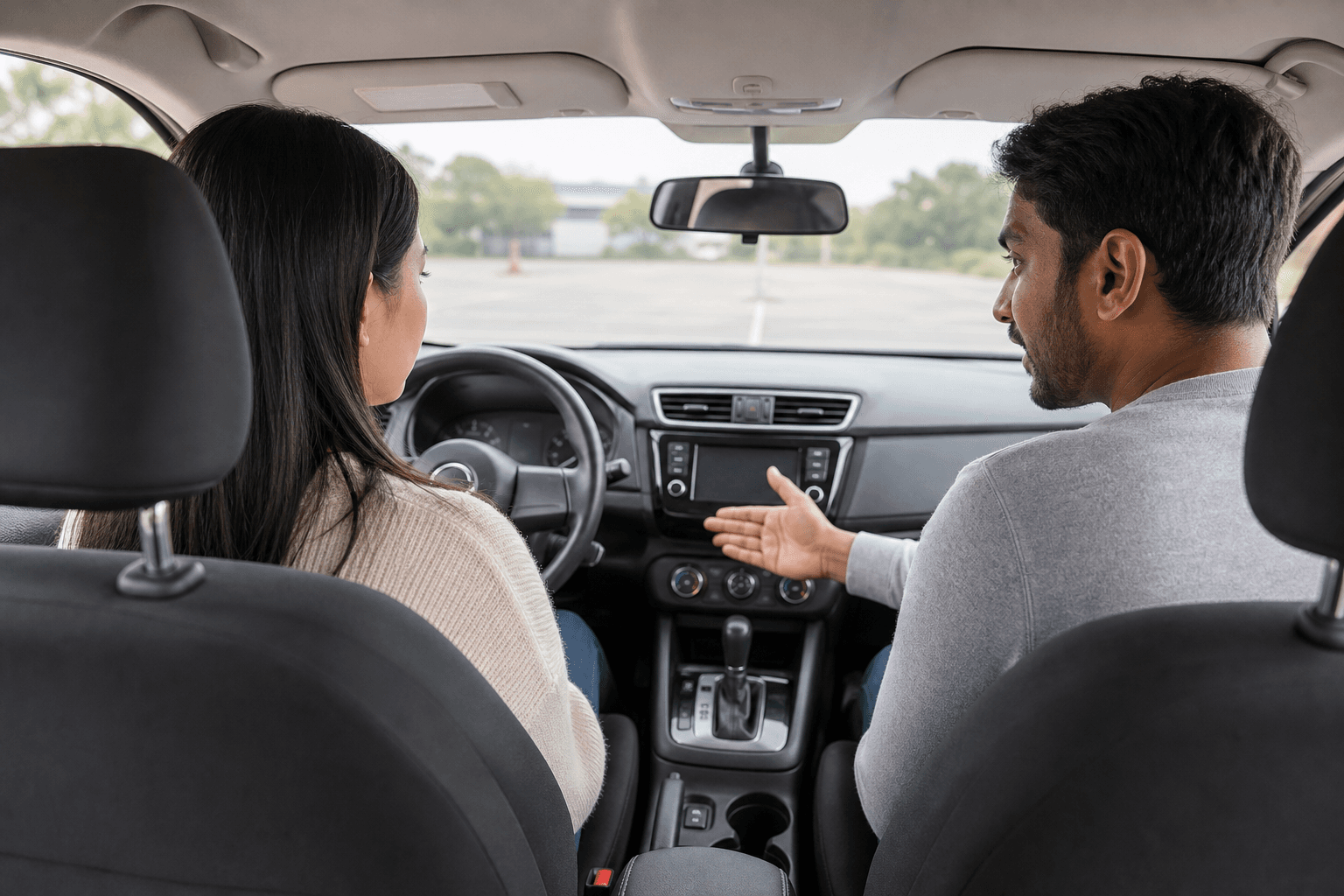
Your first driving lesson usually begins with a licence and safety check, vehicle orientation, and basic control before progressing to simple movement in a suitable low-traffic setting. Bring your valid G1 licence, wear comfortable clothing and secure footwear, share your experience and nerves honestly, and confirm the lesson length, price, pickup details, and package terms before booking.
Before the First Lesson: Are You Ready to Drive?
In Ontario, on-road instruction follows the graduated licensing process. After passing the vision and knowledge tests, you receive a G1, then progress through the G2 and G stages with road tests before a full G licence. A G1 is required before you begin driving on the road with an instructor. Check the current provincial requirements if you are unsure about your licence status or restrictions. Ontario’s graduated licensing information explains the official pathway.
A first lesson is not normally a road test or an advanced manoeuvre session. It is an introduction to controlling the vehicle, observing the road, and making simple decisions with coaching. The exact sequence depends on your experience, confidence, licence stage, and the instructor’s assessment.
Before your appointment, share whether you have never driven, have practised with family, feel anxious, or have a specific goal such as learning basic control. Also discuss where the lesson will start, how long it will last, what it costs, and how pickup arrangements and package terms work. Reviewing preparing for individual driving lessons can help you organize those details before you book.
What Happens During a First Driving Lesson?
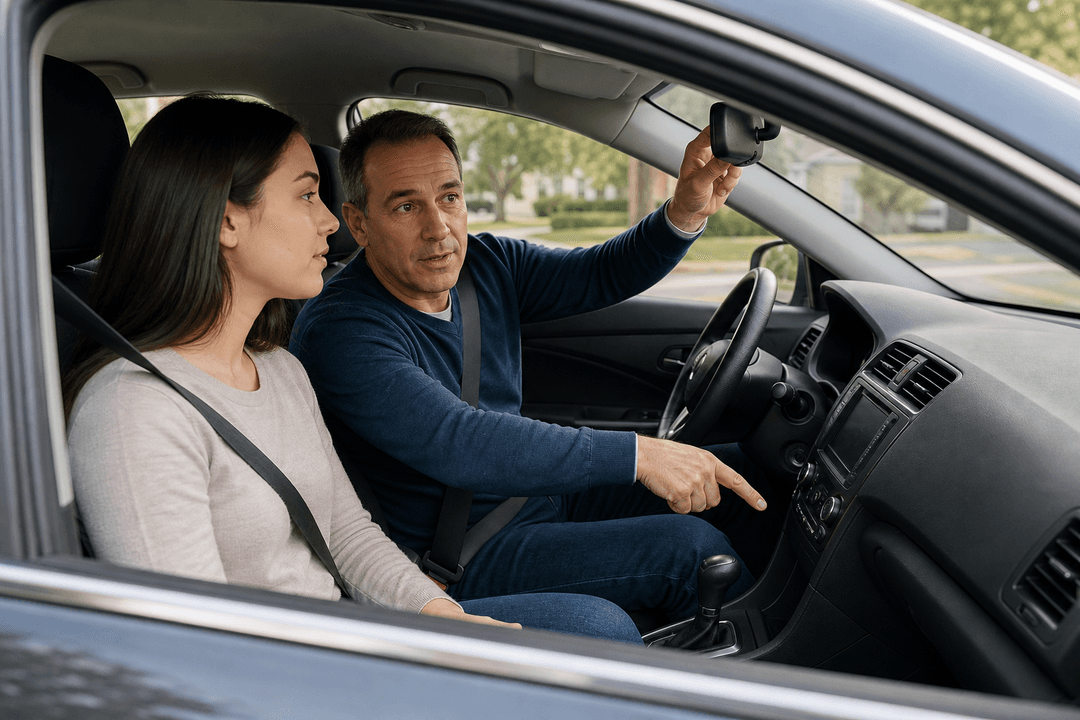
The first skill a beginner should learn is controlled vehicle operation: knowing what the controls do, moving the car smoothly, stopping safely, and keeping attention on the surroundings. Steering technique matters, but it is only one part of the first session. Good instruction connects control with observation and judgement from the beginning.
1. Settle in and discuss the plan
The instructor will typically begin by asking about your licence, previous practice, concerns, and goals. This conversation helps set a suitable pace. Someone who has never sat in the driver’s seat needs a different starting point from someone who has already driven around a parking lot.
2. Adjust the driving position
Before the vehicle moves, you should learn how to set the seat, steering position, mirrors, and head restraint so you can reach the pedals comfortably and see properly. The instructor may explain the dashboard, turn signals, wipers, parking brake, gear selector, and other controls relevant to the vehicle.
3. Learn the basic pre-start checks
There is no single universal list called the “seven steps” before starting a car, but a beginner can use this practical sequence:
- Confirm that you are seated comfortably and can reach the pedals.
- Fasten your seatbelt and check that passengers are secured.
- Adjust the mirrors and check your main viewing areas.
- Identify the brake pedal, accelerator, gear selector, and parking brake.
- Check the instrument panel for relevant warnings or an unusual indication.
- Look around the vehicle for people, cyclists, vehicles, and other hazards.
- Keep your foot on the brake, select the correct gear when instructed, and move only when the path is clear.
Your instructor should explain which checks apply to the particular vehicle and situation. The purpose is to build a repeatable habit before movement, not to rush through a memorized performance.
4. Practise starting and stopping
Once the vehicle is ready and the surroundings are suitable, the first movement may involve releasing the brake smoothly, applying gentle acceleration, and stopping with controlled pressure. You will learn how the vehicle responds at low speed and how to keep your eyes up instead of staring at the pedals.
5. Add steering and basic road position
Next, the instructor may introduce steering through simple, low-speed paths. You will practise keeping the vehicle positioned appropriately, looking where you intend to go, and making small corrections instead of abrupt steering inputs.
6. Combine movement with observation
A useful first lesson does not treat vehicle control as separate from road awareness. You may practise checking ahead, scanning intersections or driveways, noticing pedestrians and parked vehicles, and responding to instructions while maintaining a safe speed and following distance.
7. Increase difficulty only when the basics are manageable
A beginner may start in a quiet area before moving into more complex traffic. The lesson could later include simple turns, lane positioning, or controlled practice on busier roads, but advanced manoeuvres are not a requirement for every first session.
How to Prepare for Your First Driving Lesson
Preparation is mainly about arriving legally ready, physically comfortable, and clear about what you need from the session. Use this checklist before confirming an appointment:
- Licence: Have the appropriate G1 licence and bring it with you.
- Clothing: Wear clothing that lets you move your legs and arms without restriction.
- Footwear: Choose secure, closed footwear that lets you feel and operate the pedals accurately. Avoid loose shoes, high heels, or footwear that can slip.
- Timing: Arrive with enough time to settle in rather than entering the vehicle flustered or distracted.
- Goal: Choose one main objective, such as learning the controls, practising smooth stops, or becoming comfortable with basic turns.
- Experience: Tell the instructor whether you have driven before, even briefly, and which controls or situations feel unfamiliar.
- Confidence: Mention anxiety, a previous difficult experience, or a fear of traffic before the lesson begins.
- Booking terms: Confirm the duration, price, meeting or pickup arrangement, cancellation rules, and any package conditions in writing.
If you are deciding between beginner instruction and road test preparation, choose based on your current ability, not the test date alone. A complete beginner needs foundational control and observation first; G2 or G preparation becomes more useful after those skills are consistent. The school’s booking support can help discuss the options, but its 24/7 support refers to enquiries and scheduling assistance, not 24-hour driving instruction or guaranteed availability at every requested time.
How Should the Lesson Pace Change if You Feel Nervous?
If you feel nervous, the lesson should become more gradual and specific, not simply shorter or more rushed. A patient instructor can use brief instructions, repeat one skill at a time, start in a less demanding setting, and increase traffic complexity as your control and attention improve.
Tell the instructor before the vehicle moves if you are worried about stalling, turning, making mistakes, or being judged by other drivers. That information helps shape the first target. For example, a learner who is tense about acceleration may benefit from repeated low-speed starts and stops before adding turns or busier roads.
Useful confidence-building has a practical purpose. You should still learn to scan, signal, maintain space, and respond to hazards, but those skills can be introduced in manageable stages. Rushing into heavy traffic or test manoeuvres before basic control is stable makes the session harder to evaluate.
One-on-one instruction can be helpful when you need immediate correction or a plan built around your experience. One-on-one driving lessons give a learner private in-vehicle time focused on real-time coaching and individual goals.
One Lesson or a Beginner Plan: What Should You Book Next?
Book one introductory lesson when you are unsure about instructor fit, want an initial assessment, or need help identifying your first priorities. Choose individual lessons when you have specific skills to build and want coaching to adjust from session to session. Consider a multi-lesson plan when you want regular practice, continuity, and enough time to move from basic control into traffic and test-related skills.
No fixed number of lessons guarantees that a beginner will pass a road test. The time you need depends on previous experience, practice between sessions, confidence, the complexity of the roads you use, and whether you can perform the skills consistently without constant prompting.
There is also no universal answer to whether 20 lessons are enough. Twenty sessions may be more than enough for one learner and insufficient for another, because lesson length, practice quality, starting ability, and learning progress differ. Use repeated performance and instructor feedback to decide whether you are ready for the next level, not a lesson count by itself.
If you expect to need continuing instruction, compare lesson packages for new drivers before paying. A package may combine theory, in-vehicle training, flexible instruction time, mock tests, test-day coaching, or booking and pickup support, but the exact inclusions, schedule, fees, and terms need to be confirmed for the package you are considering.
For a complete beginner, compare the format with your actual stage and goal. Beginner instruction generally focuses on foundational control and observation, individual lessons let you assess fit and target specific skills, and a broader package provides continuity for learners who are ready for a longer plan. Confirm your experience, confidence, goals, practice time, lesson hours, inclusions, and terms before committing to any provider.
Questions Beginners Often Ask
What is the first thing a beginner should learn when driving?
The first thing to learn is controlled vehicle operation: understanding the controls, starting and stopping smoothly, steering at low speed, and observing the space around the vehicle. These basics create the foundation for turns, lane positioning, parking, and later road-test preparation.
What are the basic checks before starting the car?
Before starting or moving, check your seating position, seatbelt, mirrors, pedals, gear selector, parking brake, dashboard warnings, and the area around the vehicle. Keep your foot on the brake and move only after confirming that the path is clear and your instructor has directed you to proceed.
Are 20 driving lessons enough for a beginner to pass?
Twenty driving lessons are not a guaranteed amount for passing an Ontario road test. Your needs depend on experience, practice outside lessons, confidence, lesson format, and consistent performance across different road situations.
Should a complete beginner book one lesson or a package?
Book one lesson if you need an assessment or want to test the fit before committing. Choose a package when you want structured continuity and have confirmed that its lesson hours, theory, flexible time, test preparation, scheduling, and terms match your needs.
Your Next Step After the First Lesson
After the session, write down what felt comfortable, which corrections were repeated, and what the instructor recommends practising next. That short record gives you a better basis for choosing another individual lesson or a longer plan than relying on how nervous or excited you felt in the moment.
If you are in Mississauga, Brampton, or the GTA, discuss your licence stage, previous experience, confidence, schedule, and goals with Khurana Driving School before booking. The conversation can help you identify a suitable first-lesson starting point and the next skill to build.