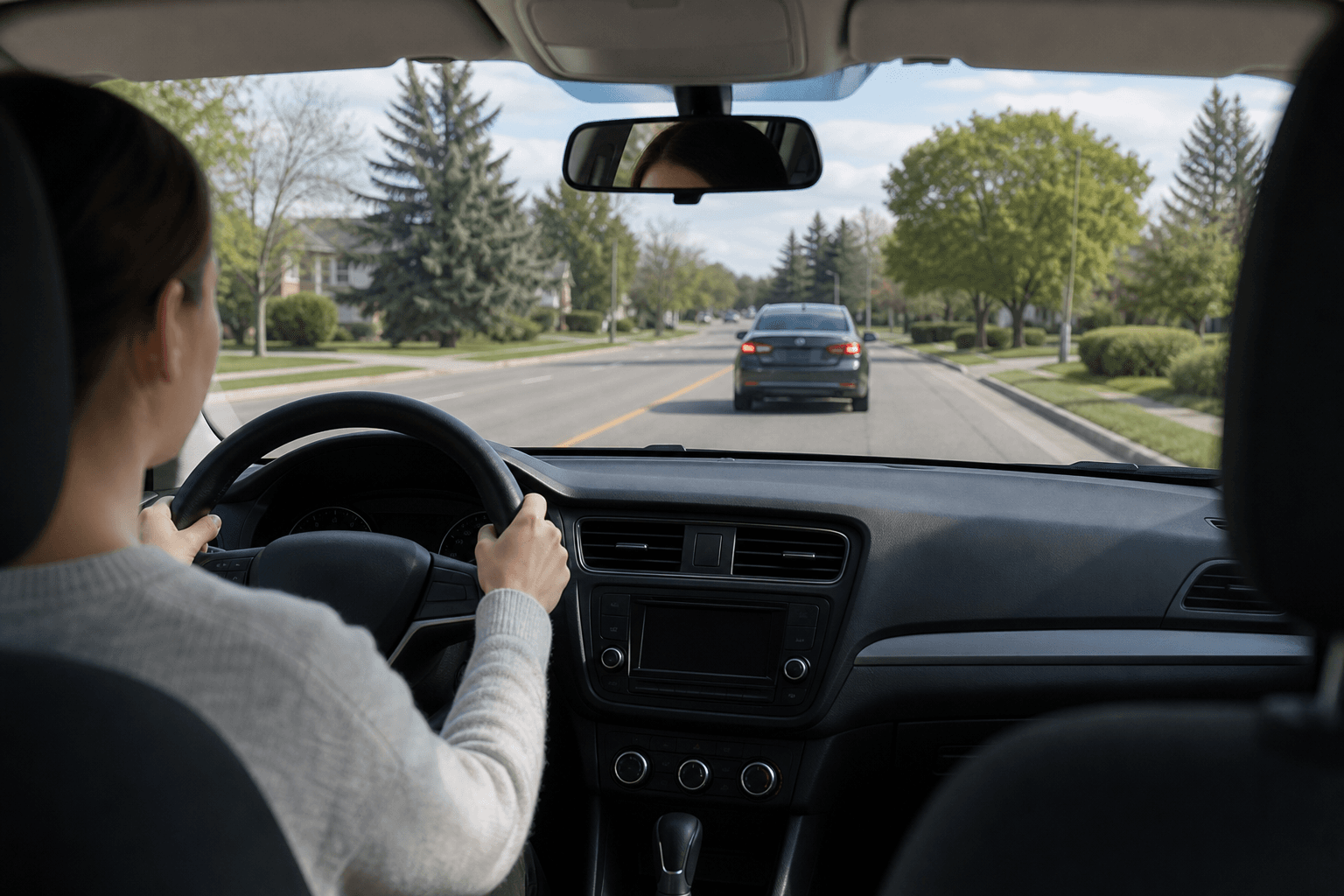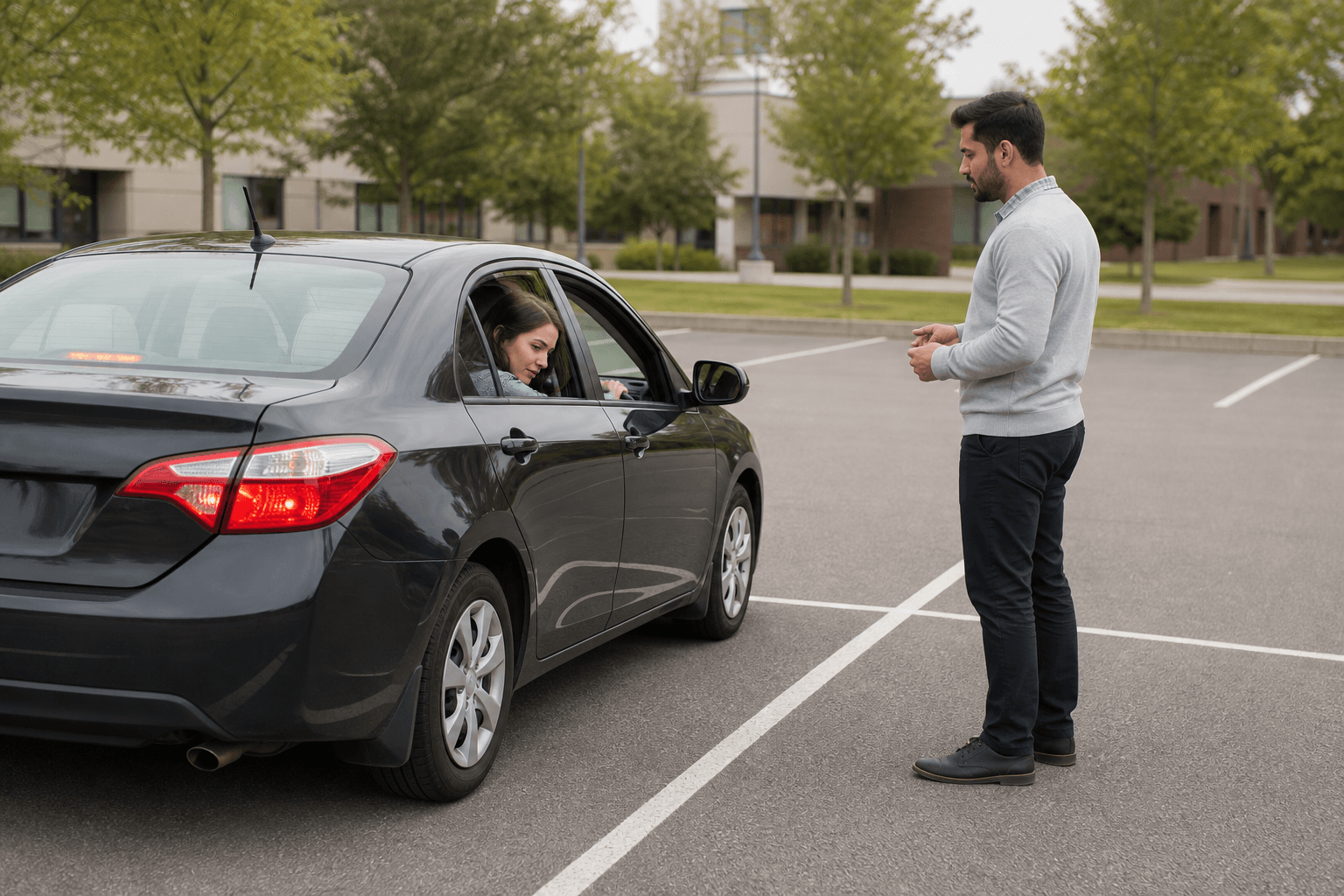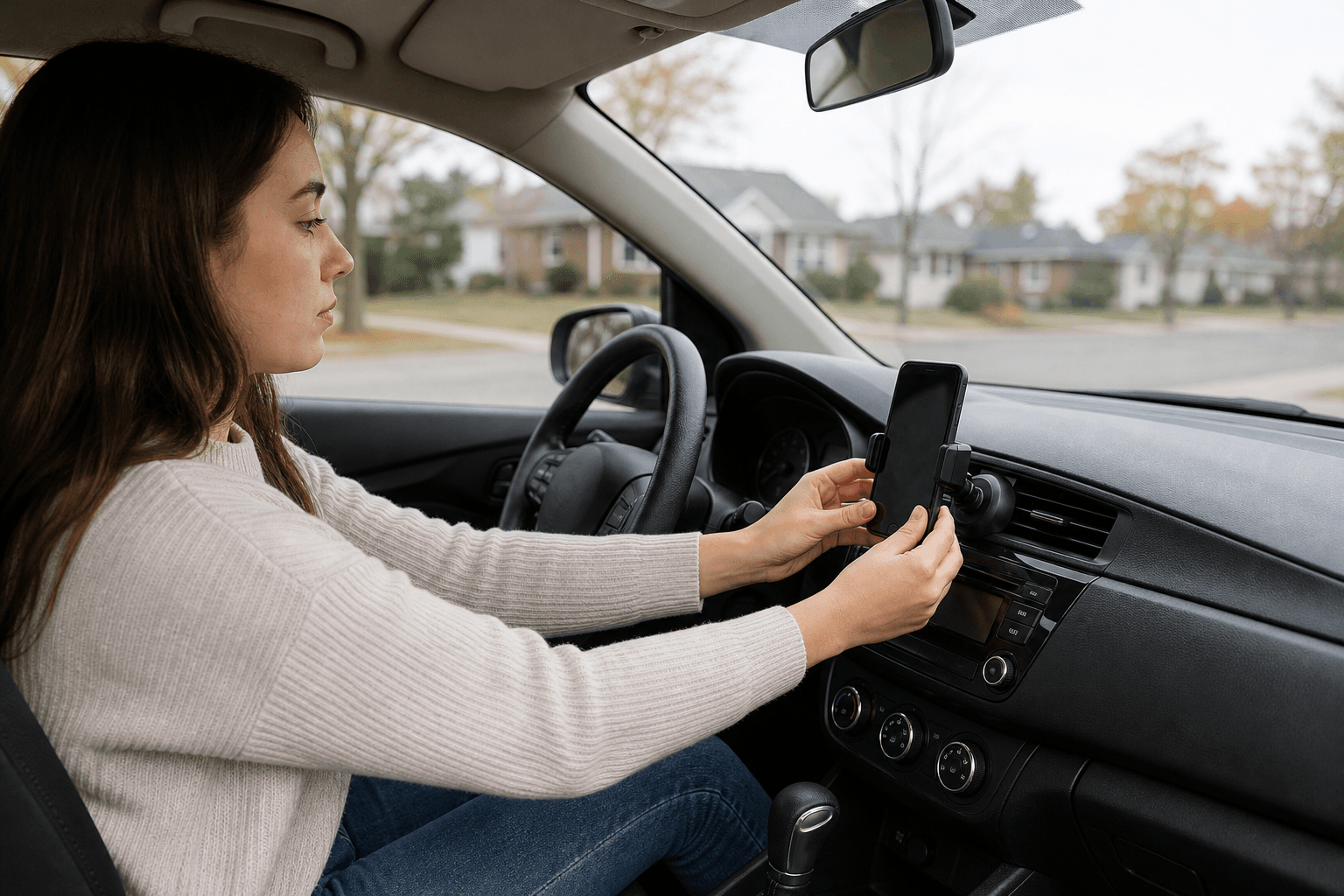

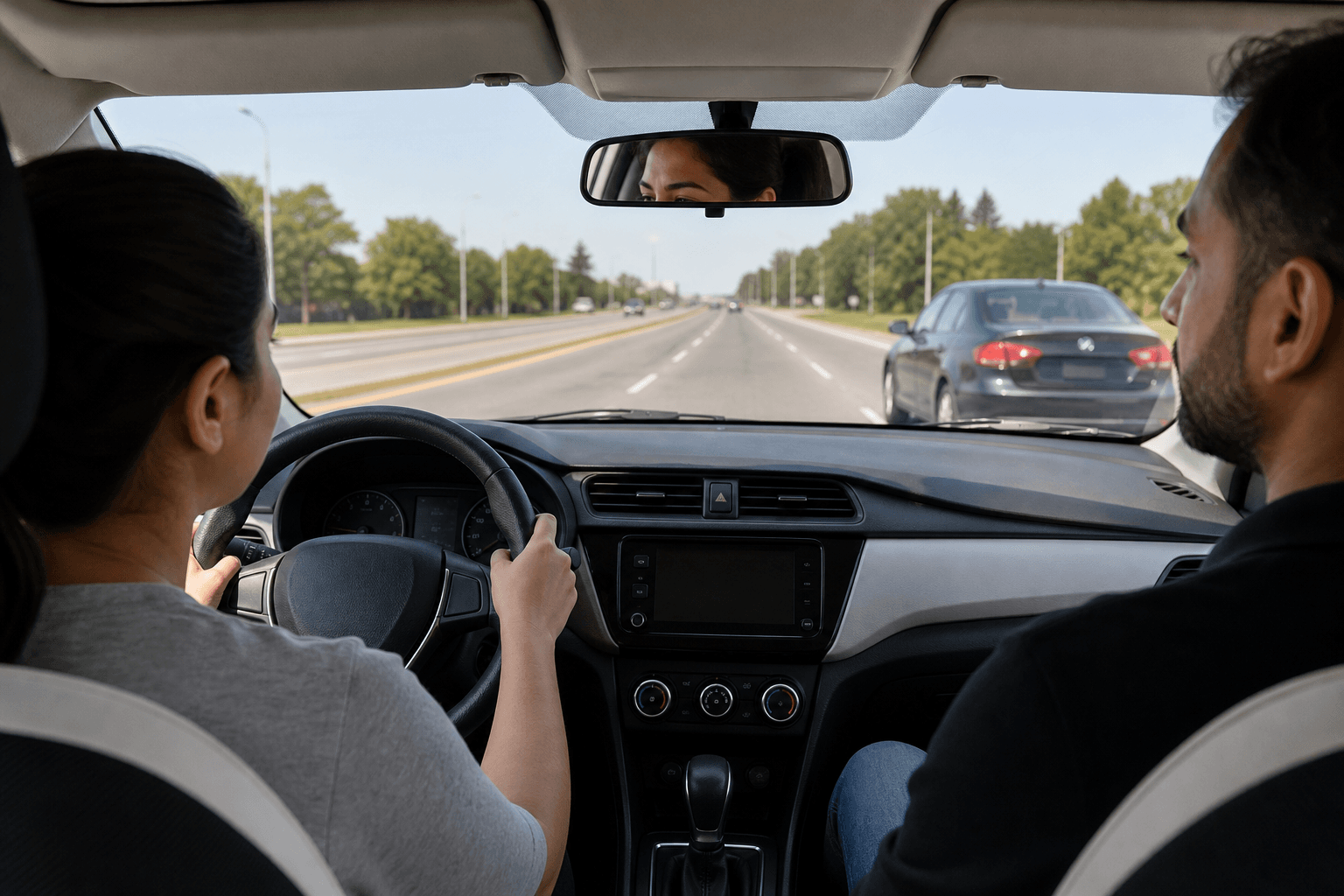
Effective lane-change lessons teach you to scan ahead and in your mirrors, signal, check the blind spot over your shoulder, choose a safe gap and move smoothly without drifting. In Ontario, lane changes are part of the G2 road test, so focused practice should build safe everyday judgement and consistent vehicle control.
A signal does not make a lane change safe by itself. You still need enough space, a clear view of the target lane and controlled steering.
Lane changes are a safety skill and a G2 test skill
Ontario’s G2 road test assesses lane changes, observation and vehicle control. Good instruction focuses on the decision before the steering movement: notice traffic early, decide whether changing lanes is necessary, wait for a usable gap and keep the vehicle stable while checking the blind spot. Ontario’s licensing guidance lists lane changes among the skills assessed during the G2 road test.
The Ontario lane-change routine
Practise this sequence until each action is deliberate and repeatable:
- Scan ahead. Look for slowing traffic, stopped vehicles, intersections, lane reductions and parked vehicles.
- Check your mirrors. Use the rear-view mirror, then the side mirror on the side you want to enter.
- Signal. Communicate your intention before moving laterally. A signal does not give you priority.
- Shoulder check. Briefly check the blind spot, then return your attention to the path ahead. The MTO requires a proper signal and a safety check before changing lanes. The handbook’s changing-position guidance explains the rule.
- Choose the gap. Move only when there is enough space in front and behind. If a vehicle is closing the gap, wait.
- Steer smoothly. Cross gradually without a sharp swerve, sudden acceleration or heavy braking.
- Settle in. Re-establish following distance, check your position and cancel the signal if needed.
Following distance gives you time to complete the routine without pressure. In suitable conditions, use at least two seconds as a starting point, increasing the gap in rain, snow, darkness, poor visibility or heavy traffic. Practising following distance helps make lane-change decisions less rushed.
Lane change, merge or evasive move?
| Situation | Primary coaching focus |
|---|---|
| Routine lane change | Mirrors, signalling, blind-spot checks, gap selection and smooth steering. |
| Highway merge | Acceleration, speed matching, early scanning and entering a faster traffic stream. |
| Evasive move | Hazard awareness, controlled braking and choosing the safest available path. |
| G2 road-test lane change | Repeatable observation, predictable movement and calm vehicle control. |
A routine lane change and a highway merge overlap, but they are not identical. For structured practice with high-speed lane changes, highway merging and test-focused manoeuvres, consider G2 driving lessons.
A progressive practice plan
Stage 1: Quiet roads
Build mirror use, signalling and brief shoulder checks where traffic is light. Advance when you can repeat the process without drifting, abrupt steering or last-second corrections.
Stage 2: Multi-lane roads
Practise straightforward changes with open gaps. Learn to wait when a gap closes, maintain your lane and try again without abrupt braking.
Stage 3: Urban traffic
Add intersections, parked vehicles, buses, cyclists, pedestrians and turning lanes. Look beyond the vehicle beside you because traffic ahead may be stopped or another driver may be entering the same space.
Stage 4: Higher-speed conditions
Once the routine is reliable, add earlier scanning, accurate speed control and larger gaps. A complete plan connects lane management with hazard perception, safe turning and highway merging. G2 test preparation can identify which skill needs targeted feedback.
Nervous learners can begin with shorter repetitions and quieter roads. Newcomers may need to adjust mirror routines, signalling habits and local road interpretation through newcomer driving in Ontario guidance.
Common mistakes and precise fixes
- Signalling without checking: Treat the signal as communication, then complete mirror and shoulder checks.
- Checking too late: Finish the shoulder check before crossing the lane line.
- Staring over your shoulder: Keep the check brief and return your eyes to the path ahead.
- Accepting a closing gap: Stay in your lane. Do not accelerate sharply to defend the original plan.
- Changing beside an intersection or exit: Scan farther ahead and wait until the conflict area has passed.
- Forgetting space behind: Use the rear-view mirror, side mirror and shoulder check as one traffic picture.
If the gap is inadequate, remain in your lane and abandon the attempt. Forcing the move can create a conflict with another vehicle that may conflict with your movement or does not expect you to change lanes.
How lessons should fit your starting point
A first-time G2 learner may need basic mirror use, steering control and road positioning before busy traffic. A confident driver preparing for a test may need targeted observation feedback and realistic traffic decisions. Nervous drivers benefit from patient coaching and a gradual increase in difficulty.
Khurana Driving School describes tailored in-car training, a defensive-driving approach and G2 and G preparation. The school is based in Mississauga. Ask for a lane-change focus if that is the skill you need to improve.
What to ask before booking
- Is the session individual?
- Will the instructor assess my current routine first?
- How will feedback cover mirrors, shoulder checks, gaps and steering?
- Will practice include multi-lane and higher-speed roads when appropriate?
- How will pacing change if I am nervous?
- What is the full price and lesson duration?
- Are evening or weekend times available?
- How does the session connect to my G2 preparation?
Lane-change readiness before a G2 test
You are progressing when you can repeatedly scan ahead, use both mirrors, signal, shoulder check, wait for unclear gaps, steer smoothly, preserve space and adapt when traffic changes your plan. There is no fixed lesson count that guarantees readiness. An instructor assessment or mock test can identify whether the remaining issue is observation, judgement, steering, speed management or confidence.
Questions learners ask
How many lane-change lessons do I need?
There is no standard number. Start with an assessment, then practise recurring faults in gradually busier conditions.
Is a lane change the same as merging?
No. Merging requires entering a faster traffic stream and judging acceleration space and approaching vehicles. The skills overlap, but the lesson focus differs.
Can nervous drivers practise gradually?
Yes. Begin on quiet roads with short repetitions, then progress to multi-lane roads, urban traffic and higher speeds as control improves.
What should I ask before booking?
Ask about individual instruction, assessment, roads and speeds, feedback, pacing, total price, duration and evening or weekend availability.
For focused coaching on changing lanes, observation and road-test preparation, Khurana Driving School’s driving lessons can be discussed around your skill level, G2 goal and preferred schedule.