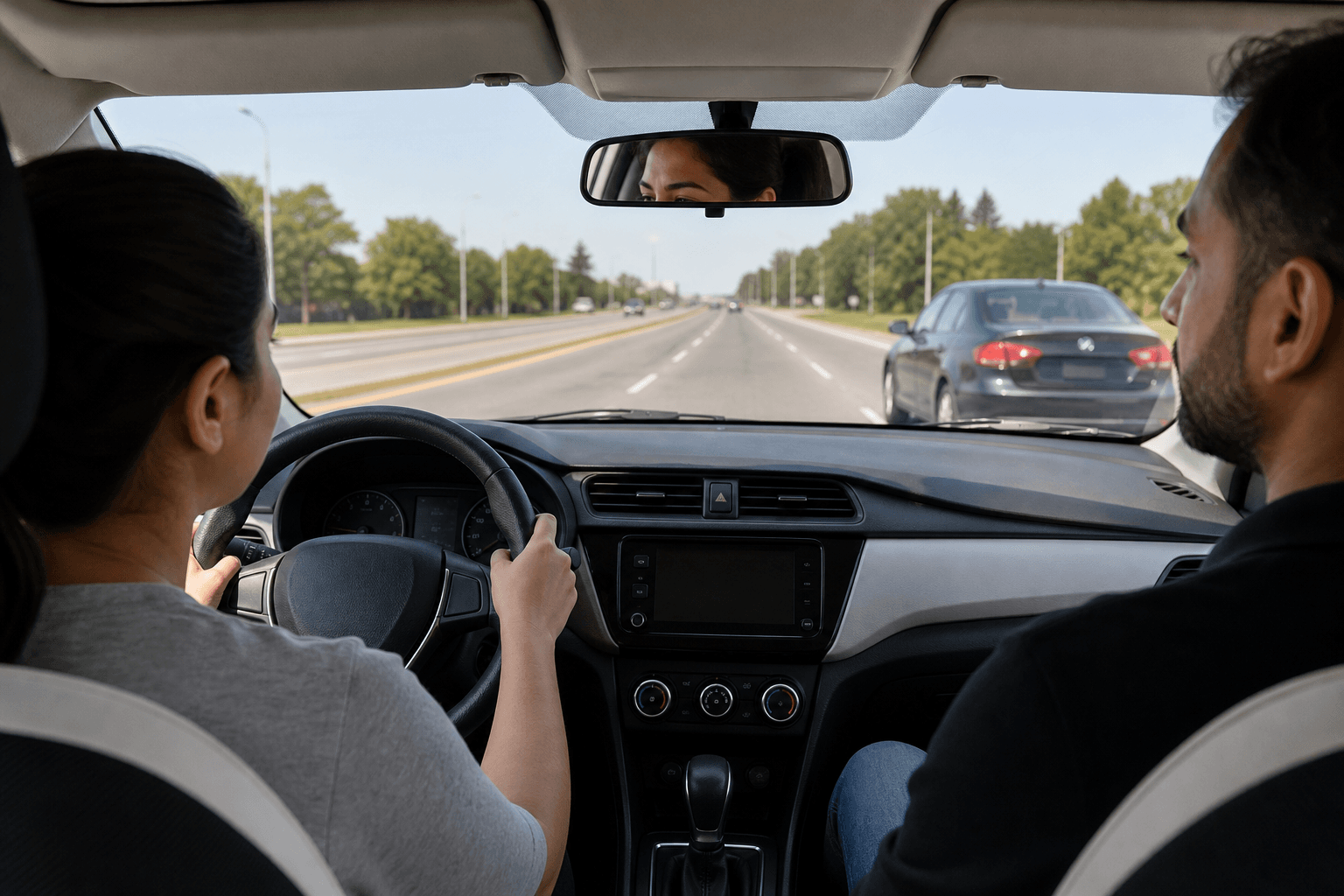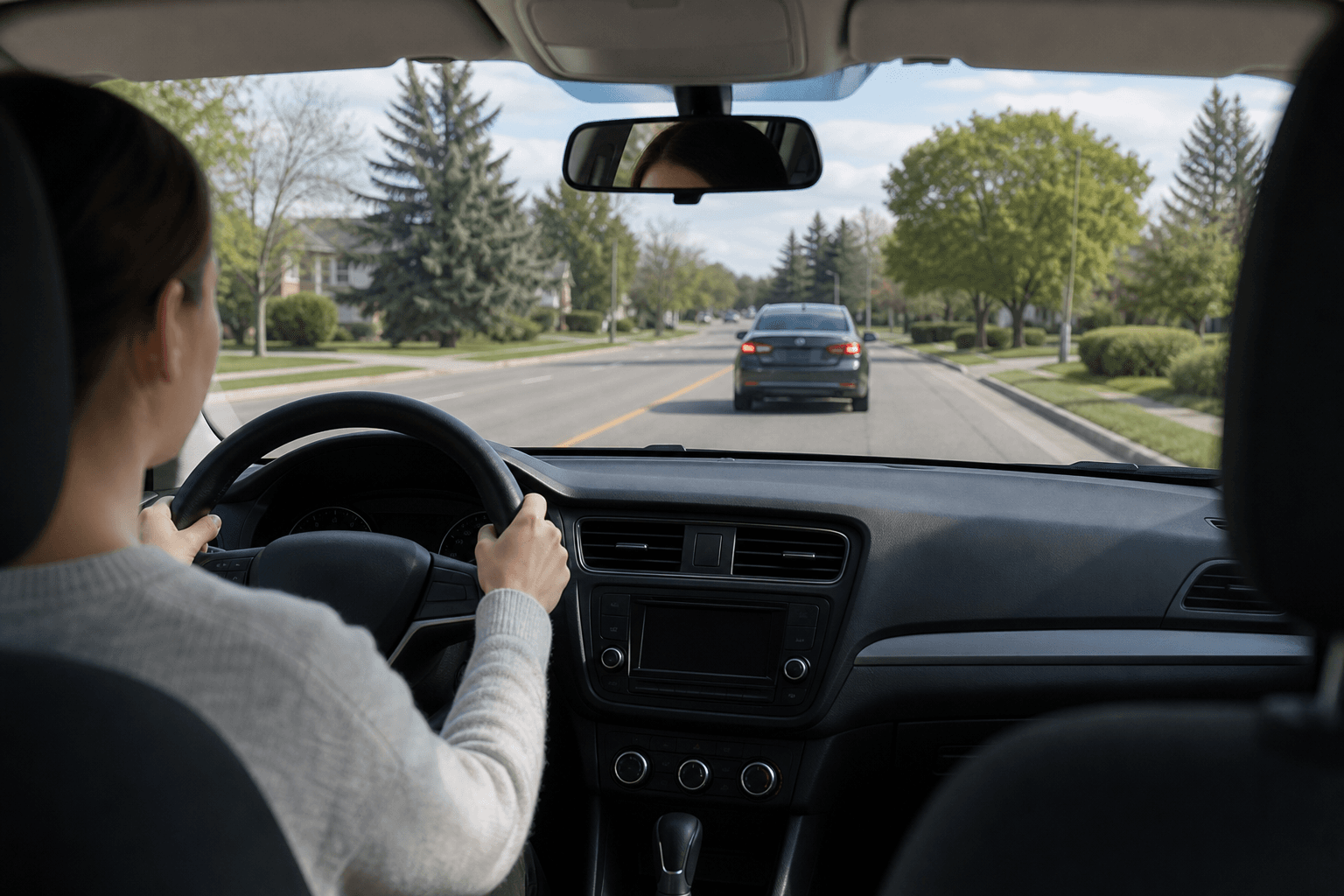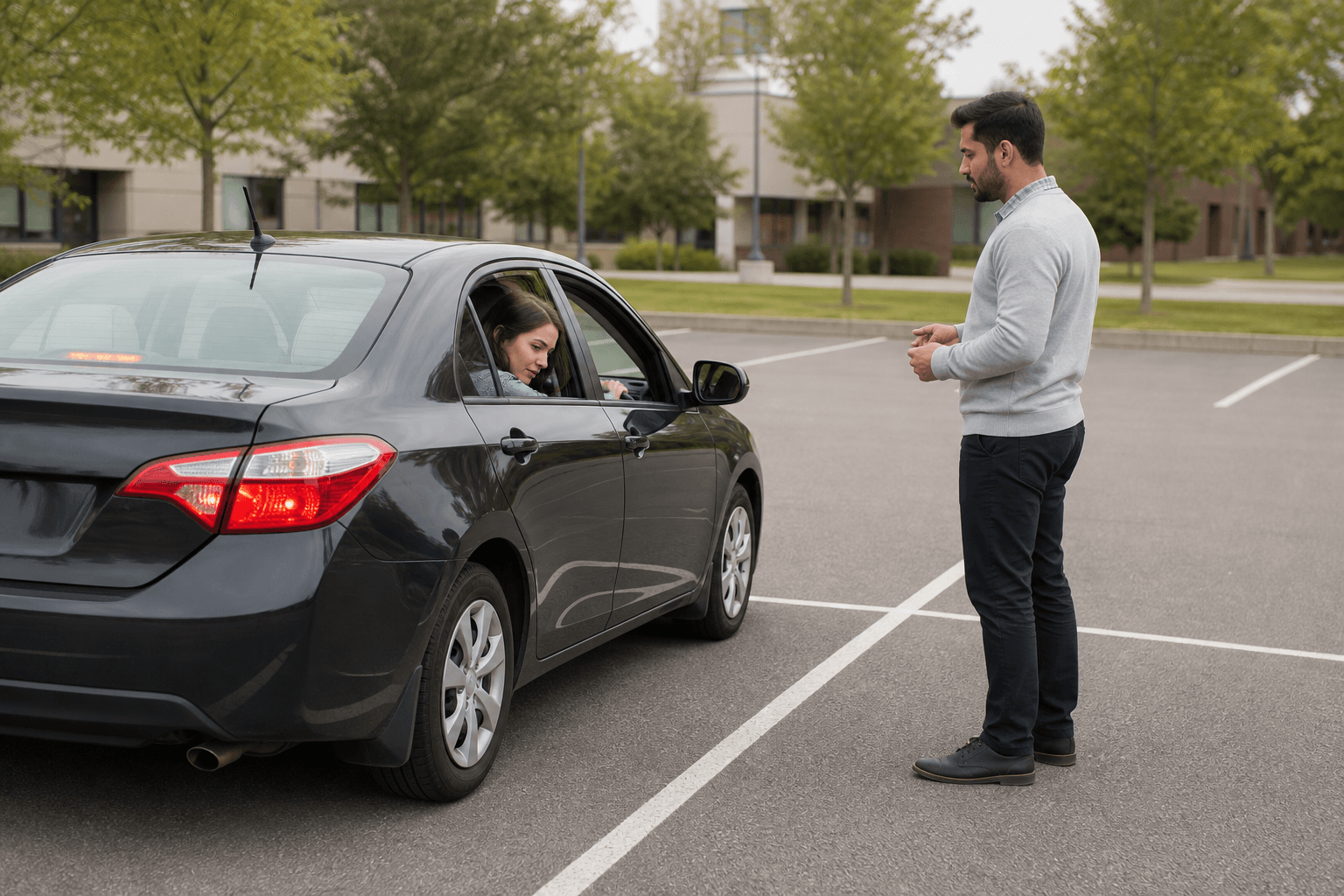

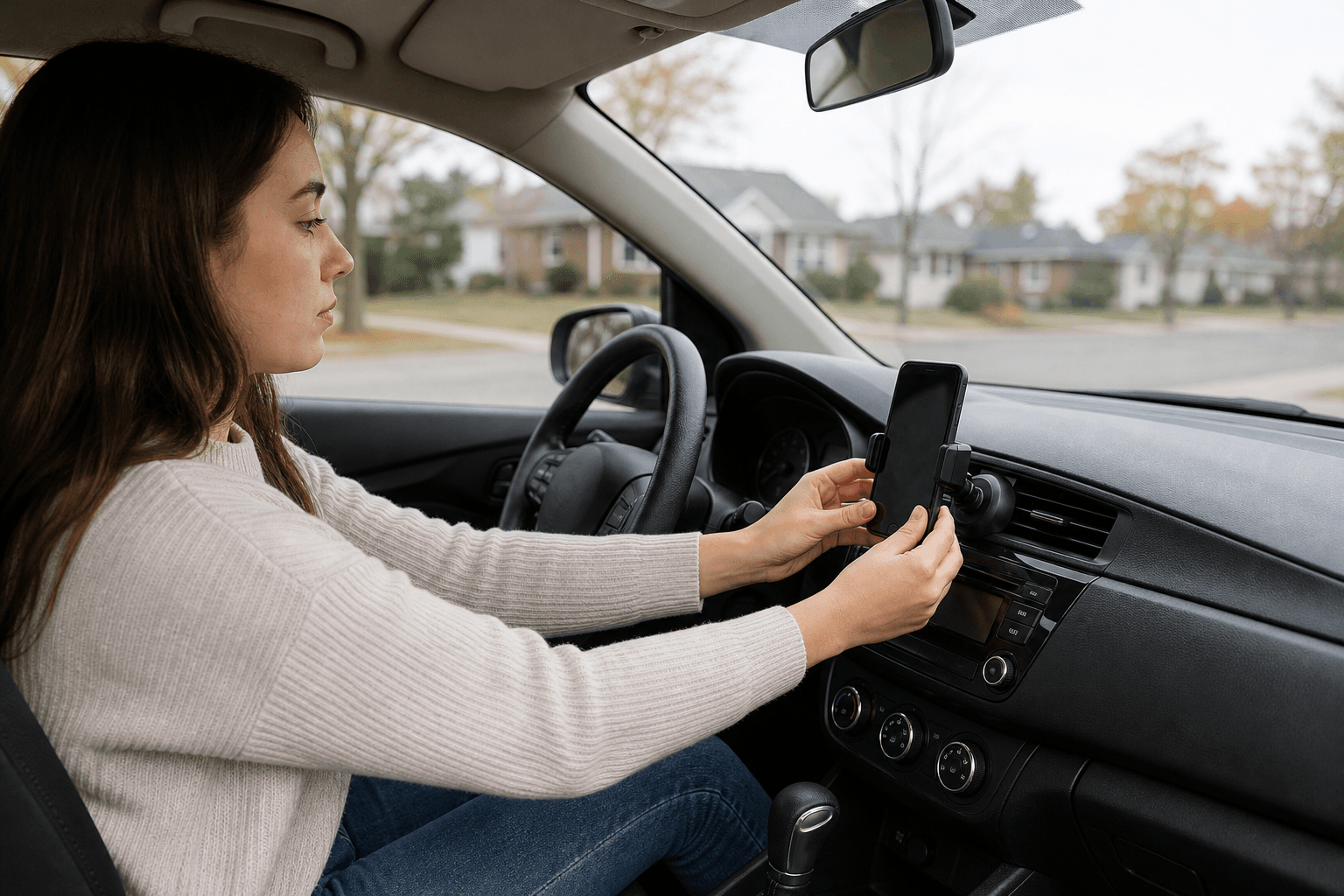
In Ontario, you generally cannot hold or touch a phone or other hand-held communication or entertainment device while driving, even when stopped in traffic or at a red light. Hands-free devices and securely mounted or built-in GPS displays may be used in the circumstances described by Ontario guidance, but set them up before moving. Related reading: Driving school trans canada st laurent.
These Ontario distracted driving rules cover congestion, navigation, music, parking and emergency calls. The safest approach is to finish phone-related tasks before driving, then park lawfully and consult the current Ontario guidance if something genuinely cannot wait.
Ontario distracted-driving rules in plain language
Ontario’s distracted-driving law focuses on using hand-held communication or entertainment devices and certain display screens while driving. The restriction applies when your vehicle is moving, stopped in traffic or waiting at a red light. The province allows limited contact with a device to call ambulance, police or fire department emergency services.
A red light or traffic jam does not turn a live roadway into a safe place to text, dial, scroll or change a song by hand. Newcomers should learn Ontario road rules instead of assuming that habits from another country apply here.
The rule also sits within a broader safety principle: anything that takes your eyes, hands or attention away from traffic can reduce your ability to notice a pedestrian, respond to a sudden stop or maintain lane position.
What can you do in common driving situations?
The table below gives a practical starting point. “Allowed” does not mean risk-free, and a device must still be used without interfering with safe vehicle operation.
| Situation | Practical answer |
|---|---|
| Stopped at a red light | Do not hold or touch a phone to text, call, scroll, navigate or change music. |
| Stopped in traffic | Do not use a hand-held device while waiting for traffic to move. |
| Driving slowly | Slow speed does not remove the need for full attention. Put the device away. |
| Legally parked | Treat this differently from being stopped in traffic, but do not assume every parked position or circumstance permits phone use. If you need to use the device, park lawfully and follow the current Ontario guidance. |
| Pulled over safely | Complete the stop first, choosing a lawful place away from moving traffic. |
| Phone mounted on the dashboard | A mount does not make every action legal. Manually typing, scrolling or handling the phone can still breach the rule. |
| Built-in or securely mounted GPS | The MTO handbook allows viewing GPS display screens when built in or securely mounted. Enter the destination before moving. |
| Changing music | Do not handle a phone to select music while driving. Choose audio before departure. |
| Hands-free call | Bluetooth, an earpiece or a lapel button are described as hands-free options. Stop safely if the conversation becomes distracting. |
| Emergency call | Touching a device is permitted for calling ambulance, police or fire department emergency services. |
The key distinction is between being lawfully parked and merely stationary. Sitting at a red light, waiting in a queue or stopping briefly at the roadside does not automatically permit phone handling.
What counts as distraction beyond phone use?
Ontario’s specific hand-held-device rule is not a complete list of every distracting behaviour. The MTO handbook identifies eating, drinking, grooming, smoking, reading and reaching for objects as conduct outside the specific rule described there, but drivers may still face careless or dangerous-driving consequences depending on what they do.
| Behaviour | Why it still matters |
|---|---|
| Eating or drinking | A cup, wrapper or food can occupy a hand, obstruct your view or delay braking. |
| Grooming | Looking away can leave you unaware of a changing signal, pedestrian or stopped vehicle. |
| Reaching | Searching in a bag or on the floor can affect steering and response time. |
| Pets or loose items | An animal or object can move unexpectedly and draw attention from the road. |
| Passengers | Arguments or complicated interactions can compete with observation and decision-making. |
| Headphones or excessive audio | Reduced awareness of traffic sounds and emergency vehicles affects situational awareness. |
| Dashboard controls | Adjust necessary controls quickly while keeping your eyes on the roadway as much as possible. |
Eating while driving is not automatically the same offence as texting while driving. However, if the activity contributes to unsafe vehicle operation, the wider circumstances can matter. Treat non-phone distractions as hazards to manage, not loopholes.
Distracted driving and careless driving are not the same
Distracted driving generally refers to prohibited use of a hand-held communication or entertainment device, or certain display screens, while driving. Careless or dangerous driving concerns the broader way a vehicle is operated and the risk created by that conduct.
The same incident can raise more than one concern. A driver who looks down at a phone may fail to notice a pedestrian or drift across a lane. The phone use and resulting driving behaviour are related, but they are not identical legal questions.
Ontario’s Official MTO Driver’s Handbook explains that eating, grooming and reaching may still have consequences if conduct becomes careless or dangerous.
What consequences should Ontario drivers verify?
Penalty amounts, demerit points, licence suspensions and repeat-offence consequences are regulated details. Check the current Ontario distracted-driving guidance before relying on any number.
A conviction can also raise separate questions about insurance, employment driving requirements, civil claims or an allegation of careless driving. Those outcomes depend on the circumstances and should not be reduced to a fixed premium increase or guaranteed result.
A five-minute phone setup routine before you drive
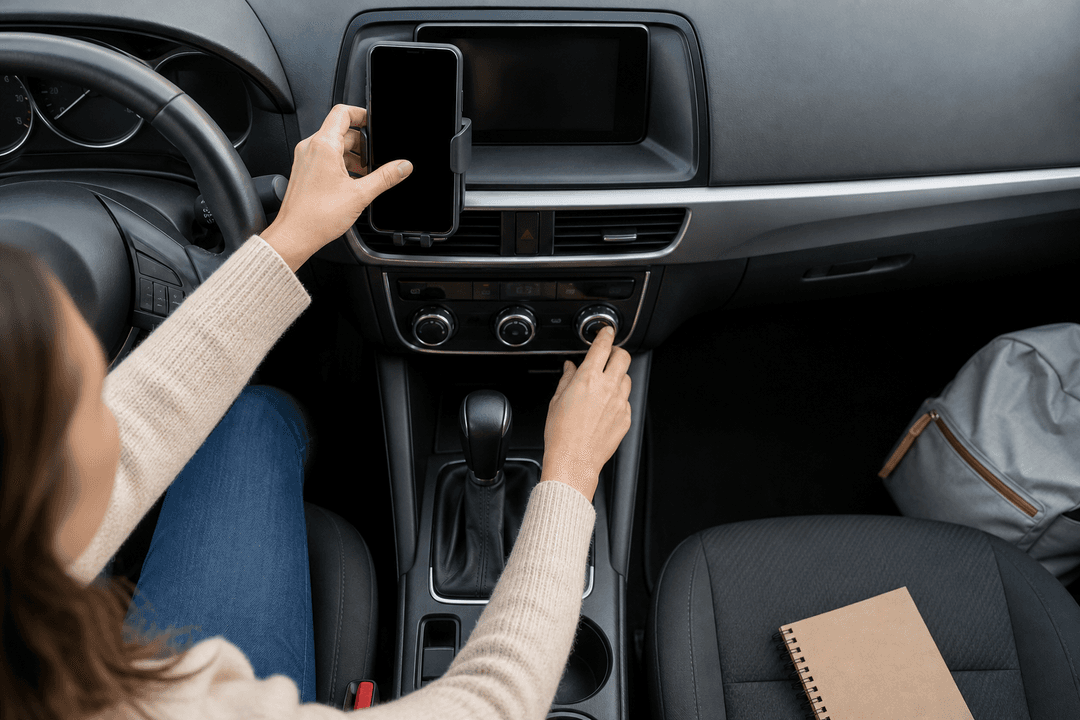
A good setup removes decisions from the part of the trip when your attention should be on traffic.
- Set the destination. Enter the address and review the route while parked.
- Secure the phone. Place it where it cannot slide under a pedal or tempt you to pick it up.
- Choose audio in advance. Select music or a podcast before leaving.
- Silence notifications. Use driving mode to reduce incoming alerts.
- Set hands-free controls. Pair Bluetooth before departure.
- Plan for interruptions. If you miss a turn or receive an urgent message, continue safely until you can stop legally.
This routine helps nervous learners reduce last-second choices and gives instructors a clear starting point for discussing attention management and safe decision-making.
Why distraction control belongs in defensive-driving practice
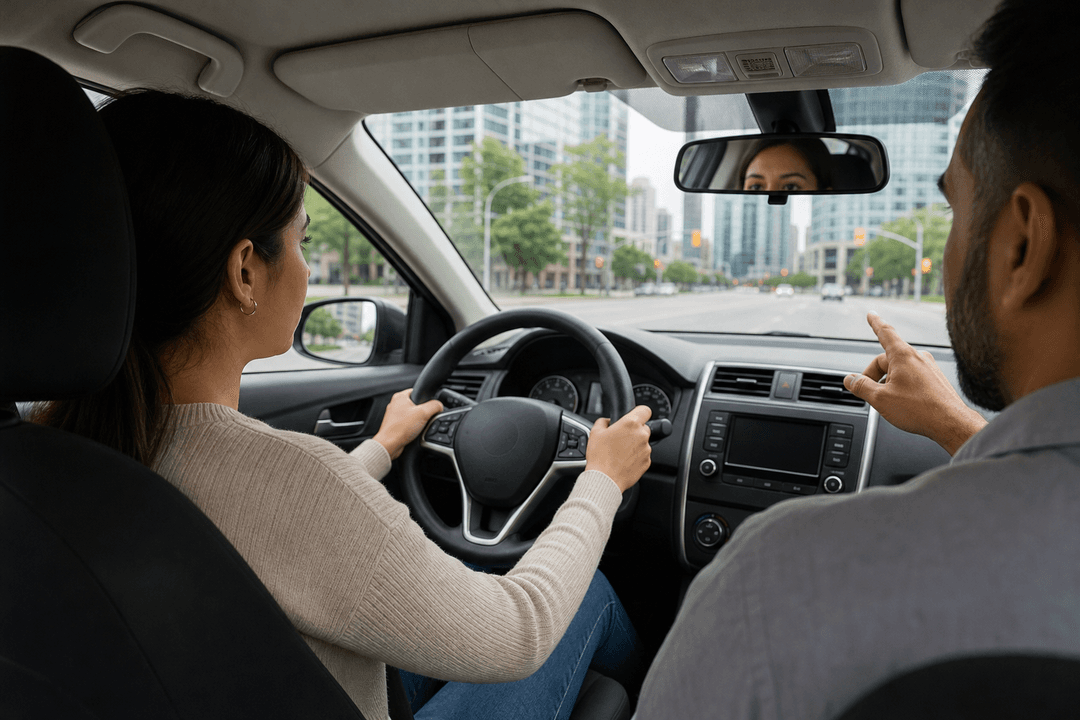
Defensive driving involves maintaining enough attention to observe hazards, preserve space, control your lane and anticipate what other road users may do.
During G2 or G preparation, practise a simple sequence: scan mirrors and the road ahead, identify a possible conflict, choose a safe response and keep your hands and eyes available for vehicle control. A phone alert should not interrupt that sequence.
Khurana Driving School’s G2 guidance connects defensive driving habits with observation, lane changes, highway practice and awareness of other road users.
Questions Ontario drivers still ask
Can I sit in my car and use my phone in Ontario?
Do not treat simply sitting in a vehicle as permission to handle a phone. The legal position can depend on whether the vehicle is lawfully parked and the circumstances of the stop, so follow the current Ontario guidance. A red light or traffic queue is different from parking.
Is a mounted phone automatically legal?
No. A mount does not make every action legal. Viewing a GPS display that is firmly attached or factory-fitted is addressed by Ontario guidance, but typing, scrolling or handling the phone can still be prohibited or unsafe.
Can I use GPS or change music while driving?
View a built-in or securely mounted GPS display as described by the MTO handbook, but set the destination before moving. Do not handle a phone to change music while driving.
What is the emergency exception?
Ontario permits touching a device to call ambulance, police or fire department emergency services. This does not permit ordinary calls, messages or notification checks.
Are the rules different for senior drivers?
The distracted-driving rules apply generally, not only to a particular age group. Senior-driver licensing, renewal and assessment requirements are separate questions.
Can eating or grooming lead to a careless-driving issue?
Eating or grooming is not automatically the specific hand-held-device offence, but it can create unsafe driving. The wider circumstances may matter if it contributes to careless or dangerous operation.
Can you legally sleep in your car in Ontario?
Sleeping in a vehicle is not the distracted-driving issue addressed here. Permission depends on where the vehicle is parked and applicable local or property rules.
Is it illegal to drink coffee while driving?
Drinking coffee is not automatically the Ontario hand-held-device offence. It can still occupy your hand, spill or reduce control, so stop safely if it becomes difficult to manage.
For learners in Mississauga, Brampton and the GTA, distraction control starts with preparing before moving, watching developing hazards and stopping safely when a task cannot wait. Khurana Driving School offers defensive driving training and driving lessons focused on responsible vehicle control.