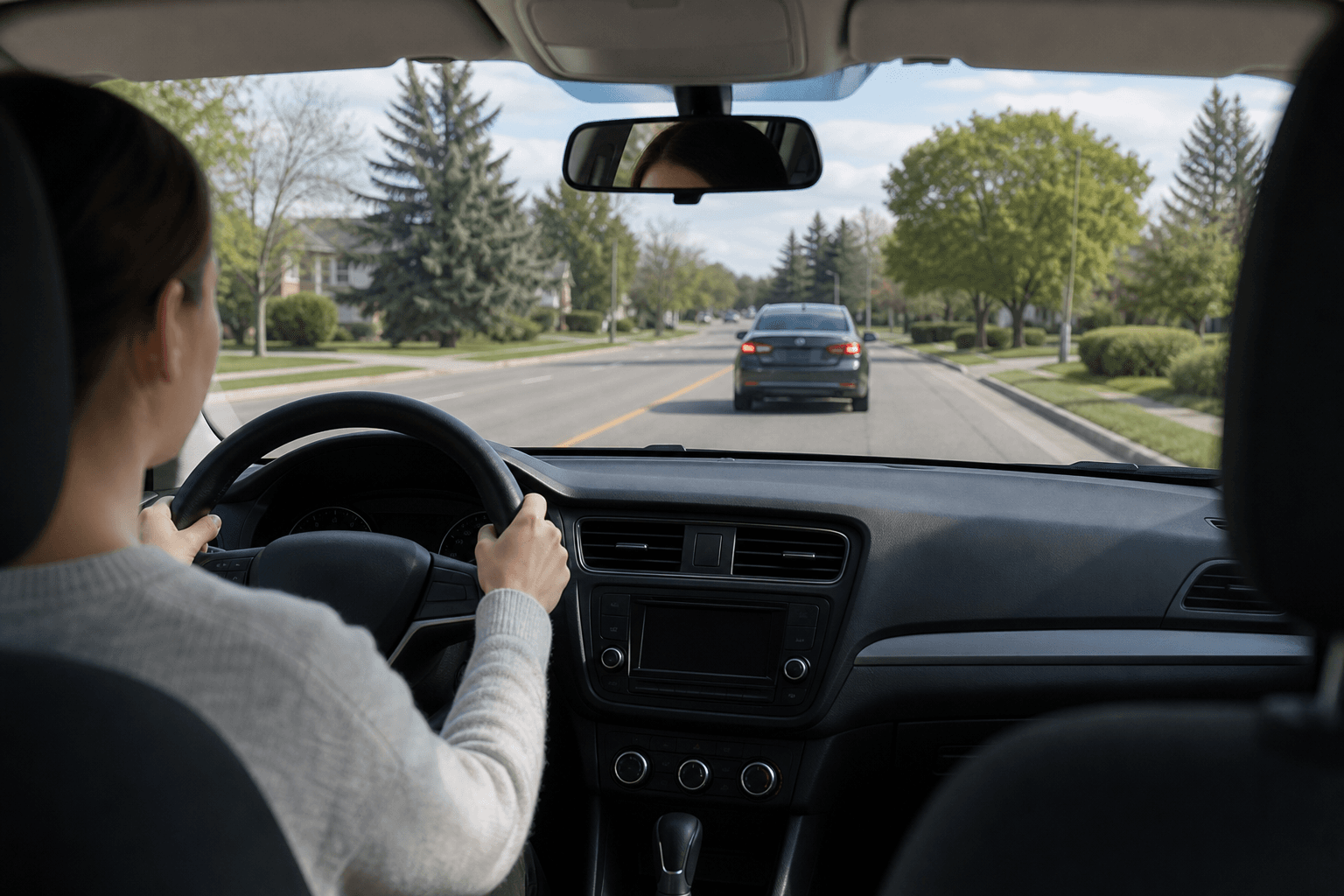

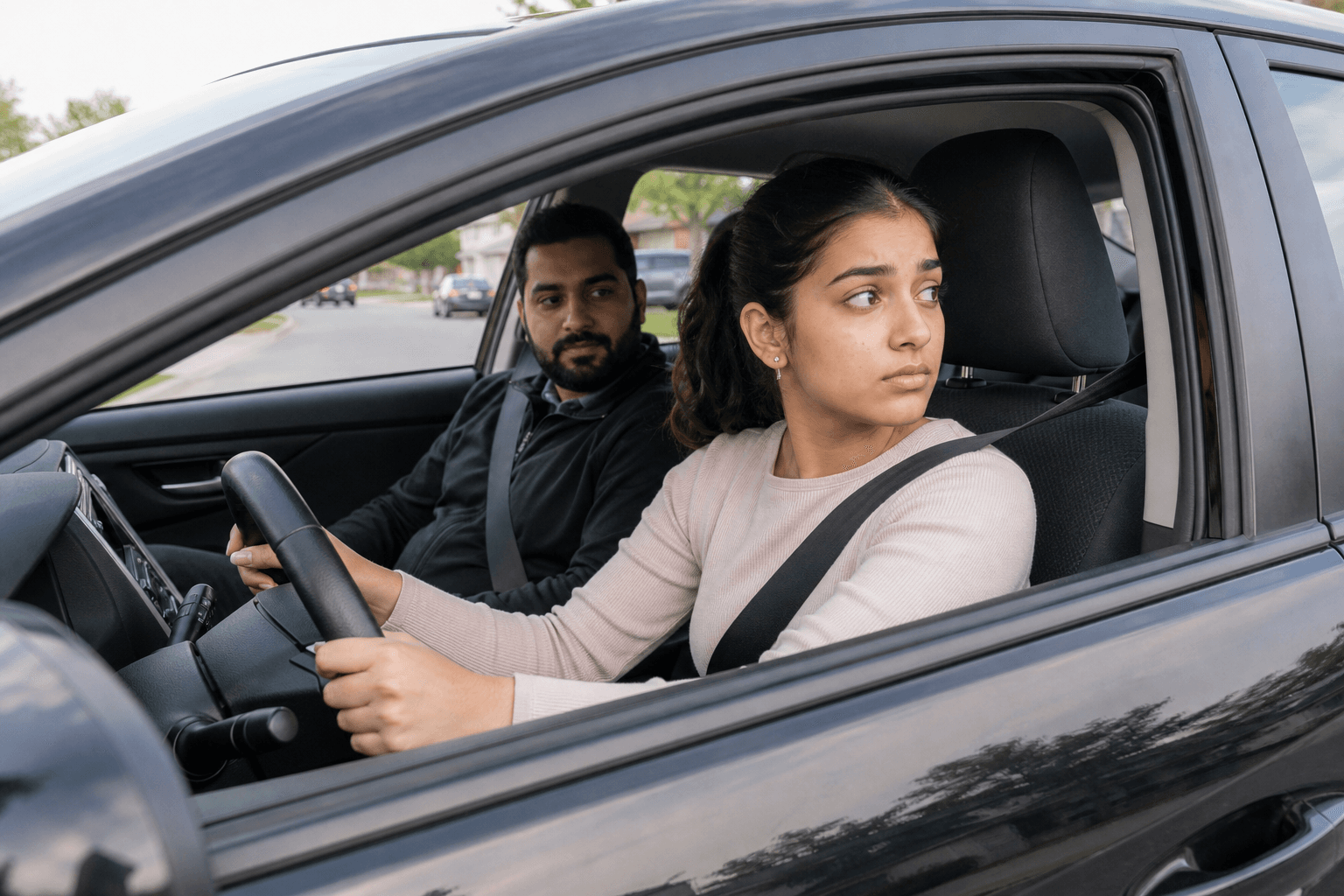
If you are searching for “G2 examiner mistakes,” the most important point is this: Ontario does not publish a fixed number of errors you are allowed to make. Your result depends on whether you demonstrate safe, legal and consistent driving, so preparation should focus on eliminating repeated habits and serious judgement errors rather than counting every minor imperfection.
Quick summary
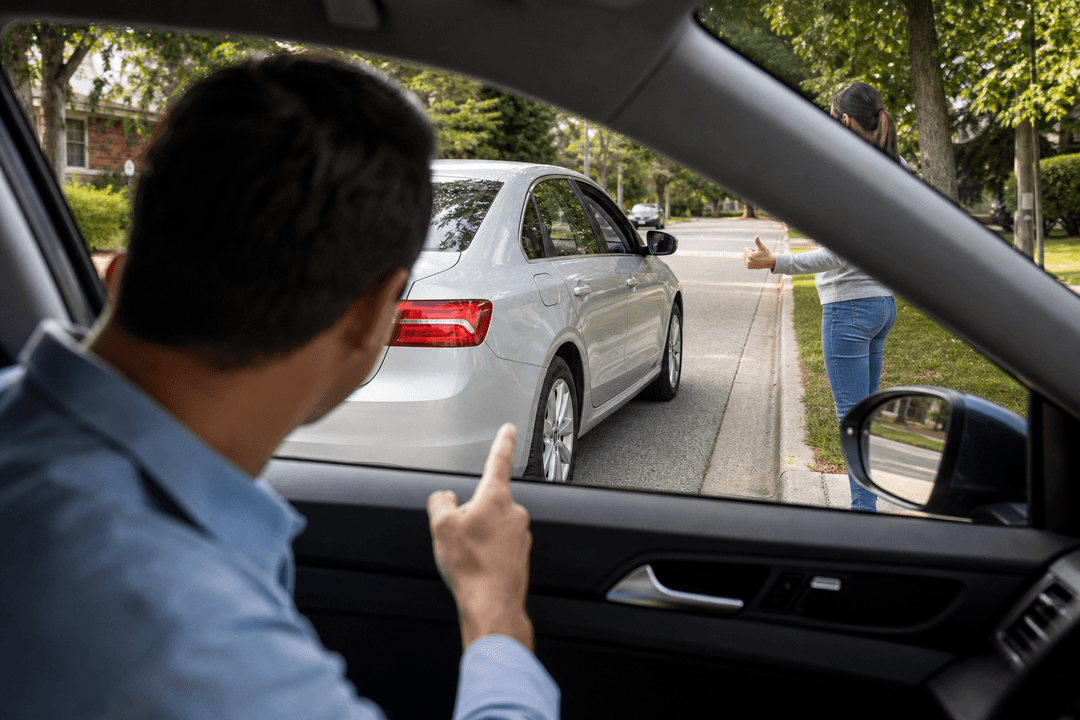
- Common problem areas include observation, vehicle control, right-of-way, signalling, intersections, parking and roadside stops.
- A missed shoulder check or incomplete stop should be treated as a behaviour to diagnose and correct, not as part of an unsupported automatic-fail list.
- Record each recurring error, identify its trigger, practise one correction and repeat the skill in realistic conditions.
- Choose regular lessons if your fundamentals are weak, targeted practice if one or two errors keep returning, or a mock road test for a final readiness check.
What G2 examiners assess in Ontario
The phrase “G2 examiner mistakes” is useful search wording, but it is not a formal Ontario scoring category. Official guidance refers to an examiner assessing your driving skills and providing a report that explains mistakes after the test. It does not provide a public, fixed mistake allowance. Review the official Ontario licence-test information for current government guidance.
In practical terms, the examiner is looking for controlled vehicle operation, appropriate observation, correct decisions around other road users, legal compliance and reliable execution of required manoeuvres. One slightly imperfect action is not the same as repeatedly failing to observe, yielding unsafely or maintaining control.
Common G2 examiner mistakes at a glance

| Category | Typical examples | Correction focus |
|---|---|---|
| Observation | Missed mirror checks, shoulder checks or blind spots | Make checks deliberate before changing speed, position or direction |
| Vehicle control | Speed fluctuations, abrupt braking, drifting or poor following distance | Look farther ahead and use smooth inputs |
| Right-of-way | Rolling stops, unsafe yielding or entering before confirming conditions | Slow early, identify priority and proceed only when safe |
| Signalling | Late or missing signals, or signalling without checking | Signal, observe and move only when the space is clear |
| Manoeuvres | Uncontrolled parking, turns, lane changes or roadside stops | Set up slowly, observe before moving and maintain control |
| Test readiness | Vehicle, document or instruction problems | Complete checks in advance and avoid preventable distractions |
1. Observation and vehicle-control mistakes
Observation errors often happen when a learner performs a manoeuvre automatically. Common examples include checking only the rear-view mirror before a lane change, missing a shoulder check, failing to scan a crosswalk or checking mirrors too late before slowing.
Vehicle-control issues can include inconsistent speed, abrupt braking, drifting within a lane, following too closely or turning too quickly. Good observation must lead to a safe, controlled response. Seeing a hazard but braking late is still a problem.
Practise one sequence at a time: mirror, signal, shoulder check, movement and re-check. Ask your instructor to identify exactly which part is missing. Khurana’s G2 programme covers observation habits and blind spots alongside vehicle control, lane changes, intersections and roadside stops.
2. Right-of-way, signalling and intersection mistakes
Intersections expose weaknesses in judgement quickly. Learners may approach too quickly, stop incompletely, turn without confirming the path is clear, yield when they should proceed or proceed when another road user has priority.
A signal communicates your intention, but it does not give you priority. Before turning or changing lanes, check mirrors and blind spots, assess pedestrians and traffic, and ensure there is enough space to complete the movement safely.
Ontario-focused practice should include right-of-way rules and turning and signalling procedures. Practise approaching intersections slowly enough to observe and decide before reaching the conflict point.
3. Manoeuvre and parking mistakes
Manoeuvres become difficult when learners rush the setup. During parallel parking, a three-point turn, a lane change or a roadside stop, the examiner is still observing your surroundings, control and decision-making.
Use a slower, repeatable process. Check around the vehicle before moving, position deliberately, keep your speed low enough to make corrections and stop if you lose track of nearby traffic. Controlled repositioning is better than forcing a manoeuvre while uncertain.
Correctable habits versus serious driving errors
Not every imperfection has the same significance. A safe positioning adjustment differs from repeatedly failing to observe before moving. A moment of hesitation differs from entering an intersection when the path is not clear.
Do not rely on online claims that one isolated action always produces an automatic failure. The supplied Ontario guidance does not publish a universal numerical threshold or complete public list of automatic failures. Treat any behaviour that creates immediate risk, violates a rule or shows loss of control as a priority for correction.
How to identify and fix recurring mistakes
- Record the behaviour: write “missed shoulder check before lane change,” not “bad lane change.”
- Identify the trigger: note whether it happened under pressure, near an intersection or after several instructions.
- Practise one correction: use the same mental sequence before every lane movement.
- Retest realistically: repeat the skill in traffic and then during a complete mock drive.
Feedback should explain what the examiner could observe, why it mattered and what to do next. Sessions based on mock road tests and structured feedback can expose recurring errors before test day.
If nerves cause your G2 mistakes
Anxiety can narrow attention, speed up decisions and make familiar manoeuvres feel unfamiliar. Nervous drivers may forget a mirror check, brake sharply or rush because they fear making a mistake.
Use structured repetition rather than simply being told to relax. Start with one skill in a quiet setting, add traffic and then practise a complete drive with minimal prompting. A calm instructor can help separate a knowledge gap from a performance problem caused by pressure.
G2 test-day checklist
- Vehicle: confirm it is roadworthy, clean enough for the examiner and free from visibility problems.
- Mirrors and windows: adjust them before the test and keep windows clear.
- Lights and controls: check essential equipment before arriving.
- Documents: bring the required documents and confirm appointment details.
- Arrival: allow time to park, check in and settle.
- Instructions: listen carefully and ask for clarification when needed.
- Mental readiness: use the same observation and control routine you practised.
Which preparation option fits you?
| Your situation | Best fit | Reason |
|---|---|---|
| Fundamentals such as steering, speed or intersections remain weak | Regular G2 lessons | You need time to build and repeat core skills |
| One or two errors keep returning | Targeted practice | A focused session can isolate the trigger |
| You can complete the skills but feel unsure under pressure | Mock road test | Realistic feedback can reveal test-day habits |
Choose the option that matches the problem. Before booking, confirm session length, inclusions, feedback and how readiness will be assessed. This G2 road test preparation guide may also help you identify skills to review.
What to do after a failed G2 test
Use the examiner’s skills report as a practice plan. Identify the behaviours noted, rank them by safety and frequency, and address the highest-priority weakness before repeating a full test simulation.
Ontario’s official material states that you must wait at least 10 days between road tests after failing. Use that time for focused correction rather than simply rebooking the earliest appointment.
FAQ about G2 examiner mistakes
Is there a fixed number of mistakes allowed?
No fixed public number is provided. Focus on safe, legal and consistent performance.
What if I keep missing shoulder checks?
Practise mirror, signal, shoulder check and movement as one sequence. Have an instructor identify whether you forget the check, perform it late or move before completing it.
Can a mock test show which mistakes I need to fix?
It can reveal habits that isolated exercises miss, especially when you manage instructions, traffic and manoeuvres together.
How long must I wait after failing?
Ontario’s official guidance requires at least 10 days between tests after failing. Use the interval to review the skills report and practise.
Prepare for consistent, controlled driving
The best response to G2 examiner mistakes is not chasing an unofficial pass-or-fail number. Build reliable observation, smooth control, correct signalling, safe right-of-way decisions and controlled manoeuvres, then confirm those skills during a realistic mock drive.
Khurana Driving School provides G2 training and test preparation for learners in Mississauga, Brampton and the GTA, including support for nervous drivers. To discuss the right preparation option, contact Khurana Driving School.