
Effective G2 road test preparation in Ontario is more than booking a last-minute driving lesson. You need to understand the skills being assessed, practise them until they are consistent, receive useful feedback, and arrive with the correct documents and a roadworthy vehicle.
The Ontario G2 road test is also called the G1 exit test. A staged plan helps you build genuine readiness instead of relying on a single pre-test session to correct every weakness.
Quick summary
- Review current Ontario requirements and identify your weakest driving skills.
- Practise vehicle control, turns, stops, observations, lane changes, parking, and residential driving in stages.
- Use a realistic mock test to identify recurring faults, then schedule targeted practice.
- Choose a provider based on feedback quality, lesson terms, preparation format, and scheduling fit.
- Before test day, check your licence, booking information, vehicle condition, and arrival plan.
What the Ontario G2 road test assesses
Ontario describes the G2 road test as an assessment of basic driving skills. The listed areas include left and right turns, stopping, parallel parking, one-way streets, lane changes, three-point turns, residential driving, traffic lights, stop signs, and yield signs. Confirm current requirements through Ontario’s G2 road test guidance.
These official categories are the starting point, not a substitute for practice. You must control the vehicle while observing the road, responding to signs and signals, and making safe decisions around other road users. Coaching advice can help you prepare, but it should not be treated as the exact official scoring rubric.
For a broader explanation of the assessment and how guided practice and mock tests fit into training, review this guide to G2 driving test preparation.
Build a G2 preparation roadmap
Separate two decisions: what you need to learn and what you need to polish. A learner with little experience may need progressive instruction across several skills, while an experienced driver might need a short tune-up focused on parking, observation, or test-day consistency.
1. Confirm the current requirements
Use official Ontario information and the Official MTO Driver’s Handbook as your reference. The handbook explains the licensing process and notes that certain electronic driving aids, including automatic parallel-parking systems, lane monitoring, cruise control, and back cameras, may not be used during the road test. Check the official handbook guidance before your appointment.
2. Assess your baseline ability
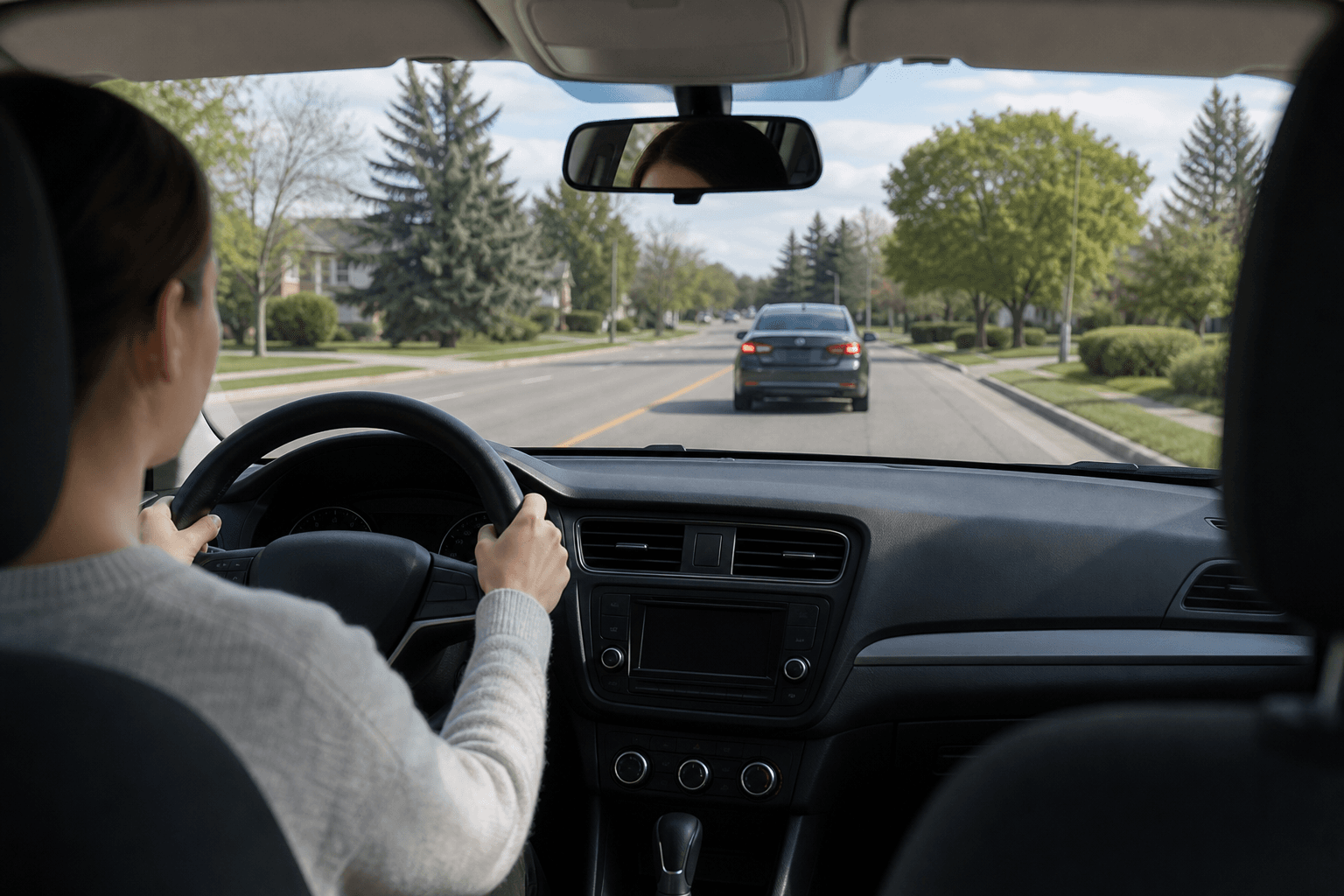
List the skills you can perform comfortably and those that still require prompting. Consider whether you can complete a full drive while maintaining appropriate speed, scanning intersections, checking mirrors, signalling on time, and responding calmly to unexpected traffic.
3. Practise from simple to complex
Begin in manageable areas where you can focus on control and observation. Add busier intersections, one-way streets, lane changes, parking situations, and residential routes as your fundamentals become more reliable. Repeating a difficult manoeuvre without correcting the underlying fault can reinforce the wrong habit, so ask for specific feedback.
4. Complete a mock test and correct recurring faults
A mock test should show whether you can apply your skills without continuous coaching. Separate isolated mistakes from repeated patterns. Missing one mirror check is different from repeatedly changing lanes without a complete observation routine.
Match each skill to a practice goal and readiness check
| Skill area | What to practise | Readiness check |
|---|---|---|
| Vehicle control | Smooth acceleration, braking, steering, and positioning. | You control the vehicle without abrupt corrections or frequent prompts. |
| Turns | Approach speed, lane position, signalling, observation, and safe completion. | You perform left and right turns consistently at different intersections. |
| Stops and signs | Full stops, stopping position, and responses to lights, stop signs, and yield signs. | You recognize signs and signals early and respond without rushing. |
| Lane changes | Mirror checks, blind-spot checks, signalling, space selection, and smooth movement. | You complete the observation routine before moving and stay in control. |
| One-way streets | Reading signs, selecting the correct lane, and maintaining traffic-flow awareness. | You identify restrictions and avoid last-second lane changes. |
| Parallel parking | Positioning, steering, reference points, speed control, and observation. | You complete the manoeuvre calmly and safely, even with an adjustment. |
| Three-point turns | Planning, checking around the vehicle, steering control, and safe completion. | You maintain observation and avoid the curb or danger areas. |
| Residential driving | Speed management, parked-car awareness, intersections, pedestrians, and changing conditions. | You remain alert without constant instructor reminders. |
| Observation | Mirror use, blind-spot checks, intersection scanning, and hazard anticipation. | Your checks are deliberate and consistent rather than reactive. |
This is a practice framework, not an official marking sheet. Use it to identify gaps, then compare your preparation with current Ontario guidance.
A practical approach for nervous or first-time drivers
Nervous drivers often benefit from progressive exposure rather than being placed immediately in demanding traffic. Begin with one or two manageable objectives, such as smooth stops and complete mirror checks, then add more complex routes as those actions become familiar.
Short, repeatable sessions can make progress easier to measure. Ask your instructor for calm, specific corrections and a clear explanation of what to do differently next time. A useful lesson should leave you with a small number of priorities, not vague criticism.
Practise the same skill in different settings. A lane change on a quiet road and one near a busy intersection require the same basic process, but traffic conditions demand different levels of planning and observation.
Why a mock G2 test and targeted feedback matter
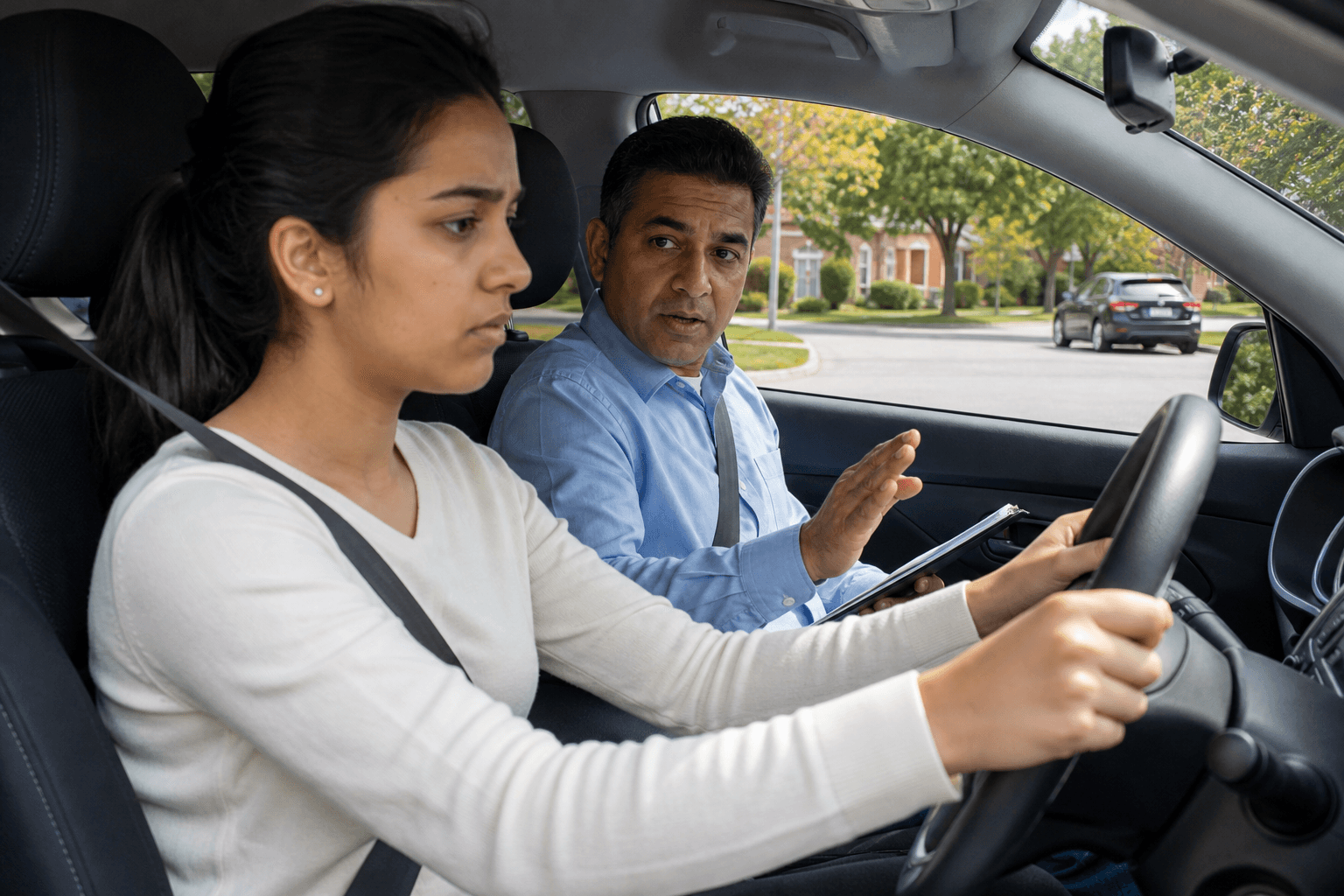
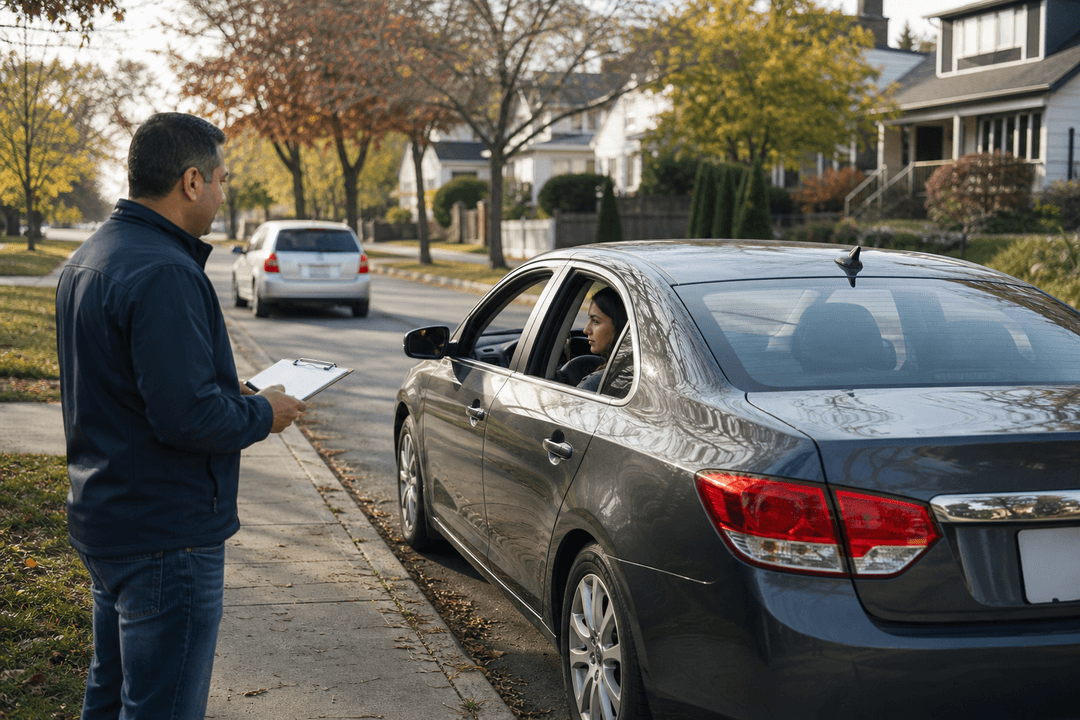
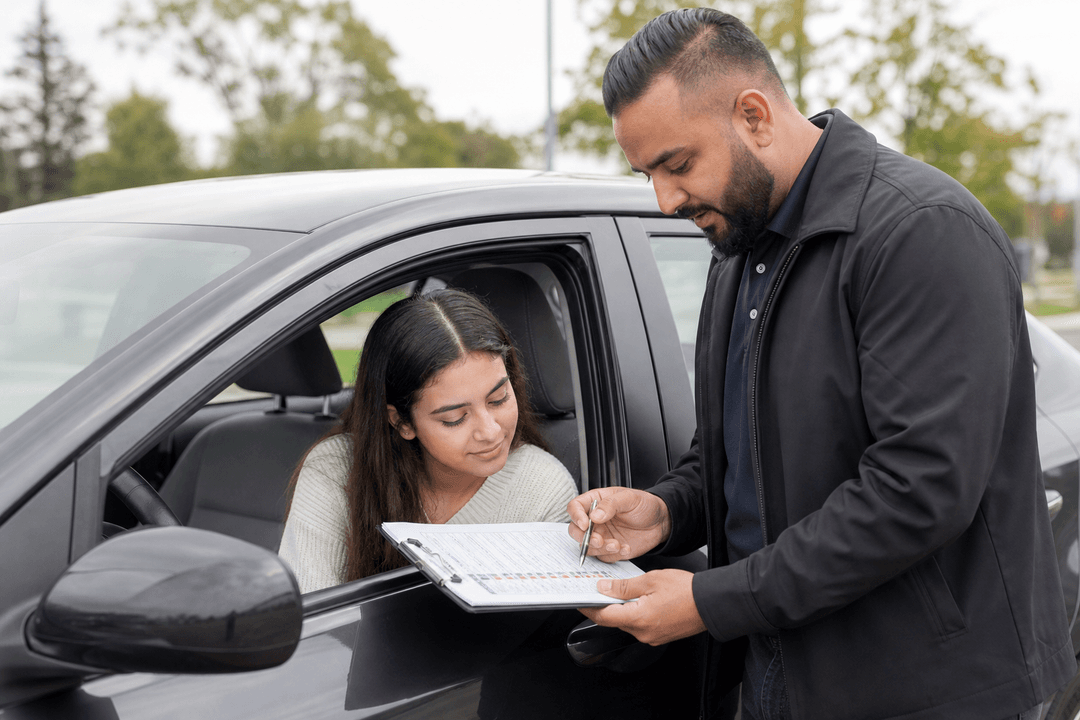
A mock G2 test should resemble an assessment without becoming a surprise lesson. The instructor should give realistic instructions, allow you to drive without continuous prompts, record recurring faults, and review the drive afterward.
Useful feedback is prioritized. It might identify incomplete blind-spot checks as the first issue to fix, followed by inconsistent stopping position and then parking adjustments. This gives you a practical order for your next sessions.
Khurana Driving School’s test-preparation course is described as including full-length mock road tests, structured feedback, commonly failed manoeuvres, pre-test vehicle and document checks, and test-day nerve management. The school also offers G2 training and individual in-car instruction. These details make a focused preparation course worth discussing if you want an assessment of your readiness, but no lesson can guarantee a pass.
Do not confuse G2 preparation with G test preparation
G2 preparation centres on basic city and residential driving skills, including the manoeuvres and traffic situations listed by Ontario. G test preparation is different because it includes full-licence abilities such as highway-focused practice, merging, speed management, and lane discipline.
If you are preparing for the G2 test, extensive highway practice does not replace work on stopping, turns, parking, one-way streets, and residential driving. Confirm that your lesson plan matches your licence stage and booked test.
How to choose G2 road test preparation lessons in Ontario
When comparing a driving school or instructor, focus on what happens during the lesson rather than relying only on a headline pass-rate claim. Ask how the instructor assesses your starting point, records feedback, and addresses weaknesses in the next session.
- Mock-test format: Ask whether the provider offers a full simulated test and what the review includes.
- Teaching approach: Nervous learners may need patient explanations and progressive practice.
- Route practice: Confirm whether lessons include realistic local road conditions.
- Vehicle arrangements: Ask who supplies the test vehicle and what is included.
- Scheduling: Confirm lesson times, notice requirements, and change procedures.
- Written terms: Get lesson length, package inclusions, pricing, cancellation terms, and additional fees in writing.
For a detailed decision checklist, use these criteria for choosing G2 test preparation lessons. No fixed number of lessons guarantees readiness. The right amount depends on your experience, consistency, anxiety level, practice time, and recurring faults.
G2 test-day checklist
Use the final days before your test to remove preventable problems. Ontario’s handbook and current government guidance should take priority if any checklist conflicts with official instructions.
- Licence and booking: Bring your current Ontario driver’s licence and keep booking information accessible.
- Vehicle condition: Check lights, signals, mirrors, horn, brakes, seatbelts, and other essential safety equipment.
- Interior readiness: Remove loose items that could obstruct your view or interfere with controls.
- Arrival plan: Allow time to reach the test centre, check in, and settle before the appointment.
- Instructions: Listen carefully and ask for clarification if necessary.
- Electronic aids: Do not rely on prohibited aids. Confirm current rules in the Official MTO Driver’s Handbook.
For additional preparation cautions and a reminder to compare advice with official requirements, review these Ontario road-test preparation red flags.
When focused lessons or packages make sense
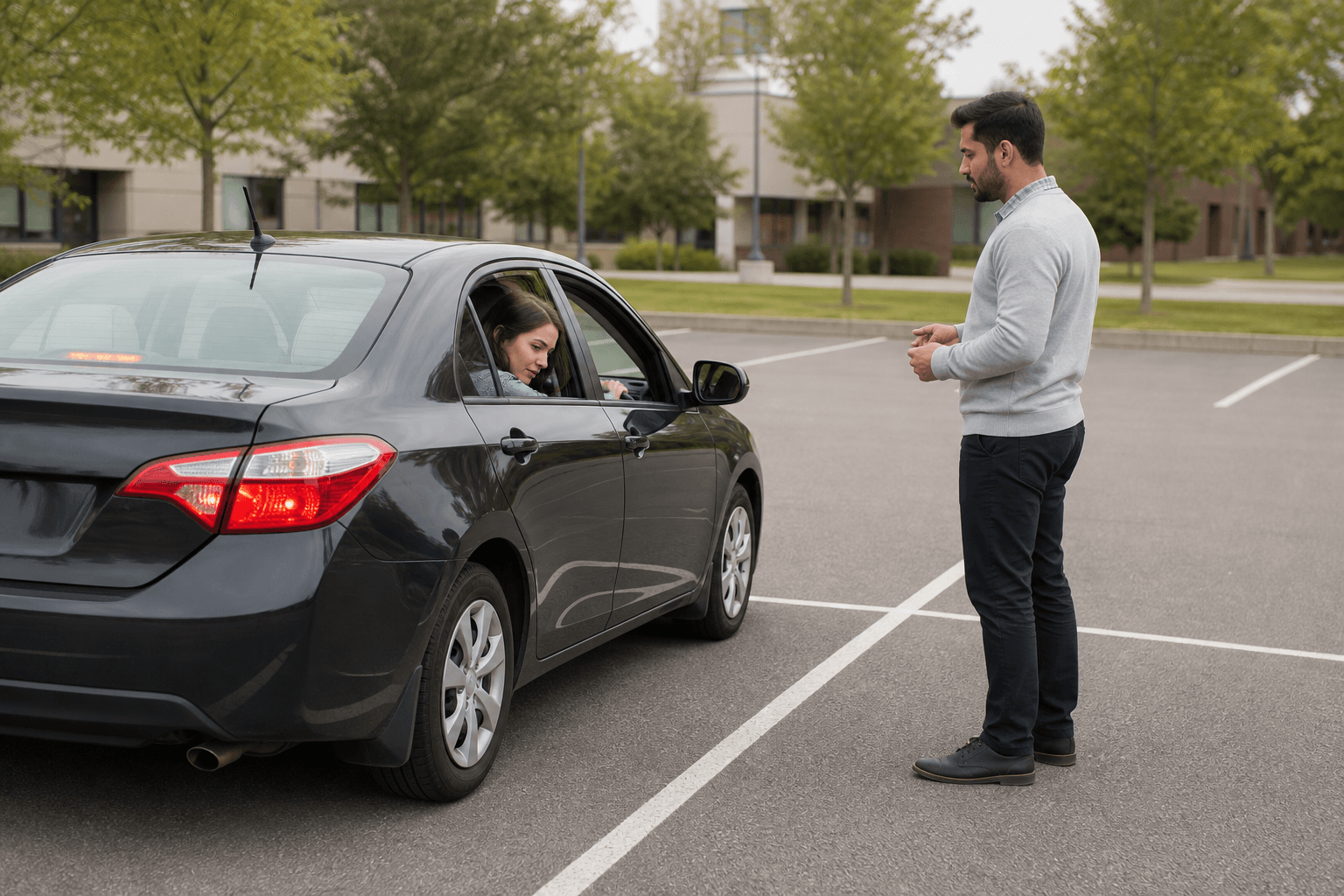
Individual lessons can suit a learner with one or two specific weaknesses, such as parallel parking or lane changes. A short pre-test session may help when everyday driving is consistent but you want a final assessment and vehicle check.
A broader lesson package may make more sense if you are beginning from scratch, have limited practice access, feel anxious in traffic, or need structured instruction across several skills. Khurana Driving School describes individual lessons, licence-focused packages, defensive-driving instruction, mock testing, and evening and weekend scheduling as available options. Pricing depends on the hours required, so confirm the exact scope and terms before paying.
Frequently asked questions about Ontario G2 preparation
What is the difference between the Ontario G2 road test and the G1 exit test?
They are two names for the same Level Two road test. Ontario uses both terms in its driver-licensing information. The test assesses basic driving skills rather than the highway-focused abilities associated with the full G test.
How many driving lessons do I need before taking the G2 road test?
There is no universal number. Use your ability to drive consistently, complete the assessed manoeuvres, respond safely to traffic, and manage a full drive without continuous prompts as the better readiness measure.
What should a mock G2 road test include?
It should include realistic instructions, substantial independent driving, notes on recurring faults, and a post-drive review that ends with a prioritized practice plan.
Can nervous drivers prepare with shorter lessons?
Shorter sessions can help when they focus on one or two skills without becoming overwhelming. Build complexity gradually and ensure the overall plan provides enough practice to drive independently.
What vehicle checks should I complete before the G2 road test?
Check the vehicle’s legal and safe operating condition, including lights, signals, mirrors, horn, brakes, and seatbelts. Remove loose items and confirm provider-specific vehicle arrangements before test day.
Can I use electronic driving aids during the Ontario G2 road test?
The Official MTO Driver’s Handbook states that certain aids, including automatic parallel-parking systems, lane monitoring, cruise control, and back cameras, may not be used. Review the current handbook and follow the examiner’s instructions.
Conclusion: practise for readiness, not just appointment day
Strong G2 road test preparation in Ontario combines official information, skill-specific practice, progressive exposure, a realistic mock test, and a final logistics check. Focus on weaknesses that repeatedly affect your control, observation, manoeuvres, or decisions, then confirm that you can complete a full drive without ongoing prompts.
If you want structured support in Mississauga, Brampton, or the GTA, Khurana Driving School offers G2 training, individual lessons, mock-test feedback, defensive-driving instruction, and evening and weekend scheduling. Ask for the lesson scope, pricing, and terms that match your preparation needs.