
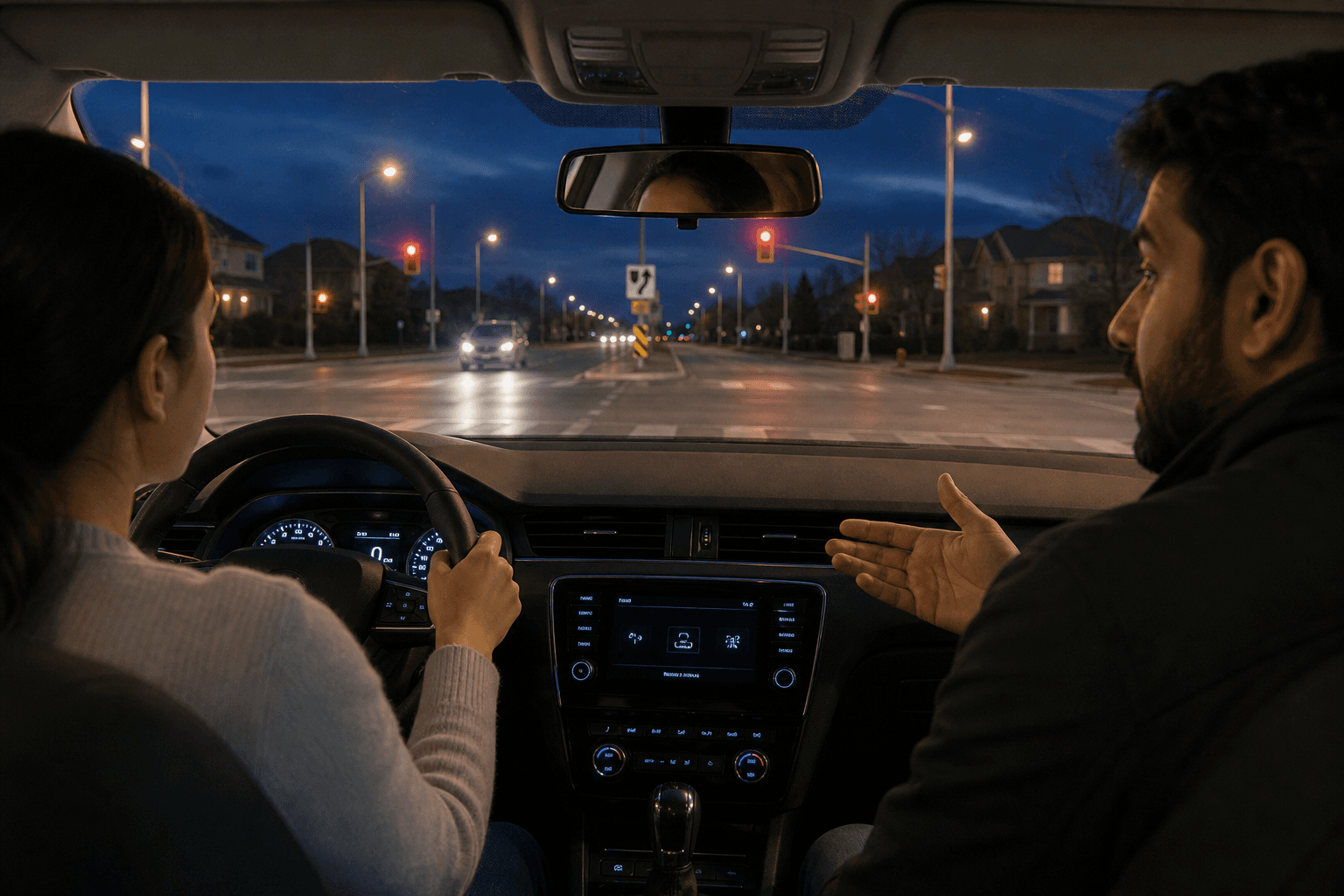
Night driving instruction can help you become more comfortable with reduced visibility, glare, changing light, and hazards that are harder to spot after sunset. However, an evening driving lesson does not automatically mean you will drive in fully dark conditions. Before booking, confirm the lesson time, expected light conditions, route, and specific skills the instructor will cover.
For learners in Mississauga, Brampton, and the GTA, the best night practice is structured around your experience and goals. A beginner may need a gradual introduction in quieter areas, while a G2 or G candidate may want to combine night practice with lane changes, highway driving, parking, and defensive decision-making.
Quick summary
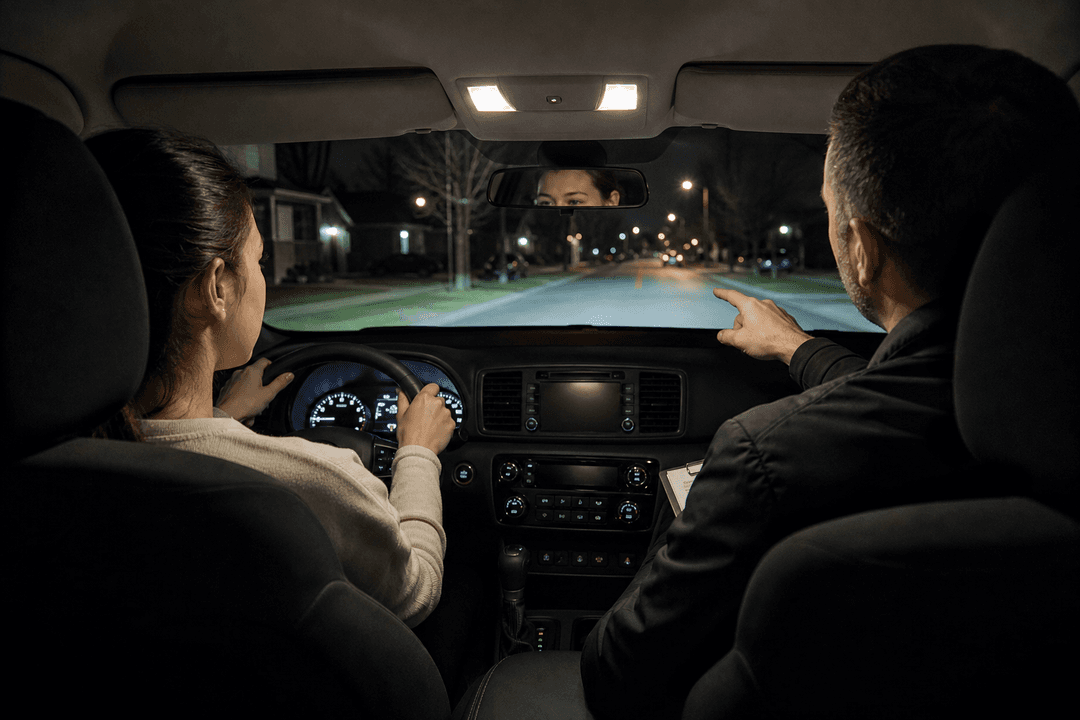
- Ask whether your evening lesson will take place before sunset, during twilight, or after dark.
- Useful night practice includes scanning, speed control, headlight awareness, safe following distance, lane positioning, and hazard anticipation.
- Ontario guidance says to slow down when visibility is reduced and avoid driving faster than the distance you can see ahead.
- Night driving can build confidence and defensive habits, but it does not replace complete G2 or G road-test preparation.
- Confirm the lesson length, one-on-one format, instructor credentials, vehicle condition, weather policy, pricing, and cancellation terms before paying.
What night driving instruction means in Ontario
“Night driving instruction” is a practical description of in-vehicle training in reduced-light conditions. It is not a separate Ontario licence class, mandatory course, or standardised programme. Depending on the provider and booking time, it may involve driving at dusk, during twilight, or after full darkness.
This distinction matters because daylight changes throughout the year. A lesson beginning in the early evening may finish in darkness during winter but remain mostly light during summer. Ask the school to describe the expected conditions rather than assuming that an evening booking includes fully dark driving.
Night instruction may be offered as part of individual lessons, road-test preparation, defensive driving training, or a broader Beginner Driver Education programme. If you are considering a government-approved BDE course, confirm exactly what its classroom, in-vehicle, and flexible instruction components include. Ontario describes approved BDE courses as including classroom instruction, in-vehicle training, and flexible instruction delivered by a licensed instructor. Read the Ontario requirements for government-approved driving schools.
Who benefits most from night-driving practice?
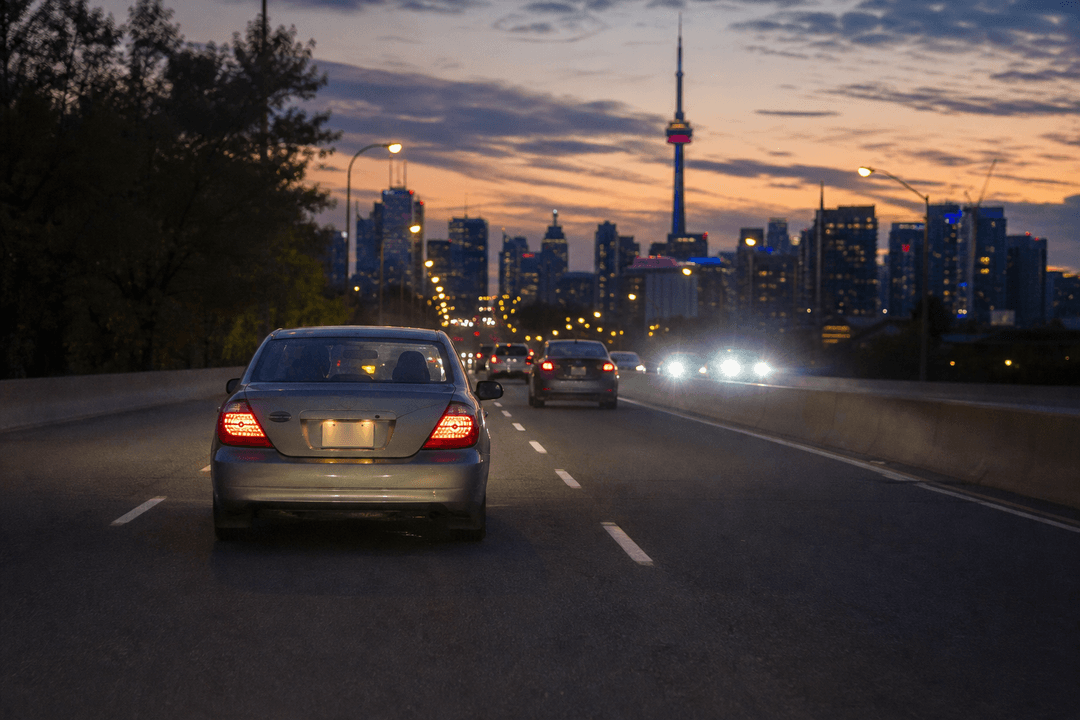
Complete beginners
Beginners can benefit from night practice, but the first session should not be an abrupt jump into busy, unfamiliar roads. Start with vehicle controls, smooth steering, braking, mirror use, and observation in a quieter area. Once those skills are becoming consistent, the instructor can gradually introduce darker roads, more traffic, intersections, and glare from other vehicles.
Nervous or low-confidence drivers
Night driving can feel difficult because headlights, reflections, shadows, and limited sight distance create more uncertainty. A patient, one-on-one lesson can help you identify what is causing the anxiety and practise one challenge at a time instead of treating the entire experience as a test.
For some learners, the most useful first step is a short evening session that builds familiarity. For others, daytime practice should come first so basic vehicle control and observation do not compete with the additional demands of darkness.
G2 candidates
G2 learners may use night practice to strengthen observation, lane positioning, controlled stops, turning, parking, and decision-making in reduced visibility. The goal should be transferable driving skill, not simply completing a route after sunset.
G candidates
Drivers preparing for the full G licence may want night experience alongside highway merging, speed management, lane discipline, and maintaining safe space around the vehicle. Khurana Driving School describes its G lessons as highway-focused, but you should still confirm whether a particular booking includes after-dark practice.
Newcomers to Ontario
Drivers who learned elsewhere may be comfortable with a vehicle but unfamiliar with Ontario traffic patterns, road markings, lighting conditions, or local expectations. Night instruction can provide a focused opportunity to discuss these differences while practising in the urban and suburban traffic found around Mississauga and Brampton.
Daytime, evening, and fully dark lessons compared
| Lesson timing | Best used for | Main benefit | What to confirm |
|---|---|---|---|
| Daytime | Beginning skills, manoeuvres, route familiarity, and general practice | Better visibility makes it easier to focus on vehicle control and road positioning | Whether the route includes residential, arterial, and higher-speed roads |
| Evening or twilight | Transitioning from daylight to lower light | Builds awareness of changing visibility, headlights, glare, and traffic conditions | Whether the lesson starts before sunset and how much time will be after dark |
| Fully dark | Night confidence, reduced-visibility practice, and hazard anticipation | Provides direct experience with limited sight distance and vehicle lighting | Exact start time, route lighting, weather policy, and instructor safety procedures |
If your schedule is the main reason for choosing an evening slot, compare how different start times affect the daylight and traffic you encounter. This guide to evening driving lessons covers practical scheduling questions for learners balancing work or school with G2 preparation.
What a useful night-driving lesson should practise
A strong lesson is more than driving around after sunset. The instructor should explain what to look for, provide timely feedback, and help you make safer decisions when visibility is limited.
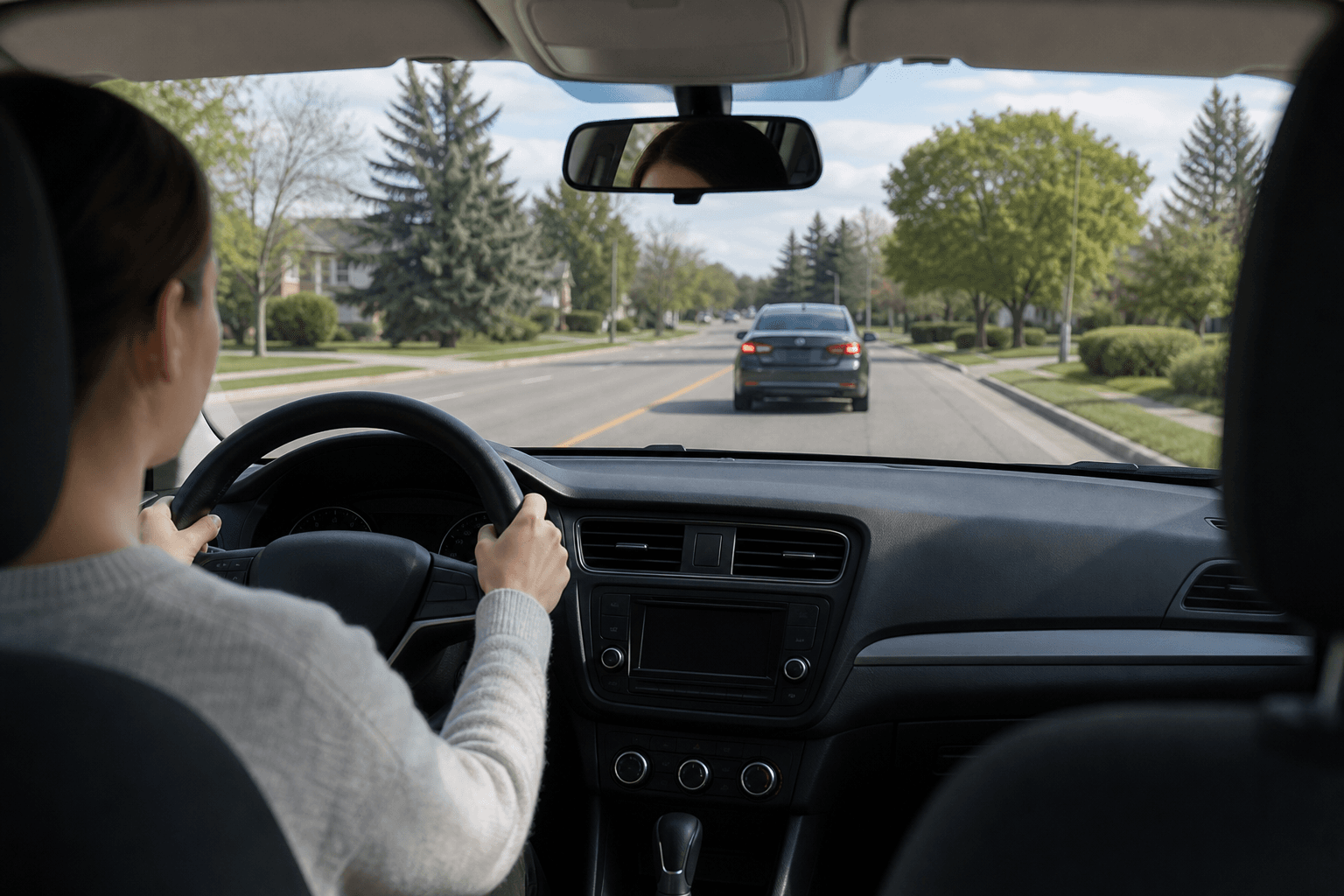
- Scanning and visual search: Look farther ahead, check intersections early, and keep scanning mirrors and side areas rather than focusing only on the illuminated road directly in front of you.
- Speed selection: Adjust speed to the distance you can see, the road surface, traffic, weather, and the time available to react.
- Headlight awareness: Understand when headlights are needed, how to use high and low beams appropriately, and how glare from approaching vehicles affects your vision.
- Following distance: Leave enough space to respond if the vehicle ahead brakes or an obstacle appears in the road.
- Lane positioning: Practise staying centred, reading lane markings, and confirming blind spots before changing lanes.
- Intersections and pedestrians: Slow down where people, cyclists, driveways, turning vehicles, or cross traffic may be difficult to see.
- Controlled braking: Practise smooth stops and learn to respond without sudden steering or braking that could reduce control.
- Hazard anticipation: Use a defensive driving approach by considering what other road users might do before they create an immediate problem.
Ask the instructor to explain the reason behind each adjustment. Understanding why you should reduce speed, increase space, or scan earlier will help you apply the skill on roads you have not practised before.
Ontario night-driving safety points to know
Ontario’s official guidance explains that drivers cannot see as far ahead at night or in rain, snow, and fog. It advises slowing down when visibility is reduced and warns against “overdriving” your headlights, which means travelling so quickly that your stopping distance is longer than the distance you can see. Review Ontario’s guidance on driving at night and in bad weather.
The Ontario Driver’s Handbook states that headlights are required from one-half hour before sunset to one-half hour after sunrise, as well as during poor-light conditions when you cannot clearly see people or vehicles at the specified distance. It also states that low beams should be used when you are less than 60 metres behind another vehicle. Check the current Ontario Driver’s Handbook for complete lighting guidance.
These rules are only the starting point for a lesson. Safe night driving also depends on choosing a reasonable speed, preserving space, keeping the windshield and lights clear, and recognising that weather can make a familiar route substantially harder to read.
Choose the right focus for your licence stage
| Your situation | Useful night-driving focus | What it should not replace |
|---|---|---|
| New learner | Gradual exposure, controls, observation, turns, stops, and confidence | Foundational daytime instruction and supervised practice |
| G2 candidate | Observation, lane changes, parking, intersections, and controlled decision-making | Complete road-test preparation across different road types and conditions |
| G candidate | Highway awareness, merging, speed, lane discipline, and maintaining safe space | Broad G preparation, including skills relevant to your assessment |
| Experienced but nervous driver | Glare management, route familiarity, hazard anticipation, and calm responses | Addressing specific weaknesses identified through feedback |
Night practice is most effective when it is part of a progressive plan. You may need daytime sessions for manoeuvres and route learning, followed by evening sessions for reduced visibility and then a broader review of recurring errors. When preparing for a G2 assessment, combine night practice with structured G2 driving test preparation, including lane changes, parking, expressway practice where appropriate, and mock-test feedback.
What to ask before booking night driving instruction
Use these questions when comparing a driving school or discussing a lesson with an instructor:
- Will the lesson take place before sunset, during twilight, or fully after dark?
- How long is the lesson, and how much of that time is active in-vehicle instruction?
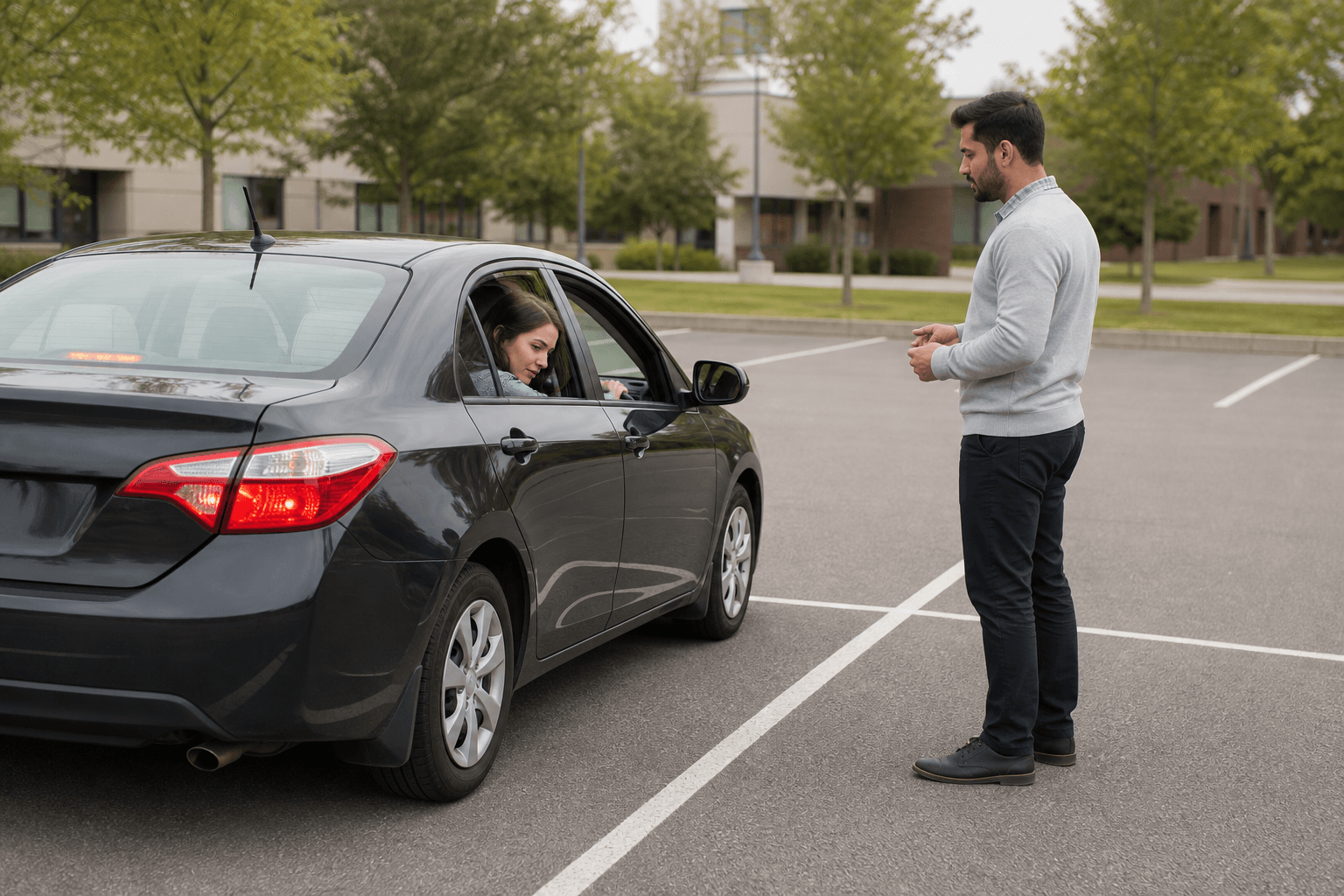
- Is the lesson one-on-one, and will the instructor provide feedback throughout?
- Is the instructor licensed or otherwise qualified to provide the type of instruction being booked?
- What vehicle will be used, and are the headlights, mirrors, windshield, tyres, and controls maintained?
- Will we practise in quiet streets first, or will the route immediately include busy roads and highways?
- How do you handle rain, snow, fog, glare, or other conditions that make visibility unsafe?
- Does the price cover a standard lesson, a longer session, pickup time, or a package of lessons?
- What are the cancellation, rescheduling, and late-arrival terms?
- How will you assess my progress and decide what to practise next?
Ask for the lesson scope and duration in writing before paying for a package. Night practice should be an agreed part of the booking, not an assumption based only on the word “evening.”
How night practice fits into G2 or G road-test preparation
Night-driving instruction can improve observation, space management, hazard anticipation, and confidence. It does not guarantee a road-test pass and should not be treated as a substitute for practising the full range of skills required for your licence stage.
A balanced plan might include daytime vehicle control and parking, evening observation and visibility practice, lane changes on appropriate roads, highway or expressway work where relevant, and a mock test under conditions that allow the instructor to assess your decisions. The right mix depends on your current experience, test timeline, and specific weaknesses.
Make night practice part of a safer learning plan
The best time for night driving instruction is when you can benefit from reduced-visibility practice and the session can be delivered safely and deliberately. Confirm whether you will drive after dark, choose a lesson focus that matches your licence stage, and treat the session as one part of broader defensive driving and road-test preparation.
Khurana Driving School is based in Mississauga and offers evening and weekend lessons, G2 and G training, and a defensive driving approach for learners in Mississauga, Brampton, and the GTA. To discuss the timing and scope of lessons, visit Khurana Driving School.