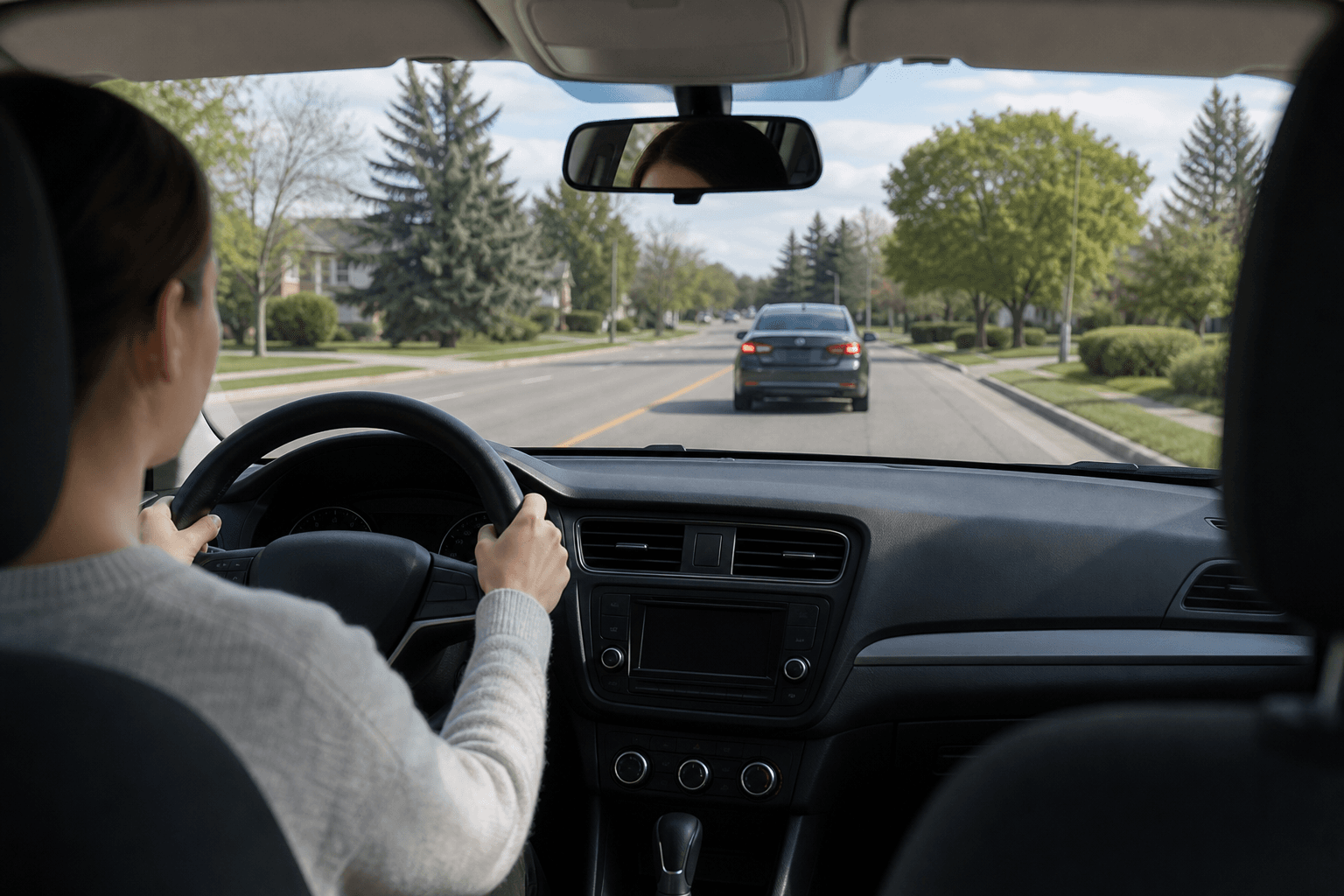

Ontario road rules are easiest to learn when you combine official requirements with practical driving habits. The Official MTO Driver’s Handbook is the starting point for rules of the road, safe driving practices, and the licensing process. Lessons and supervised practice then help you apply those rules through observation, judgement, and vehicle control.
This distinction matters. Knowing that you must signal is not the same as checking your surroundings, choosing a safe gap, positioning the vehicle correctly, and completing the manoeuvre safely. This guide explains the rules learners use most often and how to practise them for everyday driving and G2 or G road-test preparation.
Quick summary

- Use the current Official MTO Driver’s Handbook to verify Ontario’s rules and licensing requirements.
- Prioritise right-of-way, complete observation, correct signalling, lane discipline, speed control, and safe following distance.
- Signals communicate your intention, but they do not make an unsafe lane change or turn safe.
- G1 and G2 restrictions can affect who, when, and how you may drive. Confirm current details through Ontario’s official guidance.
- Practise one weak skill at a time, then use a realistic mock drive to connect rule knowledge with consistent behaviour.
How to Use Ontario Road Rules in Real Driving
A useful way to study is to separate three things: the legal rule, the safe-driving habit that supports it, and the coaching exercise that helps you remember it. Ontario’s handbook explains rules and safe practices, while an instructor can help you identify errors and practise decisions in changing traffic conditions. Ontario’s safe-driving guidance is more reliable than informal advice or assumptions from another province or country.
For a broader review of Ontario driving rules, focus on right-of-way, lane positioning, pedestrian crossings, and graduated licensing restrictions. Recheck official sources when a rule affects your eligibility, passengers, driving times, alcohol requirements, or road-test booking.
Ontario Road Rules: Rule, Action, and Safe Practice

| Situation | What the driver should do | Common learner error | Safe practice idea |
|---|---|---|---|
| Intersections and right-of-way | Approach with enough time to scan, obey signs and signals, and yield when required. | Assuming another driver will stop or proceed without checking. | Practise a consistent scan before moving and discuss uncertain situations with an instructor. |
| Turns and signals | Signal early, choose the correct position, check the path, and turn only when safe. | Signalling late, turning from the wrong position, or treating the signal as permission to go. | Repeat left and right turns on quiet roads before adding busier intersections. |
| Lane changes | Check mirrors, signal, check the blind spot, judge the gap, and move smoothly. | Moving after a mirror check without a shoulder check or adequate gap. | Use the same mirror-signal-shoulder-check sequence on every suitable practice drive. |
| Following distance | Leave enough space to respond to traffic, road conditions, and sudden braking. | Following closely because traffic is moving slowly or another vehicle is behind. | Practise looking beyond the vehicle ahead and adjusting space as conditions change. |
| Speed management | Obey the posted limit and adjust for traffic, visibility, weather, and road conditions. | Driving at a fixed speed without considering the environment. | Call out signs, traffic changes, and reasons for adjusting speed. |
| Pedestrians and cyclists | Scan actively, yield where required, and leave safe space around vulnerable road users. | Looking only for vehicles or failing to notice a crossing road user. | Include sidewalks, crossings, bike lanes, and driveways in every intersection scan. |
| Parking | Read local signs and markings, park legally, and avoid blocking travelled portions or access points. | Relying on a familiar habit instead of checking the location. | Review signs before stopping and practise positioning in several legal locations. |
| Freeway merging | Scan continuously, check mirrors and blind spots, choose a safe gap, and maintain suitable space. | Merging too slowly, changing lanes abruptly, or focusing only on the vehicle ahead. | Build from low-traffic practice to more complex conditions with qualified supervision. |
Right-of-Way, Intersections, and Pedestrian Crossings
Right-of-way is not a reason to stop observing. At an intersection, approach under control, read signs and signals, scan for cross traffic, and look for pedestrians and cyclists before proceeding. If another road user’s action is uncertain, slow down and create time for a safer decision rather than moving on an assumption.
Pedestrian and cyclist awareness must be part of every intersection routine. Ontario requires drivers to share the road with pedestrians, bicycles, motorcycles, large trucks, buses, and other road users. The handbook’s guidance on sharing the road is useful when building a wider scan.
A practical drill is to name what you see before moving: left, ahead, right, crossing areas, and any vehicle or person that could enter your path. The aim is not to speak during a road test, but to make deliberate observation automatic.
Turns, Signals, Lane Changes, and Blind Spots
For turns, positioning and signalling work together. Ontario’s handbook explains that right turns generally begin and end close to the right side of the road unless signs or markings indicate otherwise. Left turns require appropriate positioning near the centre line or median, an early signal, and confirmation that the turn can be completed safely. Review the official turning and signalling guidance for the current rule.
For a lane change, use a repeatable sequence: check mirrors, signal, check the blind spot, reassess the gap, then move smoothly when safe. A signal communicates your intention, but it does not give you priority or remove your responsibility to check. On higher-speed roads, scanning and space management become especially important. Lane-change practice can help connect these steps with road-test preparation.
Speed, Following Distance, and Sharing the Road
Safe speed is not simply the number on a sign. Consider congestion, visibility, weather, road surface, curves, construction, and the behaviour of other road users. Maintain a following distance that gives you time to see hazards and respond smoothly. The right amount of space changes with conditions, so avoid treating one fixed distance as a universal answer.
Freeway driving requires continuous scanning ahead, to the sides, and behind. Ontario’s handbook emphasises mirror and blind-spot checks before lane changes and safe following distances. These habits are relevant to both daily driving and freeway driving in Ontario.
Large trucks may block your view or need more room to manoeuvre. Motorcycles and bicycles can be less visible, while pedestrians may enter a crossing or roadway unexpectedly. Slow down when appropriate, keep scanning, and avoid passing or changing lanes based on a quick glance alone.
Parking and Basic Vehicle Readiness
Parking rules can change from one location to another, so always read signs and markings before stopping. Ontario’s handbook advises drivers not to park on the travelled portion of a road, block a driveway or private road, or disregard location-specific restrictions. Use the province’s guidance on parking along roadways when reviewing a particular situation.
Before a lesson or test, confirm that the vehicle is legally usable and maintained. Ontario states that motor vehicles must be registered, insured, and maintained to meet basic safety standards. A pre-drive check should also include making sure you can see clearly and operate the vehicle’s controls without distraction.
G1 and G2 Restrictions: Verify the Current Requirements
Ontario’s graduated licensing system allows new drivers to build experience in stages, but each licence level has requirements and restrictions. The exact rules can affect passengers, supervision, driving times, alcohol, test eligibility, and other details. Do not rely on a friend’s memory or assume that rules from another jurisdiction apply in Ontario.
Use current provincial information about Ontario licensing and government-approved driving schools, together with the Official MTO Driver’s Handbook, to verify the requirements that apply to you. A driving school can explain how restrictions affect lesson planning, but its advice should not replace current government information.
Newcomers should make this check before booking a lesson or road test. Previous driving experience may be valuable, but Ontario road signs, right-of-way practices, licensing conditions, and test expectations still need to be understood in the Ontario context.
How Road Rules Appear in G2 and G Test Preparation
Road-test preparation is not just memorising manoeuvres. It is demonstrating that you can apply rules while controlling the vehicle, observing traffic, responding to signs, and making safe decisions. Depending on the test level and current official requirements, practice commonly focuses on controlled turns and stops, lane changes, observation, parking, residential driving, and highway-related skills.
Use coaching checklists as practice tools, not as the official scoring rubric. Compare your preparation with current Ontario guidance before the appointment. A useful mock drive should reveal recurring issues such as late shoulder checks, inconsistent signalling, poor lane positioning, rushed intersections, or unsafe gap selection. Then schedule practice around those weaknesses rather than repeating skills you already perform consistently.
When planning a move or commute, driving knowledge can sit alongside broader decisions about where you live and how you travel. For readers comparing Ontario housing and local travel considerations, this Ontario home and neighbourhood guide provides related context, while driving rules should still come from official provincial sources.
Ontario Road Rules Study and Practice Checklist
- Start with the handbook. Read the sections covering rules of the road, safe driving, changing directions, sharing the road, freeway driving, parking, and licensing.
- Record uncertainty. Write down rules you cannot explain in your own words, especially right-of-way, restrictions, signs, and lane positioning.
- Choose one practical skill. Work on turns, observation, lane changes, speed control, parking, or merging instead of trying to correct everything at once.
- Practise progressively. Begin in a suitable low-traffic setting, then add complexity when the basic routine is reliable.
- Review feedback. After each drive, identify one strength, one recurring error, and one action for the next session.
- Vary conditions responsibly. Practise different roads and traffic levels when safe and appropriate.
- Verify current requirements. Recheck licence restrictions, test eligibility, documents, vehicle requirements, and booking details through Ontario’s current sources.
- Complete a mock drive. Treat it as a readiness check, then fix repeated issues before attending the road test.
When Defensive-Driving Instruction Can Help
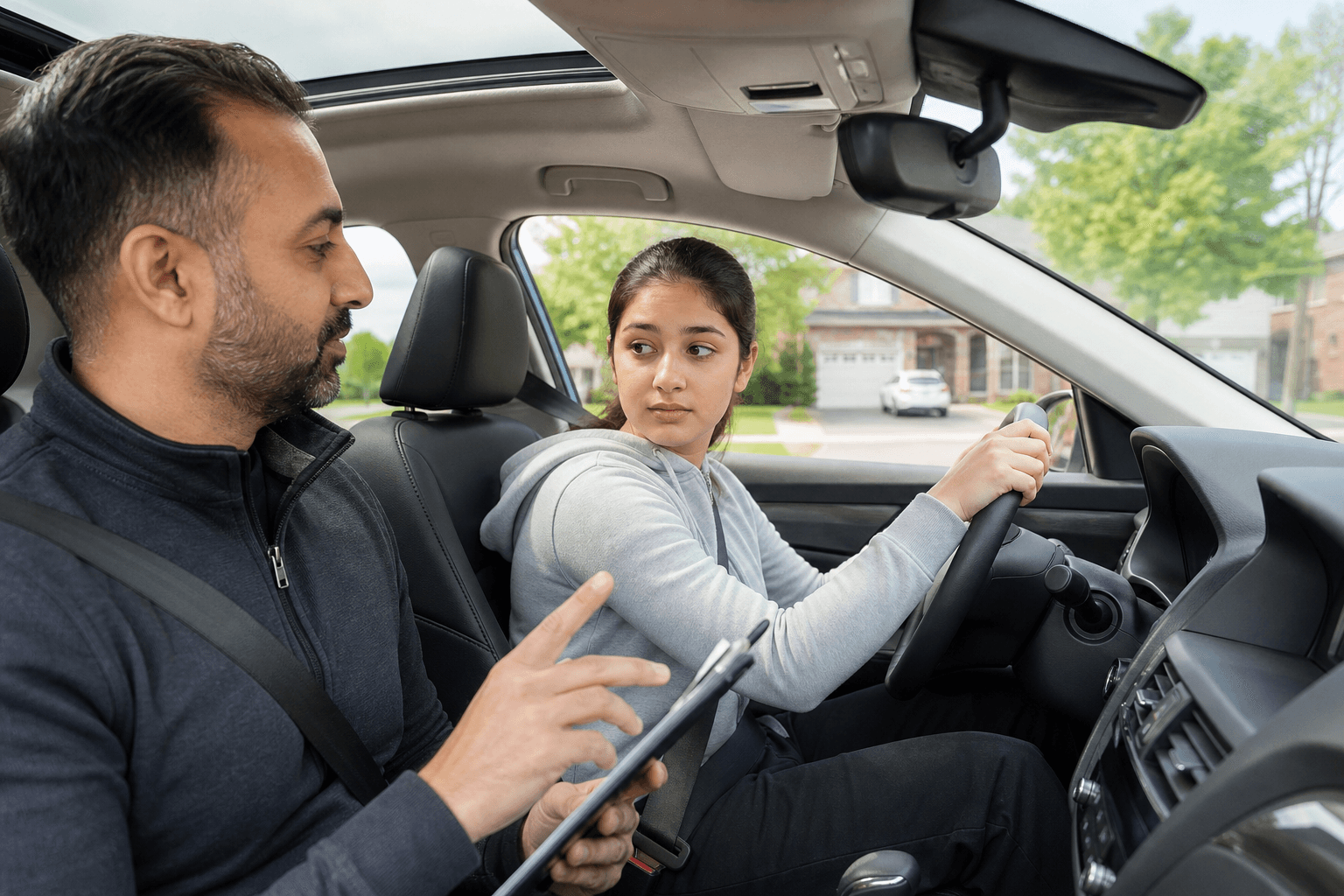
Structured instruction can be useful if you are learning from the beginning, returning to driving, adapting to Ontario rules, feeling nervous, or repeating observation and lane-management errors. The goal is not simply to collect tips. It is to build calm, repeatable habits that support safer decisions beyond test day.
Khurana Driving School describes its training as a defensive-driving approach focused on vehicle control, judgement, safety, and responsible driving. Its verified services include G2 and G road-test training, bundled in-car lesson hours, test preparation, guidance on booking a road test, and evening and weekend lessons. Ask any provider to explain lesson length, pricing, cancellation terms, practice goals, and how feedback will be measured before you book.
Frequently Asked Questions
What is the best official source for Ontario road rules?
The Official MTO Driver’s Handbook is the primary study reference for Ontario rules of the road, safe driving practices, and the licensing process. Use current Ontario government pages to confirm requirements that may change, including licence restrictions and road-test information.
Do driving instructor tips replace Ontario’s official road-test requirements?
No. Instructor drills and checklists are practical coaching advice. They can help you build skills, but the current Ontario handbook and government guidance remain the authority for official requirements and test information.
How do Ontario road rules relate to the G2 and G road tests?
The rules become observable behaviour. Examiners need to see safe control, observation, signalling, lane discipline, turning, stopping, parking, and appropriate decision-making. Preparation should combine handbook study with supervised practice and feedback.
Where should newcomers verify Ontario licence restrictions?
Check current Ontario government licensing pages and the Official MTO Driver’s Handbook. Do not assume that a licence, passenger rule, driving condition, or road-test process from another country or province applies in Ontario.
Conclusion: Learn the Rule, Then Practise the Decision
Ontario road rules become useful when they guide real decisions. Start with the Official MTO Driver’s Handbook, verify restrictions and test requirements through current provincial sources, and focus practice on observation, judgement, positioning, signalling, speed, space, and control.
If you want structured support, choose lessons that explain the reason behind each action and give specific feedback on recurring mistakes. Khurana Driving School provides defensive-driving instruction, G2 and G preparation, test-preparation support, and evening and weekend lesson options for learners in Mississauga, Brampton, and the GTA.