
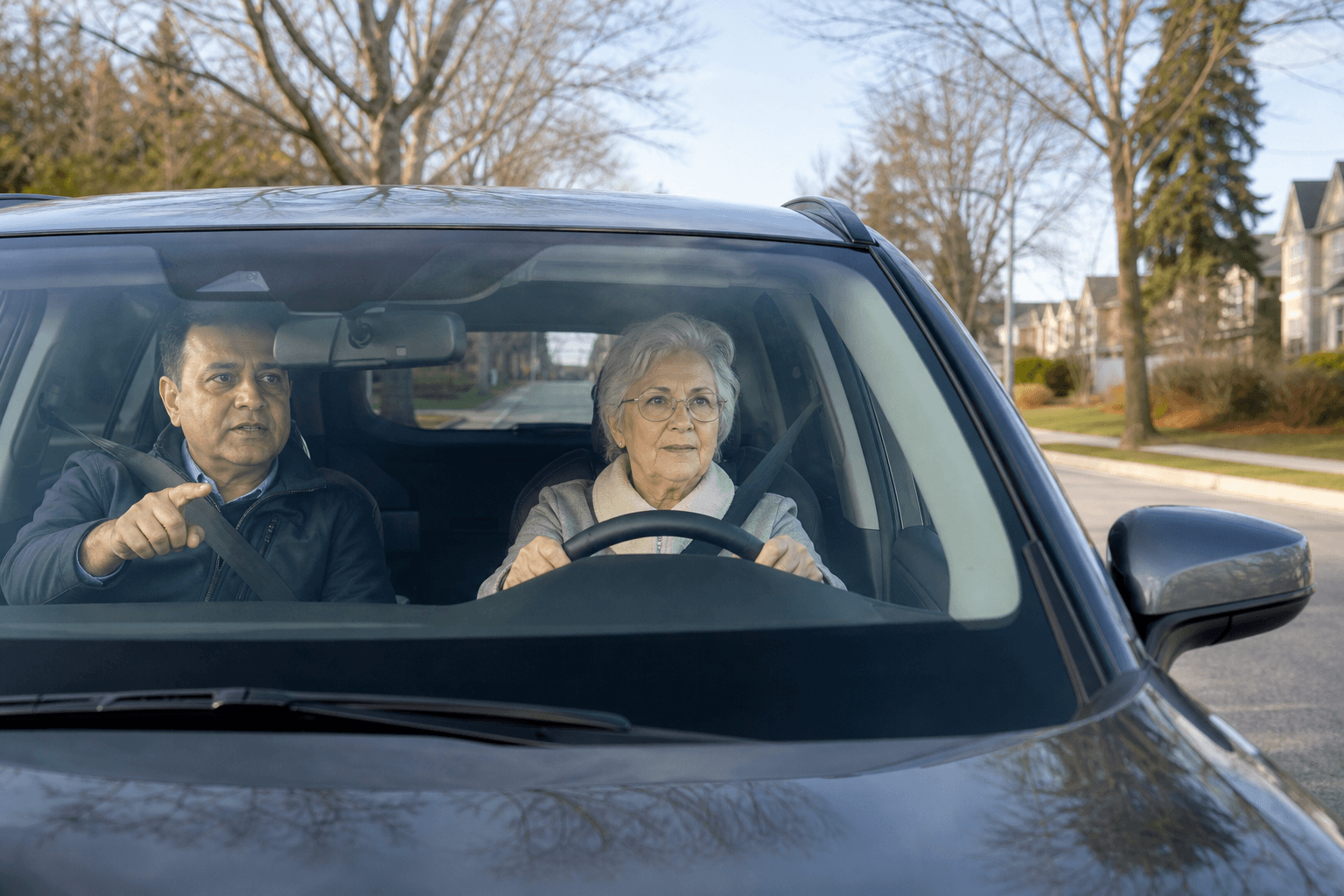
In Ontario, there is no universal special road test at age 70 or 75. At age 80, drivers renew every two years through vision testing, a driver-record review, education and screening assignments, while further testing or assessment may be required in some circumstances. Private refresher instruction is different from an official medical or licensing assessment. Related reading: CZ coach bus road test guide for Toronto drivers and common mistakes.
The right next step depends on why you are concerned. You may need renewal information, a formal functional driving assessment, vision or medical care, a regular road test, or patient in-car practice after time away from driving.
The services people often mean by “senior driver assessment”
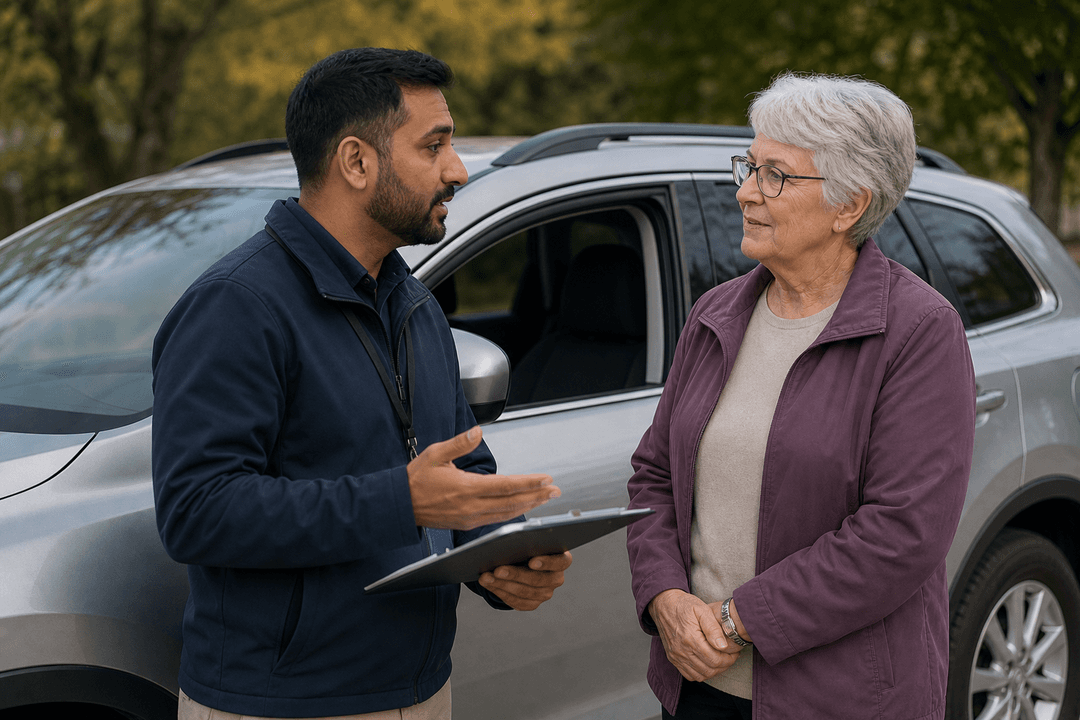
Before booking, identify whether you need an official licensing decision, a health-related evaluation or instructional feedback about driving skills.
| Service | Who conducts it | What it determines | What it does not replace |
|---|---|---|---|
| Age-80 renewal screening | Ontario’s licence-renewal system and approved providers | Whether required renewal steps are complete and whether further review is needed | Private lessons or a full medical diagnosis |
| Functional driving assessment | An occupational therapist and qualified driving instructor | How a medical or functional concern affects driving | A routine refresher lesson |
| Medical review | A healthcare professional and Ontario’s medical-review process | Whether a reported condition requires further review | A driving instructor’s opinion about medical fitness |
| Vision test or review | An authorized tester, optometrist or ophthalmologist | Whether vision meets the applicable requirement | Assessment of traffic decisions or vehicle control |
| Regular road test | An Ontario road-test examiner | Whether you meet the standard for the licence test | A medical examination or learning plan |
| Private refresher lesson | A driving instructor | Which skills need practice, such as observation, parking or merging | Medical diagnosis, licence decisions or official referrals |
Ontario describes a functional assessment, also called a driving evaluation, as a medical assessment and on-road evaluation involving an occupational therapist and qualified driving instructor. Review Ontario’s medical-review guidance before treating a private lesson as an official evaluation.
Ontario age rules: what happens at 70, 75 and 80
Age 70 does not automatically require every Ontario driver to take a road test, medical assessment or special senior test. The same is true at age 75. A driver may need review at any age if a medical condition, functional impairment, vision issue or other circumstance leads to an official referral.
What do drivers have to do at 70?
There is no universal Ontario rule requiring every driver to complete a special assessment solely because they turn 70. Follow the renewal instructions attached to your licence and respond to any specific request from the Ministry or another authorized body.
What do drivers have to do at 75?
Turning 75 does not by itself create a universal road-test requirement in Ontario. If your driving has changed or you are worried about a specific skill, arrange the appropriate professional or instructional next step.
What happens at age 80?
Drivers aged 80 and older renew their licences every two years. Ontario’s senior-driver information describes a process involving a vision test, driver-record review, a group education session and two in-class screening assignments. A road test or functional assessment may also be required. Review Ontario’s senior-driver information for current details.
The Official MTO Driver’s Handbook also states that drivers aged 80 or older renew every two years and may need a road test, medical follow-up or additional vision information. Check the handbook’s licence-renewal guidance before acting on older information.
What happens during a formal functional driving assessment
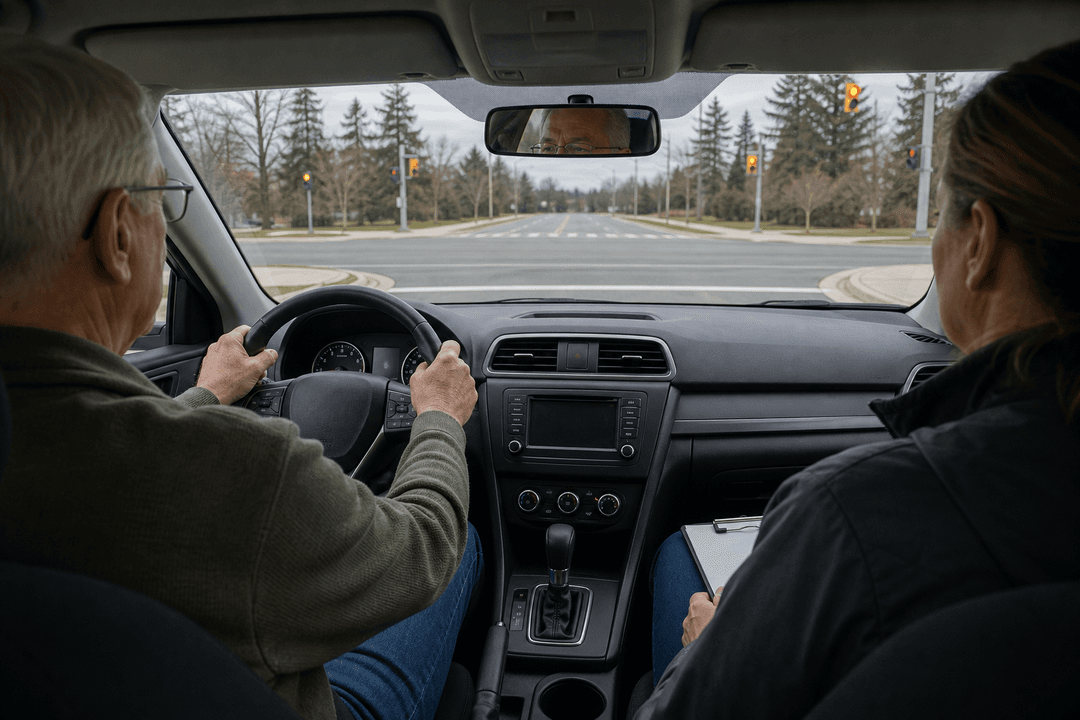
A formal functional driving assessment is not simply a longer driving lesson. It normally combines an in-clinic occupational-therapy assessment with an on-road evaluation involving an occupational therapist and qualified driving instructor.
Before the assessment
Bring your current licence, appointment information and any referral or renewal documents. Use the glasses, hearing devices or other prescribed aids you normally rely on for driving.
Ask whether you will use your own vehicle, what condition is required, how long the appointment takes, what the fee includes and whether written feedback is provided. Formal functional assessments are not funded by OHIP or the Ministry of Transportation, so confirm payment responsibility before booking. See Ontario’s formal medical-review information.
During the on-road portion
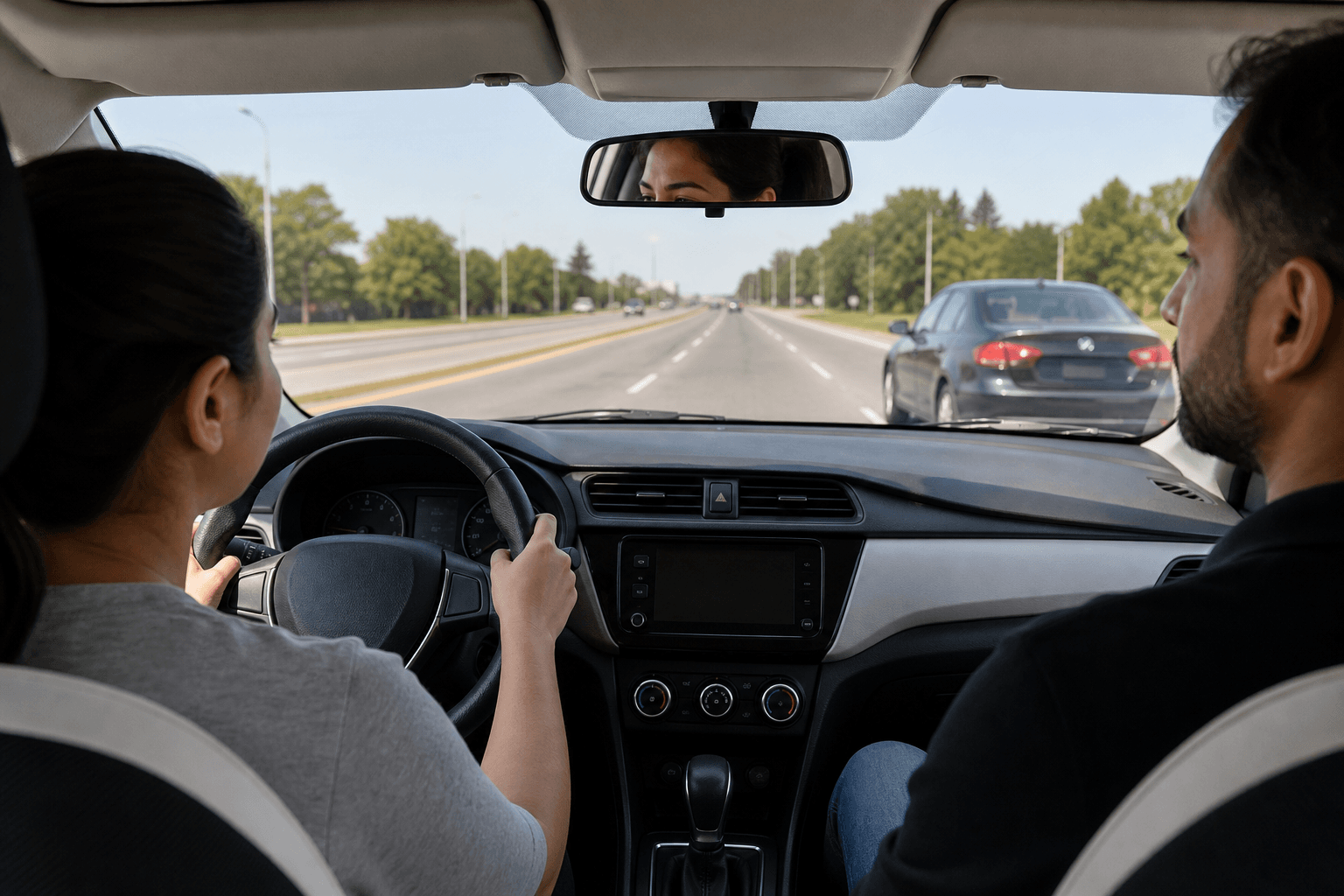
The evaluator may observe how you scan the road, interpret signs and signals, position the vehicle, control speed and respond to hazards. Depending on the route, this can include intersections, turns, lane changes, merging, parking, backing, following distance and interactions with other road users.
The focus is not memorizing a test route. It is recognizing information, making a safe decision and carrying it out with suitable control. A single hesitation is different from a repeated pattern of missed observations, late decisions or unsafe positioning.
After the assessment
Follow-up depends on the referral and findings. It may include continued driving, recommendations to adapt driving, further medical or vision information, additional testing or skill development. The evaluator or referring authority should explain what applies to your case.
Which next step fits the situation?
Start with the source of the concern, not the name of a service.
- Renewal instruction: Follow the official instructions. A private lesson cannot replace required screening or testing.
- Medical or functional referral: Ask the referring authority what assessment is required.
- Vision, medication, mobility or health concern: Speak with the appropriate healthcare professional and follow official referral instructions.
- Time away from driving: Consider a private refresher lesson or refresher driving assessment to identify the right practice level.
- One specific skill: Request focused practice for observation, positioning, parking, intersections, merging or speed control.
- Family concern: Begin with specific observations and a neutral conversation about safe mobility.
What private refresher driving practice can and cannot do
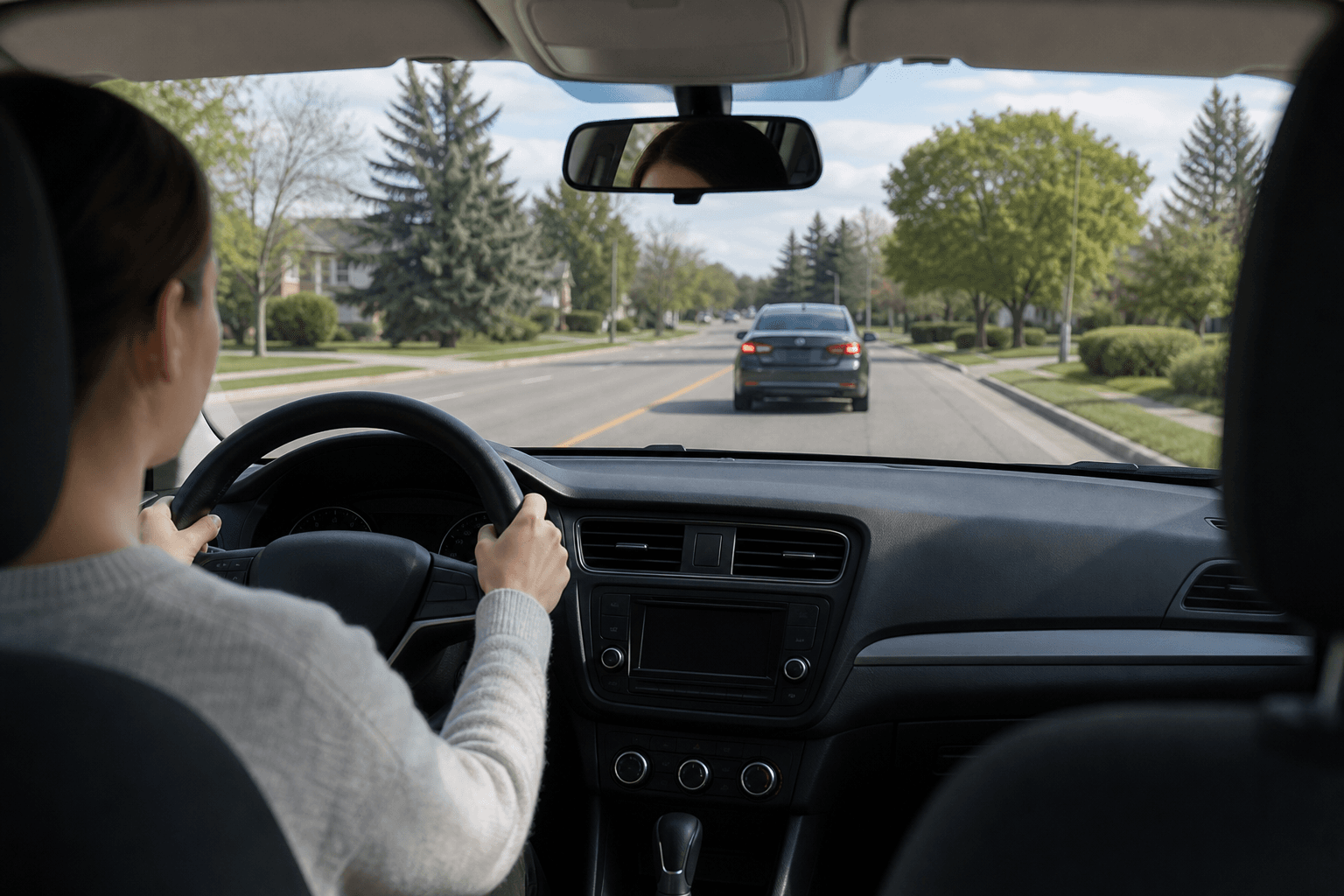
Individualized coaching can rebuild practical skills in a calm, structured setting. An instructor may work on observation, lane positioning, intersections, parking, merging, speed control, following distance and hazard response.
For example, a driver who has not driven since passing a previous licence level may have comfortable steering and braking but struggle with lane changes. The most useful plan would prioritize mirror and shoulder-check routines, positioning and gap decisions instead of automatically starting a broad beginner package.
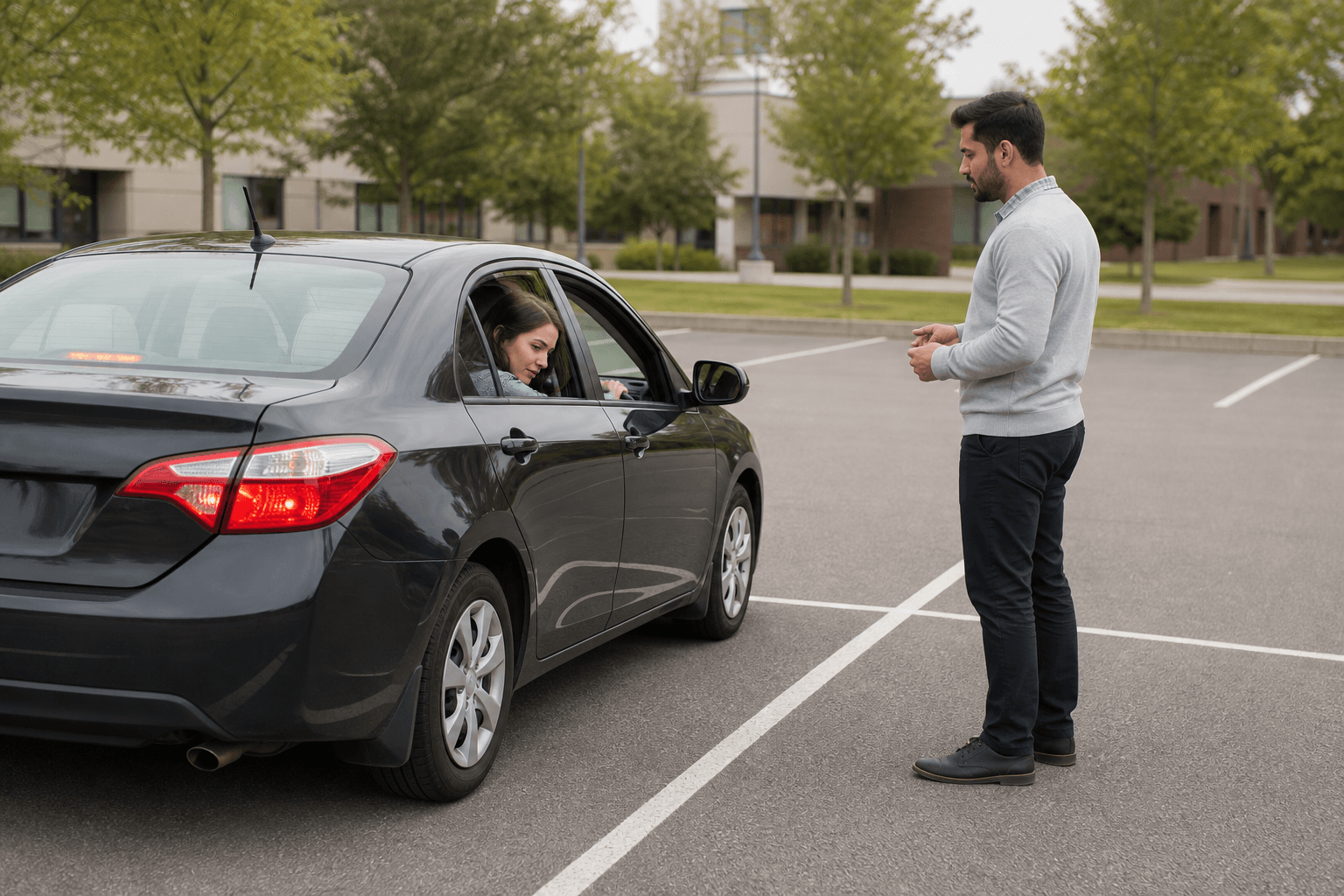
This is where targeted assessment can match practice to the actual gap. An instructor can comment on visible driving behaviours, but cannot determine medical fitness, conduct an occupational-therapy evaluation or decide licence status.
How to prepare for the next step
- Bring your current licence, appointment details and referral or renewal letter.
- Use the glasses, hearing devices or other equipment you normally need.
- Write down specific concerns, such as missed signs, difficulty judging gaps or uncertainty during lane changes.
- Become familiar with the vehicle’s mirrors, signals, lights, wipers, defroster and parking brake.
- Separate health questions from skill questions. Ask a healthcare professional about symptoms or medication effects, and an instructor about technique.
- Allow enough time and ask how long the appointment or lesson will last.
- Confirm whether feedback is verbal, written or provided as a practice plan.
Discuss medication effects and health questions with your prescribing or treating healthcare professional.
How families can raise concerns respectfully
Discuss a specific observation and a shared goal, not a label. Say, “I noticed the last two lane changes were made without a visible shoulder check,” instead of, “You should not be driving.”
- Choose a calm moment.
- Describe what you saw.
- Ask how driving feels, including concerns about glare, fatigue, unfamiliar roads or traffic.
- Offer choices such as official guidance, a healthcare appointment, formal assessment if referred or private refresher practice.
- Agree on one next step and when to revisit the conversation.
Encourage prompt healthcare or official guidance after repeated near-misses, sudden changes in ability, confusion, fainting, significant vision changes or concerns about a medical condition. Family observations do not establish a diagnosis or determine licence status.
Questions to ask before booking
- Is this a formal functional assessment, road test, renewal service or instructional coaching?
- Who conducts it, and what is their role?
- What driving skills or clinical factors are assessed?
- Will I receive written feedback or a follow-up plan?
- How long is it, and what is included in the price?
- Who provides the vehicle, and what condition or insurance requirements apply?
- Can the session accommodate mobility, hearing, vision, language or anxiety needs?
- What happens if a concern is identified?
- Is this a government-approved course or private instruction?
Ontario notes that not every driving school offers a government-approved course. If that is your goal, verify the school’s status separately. Check Ontario’s approved-school information.
Frequently asked questions
What is a driving record assessment in British Columbia, and does it apply in Ontario?
The phrase may describe a British Columbia process or terminology. It does not define Ontario’s renewal or medical-review system. Ontario readers should follow Ontario licensing instructions and ask the referring authority which assessment applies.
Does every older driver in Ontario need a formal functional assessment?
No. A formal functional assessment is generally connected with a medical, functional or vision-related referral. Age-80 renewal screening and private refresher coaching are separate processes.
What happens after a functional-assessment referral?
Follow the referral instructions and complete the required clinical and on-road components. Further action depends on the findings and reason for referral.
How much does a senior driver assessment cost?
There is no single price because the phrase may mean a private lesson, instructional assessment or formal functional assessment. Ask for the complete fee, duration, vehicle arrangements and reporting details before booking.
How do I book an assessment or refresher lesson?
Explain your licence stage, time away from driving, specific concerns and whether you have an official referral. Confirm that the provider offers instructional coaching if that is what you need.
Choose a practical next step in Mississauga, Brampton or the GTA
If you need official renewal or medical guidance, begin with Ontario’s instructions or the professional named in your referral. If you need to rebuild confidence or practise specific skills, Khurana Driving School offers patient, defensive-driving-focused instruction across Mississauga, Brampton and the GTA. Ask about individual driving lessons and targeted practice before booking.