
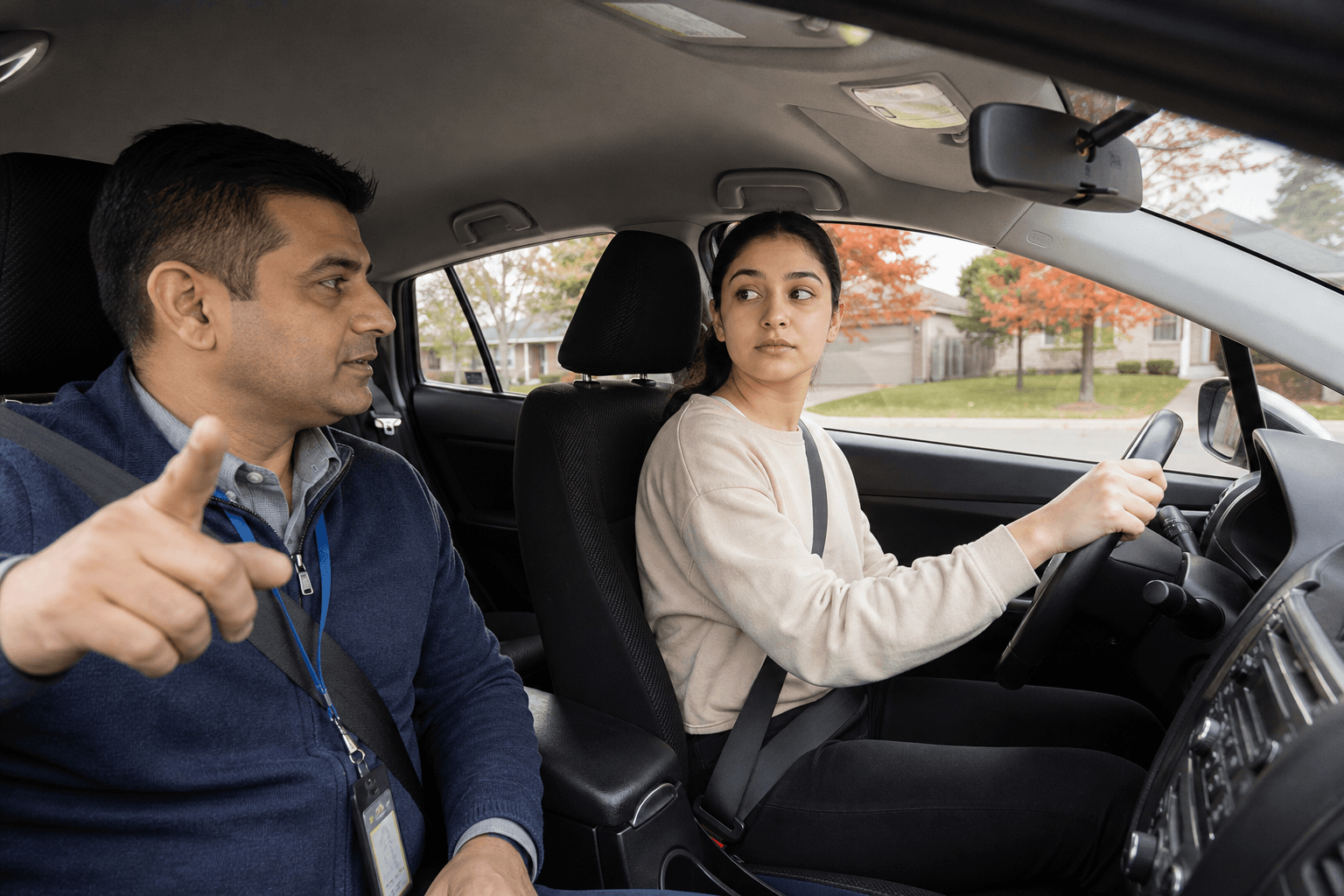
Defensive driving lessons help new drivers do more than control a vehicle. They develop the ability to notice hazards early, maintain space, communicate predictably and make safer decisions around other road users. In Ontario, these skills are commonly described through visibility, space and communication.
The main decision is whether you need focused defensive-driving instruction, general private lessons, an approved Beginner Driver Education program, or a combination. Defensive driving can strengthen your broader training plan, but it should not automatically be treated as a replacement for an Ontario-approved BDE program.
Quick summary
- Defensive driving centres on visibility, space and communication, not simply passing a road test.
- Good beginner training should progress from basic vehicle control to traffic judgement, lane changes and highway driving at a manageable pace.
- Ontario-approved BDE programs have defined classroom, in-vehicle and flexible-instruction components, so confirm exactly what a provider offers.
- Choose individual lessons or a package based on your licence stage, experience, risk areas, confidence, schedule and test goal.
- Before paying, confirm lesson duration, active coaching time, vehicle arrangements, instructor qualifications, inclusions, cancellation terms and total price.
What defensive driving means for a new driver
Ontario’s Ministry of Transportation describes defensive or strategic driving as identifying dangerous situations before they happen and responding effectively. Its framework is built around three ideas: visibility, space and communication. Read Ontario’s explanation of defensive driving for the official framework.
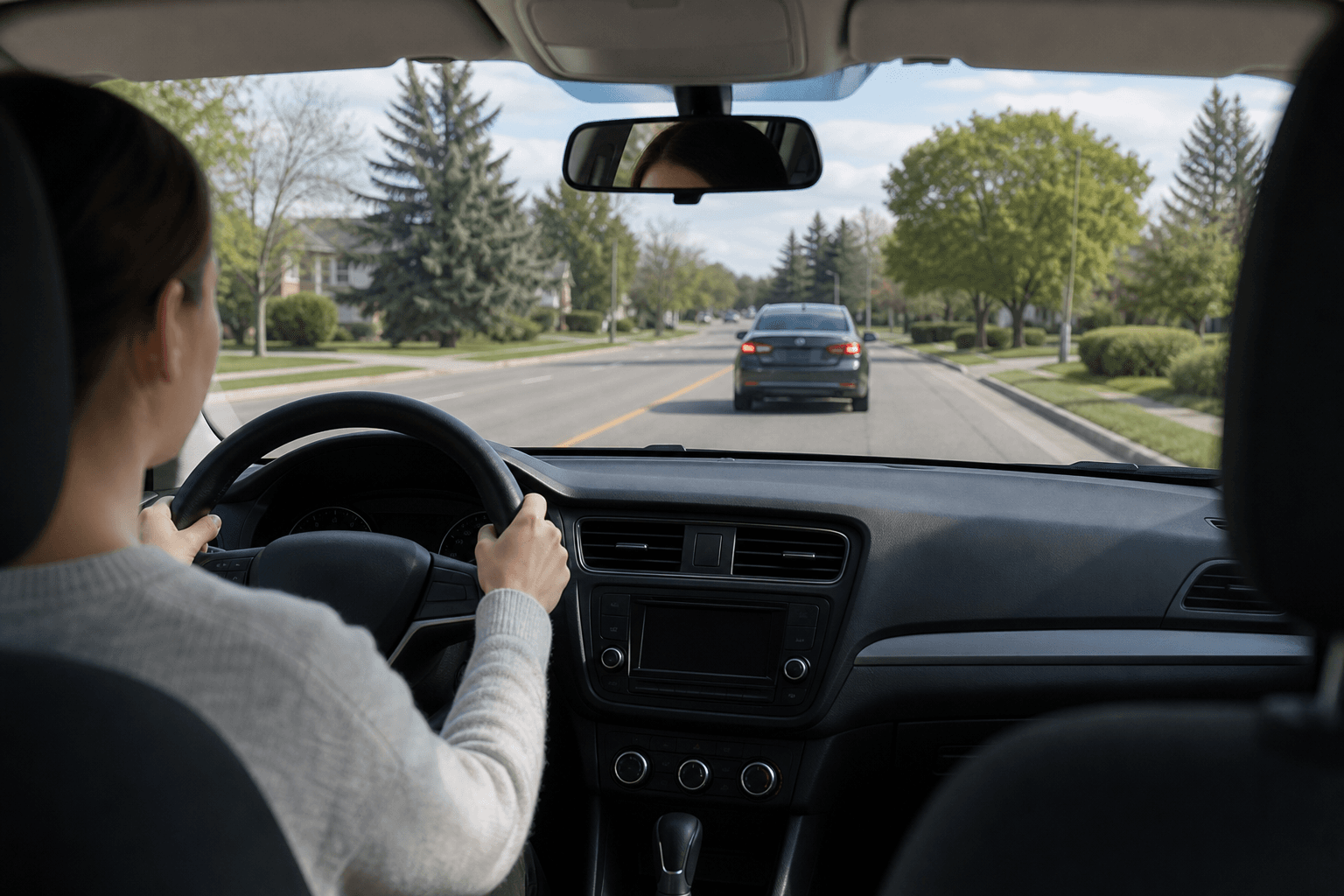
For a beginner, visibility means actively scanning rather than looking only at the road immediately ahead. This includes checking mirrors, noticing pedestrians and cyclists, looking through intersections, recognizing brake lights and using shoulder checks before changing direction or position.
Space means leaving enough time and room to respond. A learner may practise following at a safe distance, adjusting speed before a developing hazard, choosing a suitable lane position and avoiding situations where there is no safe escape option.
Communication makes your intentions easier for others to understand. Signals, brake-light awareness, predictable speed and steady lane positioning all help reduce confusion. Khurana Driving School presents its defensive-driving instruction as practical training in safer skills and judgement around other road users.
The core skills defensive-driving lessons should develop
Defensive driving training should translate broad safety principles into repeatable habits. Ask the instructor to explain what you are practising, why it matters and how you will know when the skill is becoming consistent.
Visibility and hazard awareness
- Scan intersections before entering them, including for vehicles that may not yield.
- Use mirrors regularly and complete appropriate shoulder checks before lane changes or turns.
- Look beyond the vehicle directly ahead to anticipate slowing traffic, pedestrians and obstructions.
- Recognize how parked vehicles, buildings, weather and darkness can reduce visibility.
Space and speed management
- Maintain a reasonable following distance and increase it when conditions require more time.
- Adjust speed before curves, intersections, congestion, poor visibility or changing road conditions.
- Keep a stable lane position instead of drifting toward parked vehicles, medians or adjacent traffic.
- Plan ahead so braking is controlled rather than sudden whenever possible.
Communication and decision-making
- Signal early enough to give other road users useful information.
- Make turns, stops and lane changes smoothly and predictably.
- Choose not to proceed when visibility, space or traffic conditions make a manoeuvre unsafe.
- Understand that being legally permitted to proceed does not always make proceeding the safest choice.
A progressive learning path for new drivers
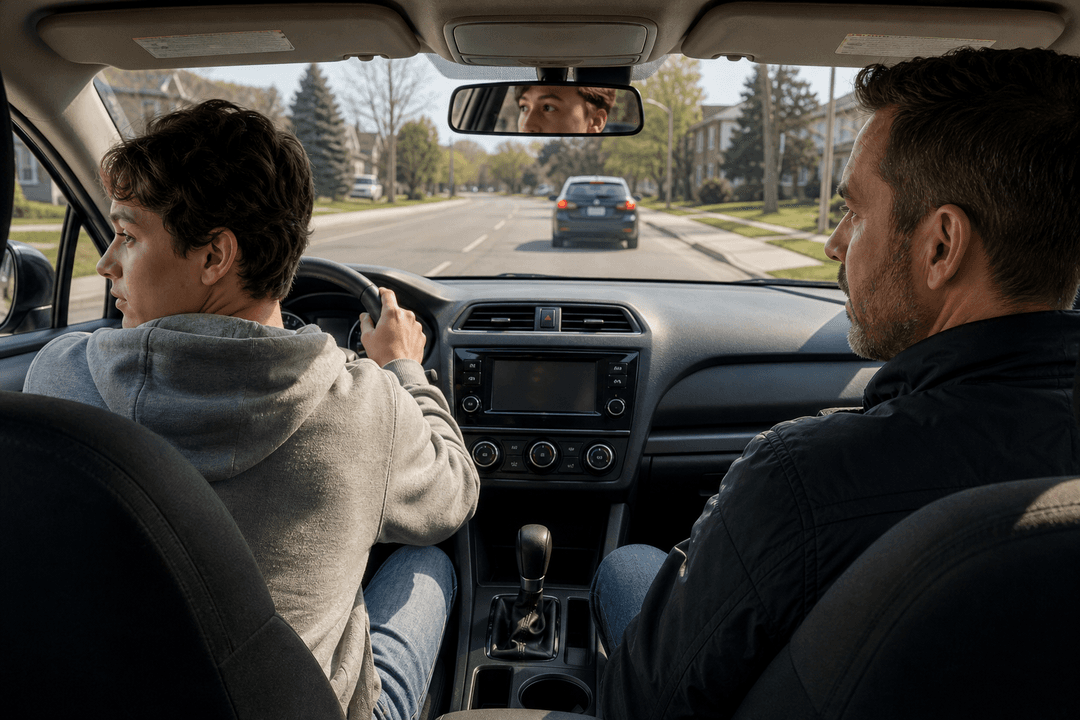
Defensive-driving practice should develop progressively rather than placing a complete beginner into the most demanding traffic immediately. Khurana Driving School describes beginner lessons that start in quiet, low-traffic areas and move forward once pedals, steering and mirrors require less concentration.
The first stage is vehicle control: starting, stopping, steering, mirror adjustment, speed control and basic positioning. Once these actions become more comfortable, practice can expand to residential streets, turns, controlled stops, intersections and parking.
The next stage adds judgement. You may work on lane changes, merging, traffic lights, busy arterials, cyclists, pedestrians, larger vehicles and changing gaps. The instructor should explain what to look for before each decision, not merely correct the manoeuvre afterwards.
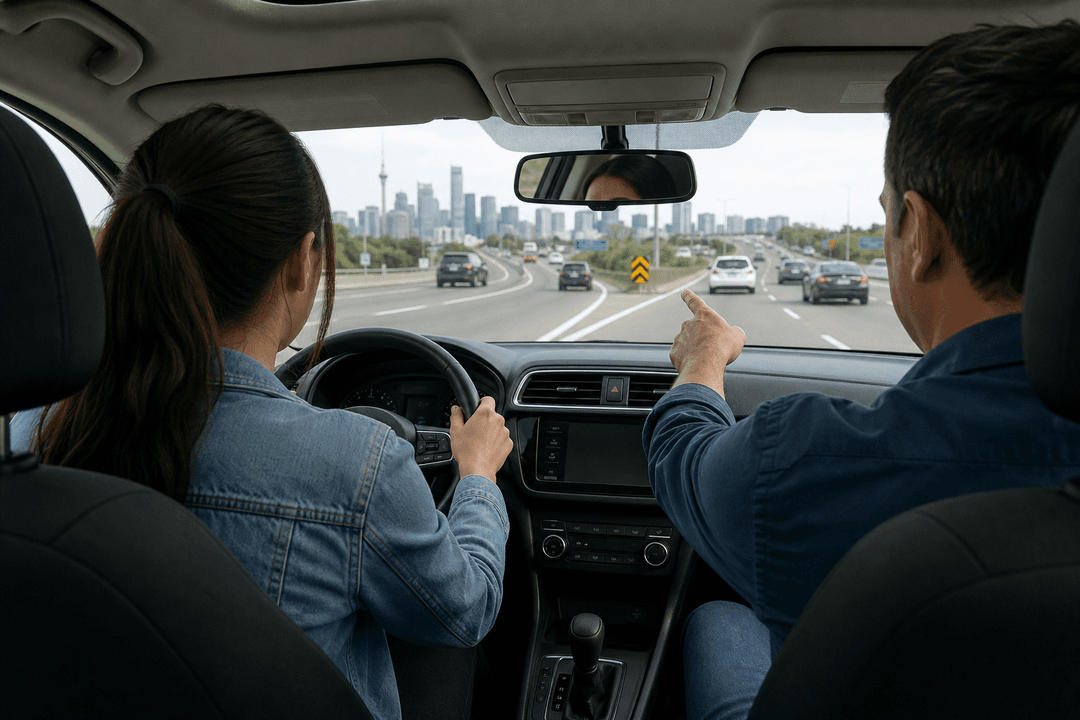
For G2 learners, training may combine defensive habits with observation, signalling, lane discipline and controlled manoeuvres. For G drivers, the focus can include highway merging, speed management, lane selection and awareness at higher speeds. Readiness should be based on demonstrated control and judgement, not a fixed number of lessons.
How defensive-driving lessons can support nervous drivers
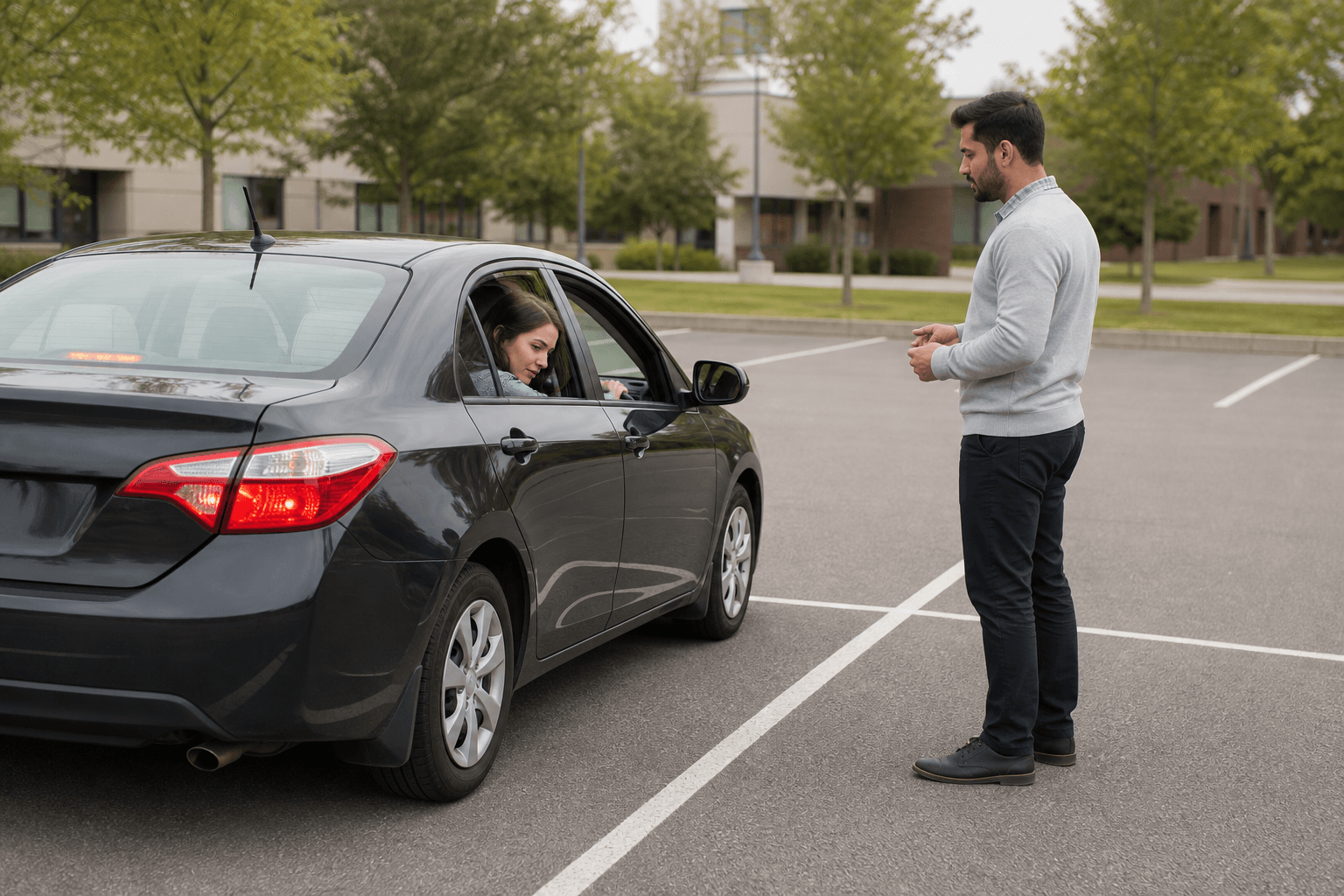
Nervousness is often worse when a learner must handle too many new tasks at once. A patient instructor can reduce the load by introducing one skill at a time, explaining each action, repeating a route or manoeuvre and giving specific feedback.
Tell the instructor what triggers your anxiety. It might be left turns, merging, heavy traffic, parking, unfamiliar roads, highway speeds or making mistakes while someone is watching. This makes practice more useful than simply driving without a defined objective.
One-on-one instruction can help when you need real-time corrections and a plan adapted to your confidence level. When comparing one-on-one driving lessons, ask how the instructor balances reassurance with honest feedback and how progress is recorded.
Defensive driving lessons vs general lessons and BDE programs
These options can overlap, but they do not necessarily have the same purpose or structure. Ontario’s graduated licensing process takes new drivers through G1 and G2 before the full G licence and required road tests, so your licence stage should shape the conversation with any provider. Review Ontario’s licensing progression when confirming your requirements.
| Training option | Main purpose | What to confirm |
|---|---|---|
| Defensive-driving instruction | Build hazard awareness, space management, communication and safer judgement. | Which risks and situations will be practised, and how will lessons be adapted? |
| General private lessons | Develop vehicle control, road skills and confidence through in-car coaching. | Does the lesson include defensive habits, clear objectives and active coaching? |
| Approved BDE program | Provide a defined structure with classroom, in-vehicle and flexible instruction components. | Is the program approved, what components are included and what documentation will you receive? |
Ontario states that government-approved BDE programs have required classroom and in-vehicle components and are distinct from separate driver-improvement or defensive-driving courses. Check the provincial guidance on approved driving schools before assuming a package qualifies as BDE or may affect insurance.
Match the training to your licence stage and goal
A G1 learner starting from the beginning may need fundamental control, Ontario road rules, observation and confidence-building before concentrating on test routines. A learner who already practises regularly may instead need targeted work on lane changes, intersections, parking or decision-making.
A G2 driver preparing for the full G licence may need highway practice, merging, speed and lane discipline, along with broader defensive judgement. Road-test preparation should reinforce safe driving habits rather than encourage memorized routes or isolated examiner tricks.
Before booking, state your licence stage, previous experience, target test and preferred timeframe. If you are new to Ontario or learned elsewhere, mention that as well, since the instructor may need to focus on local road rules and habits.
For a learner approaching the G test, a focused G road test preparation plan can connect defensive skills with observation, speed management, lane discipline, highway driving and controlled manoeuvres.
Individual lessons or a package: which is better?
Individual lessons are easier to target. They may suit a learner who wants to assess instructor fit, address one weakness, refresh skills after a break or prepare for a test without committing to a larger plan.
A package may provide continuity for a beginner who needs regular practice. It can make it easier to plan progression from basic control through traffic, highway practice and test preparation. However, do not choose a package only because the total price appears lower.
Before paying, compare lesson packages for new drivers by asking whether they include theory, in-vehicle hours, flexible practice time, mock road tests, test-day support or pickup and drop-off arrangements. Confirm optional elements and whether unused hours expire.
What to check before choosing an instructor
- Qualifications: Ask what certification, registration or training applies to the person teaching you.
- Vehicle and insurance: Confirm which vehicle will be used, whether it is maintained and insured for paid instruction, and whether your vehicle can be used.
- Lesson structure: Ask how much time is spent actively driving and coaching.
- Teaching approach: Find out how the instructor teaches defensive driving, handles mistakes and adapts to nervous learners.
- Feedback: Ask whether you will receive objectives or skills to practise before the next lesson.
- Terms: Get lesson length, price, payment schedule, cancellation rules, pickup area and package expiry terms in writing.
When comparing providers, use the same questions for each one. A broader driving school comparison can also remind you to assess structure, qualifications, vehicle arrangements and service terms instead of relying only on promotional wording.
Schedule and local fit in Mississauga, Brampton and the GTA
Choose lesson times that allow you to concentrate. Daytime sessions may offer more light, while evening sessions can provide experience in different traffic and visibility conditions. Weekend lessons may help when weekday work or school makes regular attendance difficult.
Khurana Driving School serves learners in Mississauga, Brampton and the GTA and lists evening and weekend lessons. Its booking support can help discuss your licence stage, target test and preferred times, but support does not mean continuous instruction or guaranteed availability.
Confirm the meeting point, driving area, travel time, lesson duration and rescheduling process. Ask whether the plan will include quiet streets, busier roads, local intersections or highway environments as your skills develop.
A practical checklist before booking defensive-driving lessons
- What licence stage am I at, and am I preparing for G2, G or general driving?
- How much driving experience do I have?
- Which situations create the greatest difficulty or nervousness?
- Will lessons focus on visibility, space, communication and hazard anticipation?
- Are sessions one-on-one, and how much booked time is active instruction?
- Does the plan include theory, road-test preparation, highway practice or mock testing?
- What qualifications and insurance arrangements should I verify?
- What are the vehicle, pickup, cancellation and rescheduling terms?
- What is included in the price, and are package terms provided in writing?
- Are evening or weekend times available, and how are they confirmed?
Frequently asked questions
Are defensive driving lessons the same as an Ontario-approved BDE program?
No. Defensive driving describes a safety-focused approach to hazard awareness, space and communication. An approved BDE program has defined classroom, in-vehicle and flexible-instruction components. Ask the provider to identify exactly what training and documentation are included.
How many defensive-driving lessons does a new driver need?
There is no single number for every learner. The amount depends on experience, licence stage, confidence, practice opportunities and skills requiring correction. Choose a plan based on demonstrated readiness rather than a guaranteed lesson count.
Can defensive-driving lessons help someone who is nervous behind the wheel?
They can provide structured practice, gradual exposure, repetition and clear feedback. Tell the instructor which situations cause difficulty so lessons can be paced appropriately. No instructor can guarantee that anxiety will disappear after a particular number of sessions.
Should G2 learners take defensive-driving lessons before road-test preparation?
They do not have to be separate steps. Defensive habits can be developed throughout G2 training and then applied to road-test preparation. Practise safe observation, spacing, signalling and decisions rather than memorizing a route.
Can I book evening or weekend defensive-driving lessons in Mississauga or Brampton?
Khurana Driving School lists evening and weekend options for learners in Mississauga, Brampton and the GTA. Availability must be confirmed for your preferred time, instructor and lesson format.
Choose training that builds judgement, not just test routines
The strongest defensive-driving plan matches the learner, not just the service label. Look for instruction that develops visibility, space management, communication and sound decisions, then builds those skills progressively from quiet areas to more complex traffic and highway situations.
Before committing, compare defensive-driving instruction, general private lessons and BDE options against your licence stage, target test, experience, confidence, schedule and budget. Confirm the instructor’s qualifications, active coaching time, vehicle arrangements and written package terms.
To discuss your licence stage, driving experience, target G2 or G test and preferred Mississauga, Brampton or GTA schedule, contact Khurana Driving School about suitable defensive-driving lessons or a broader training plan.