
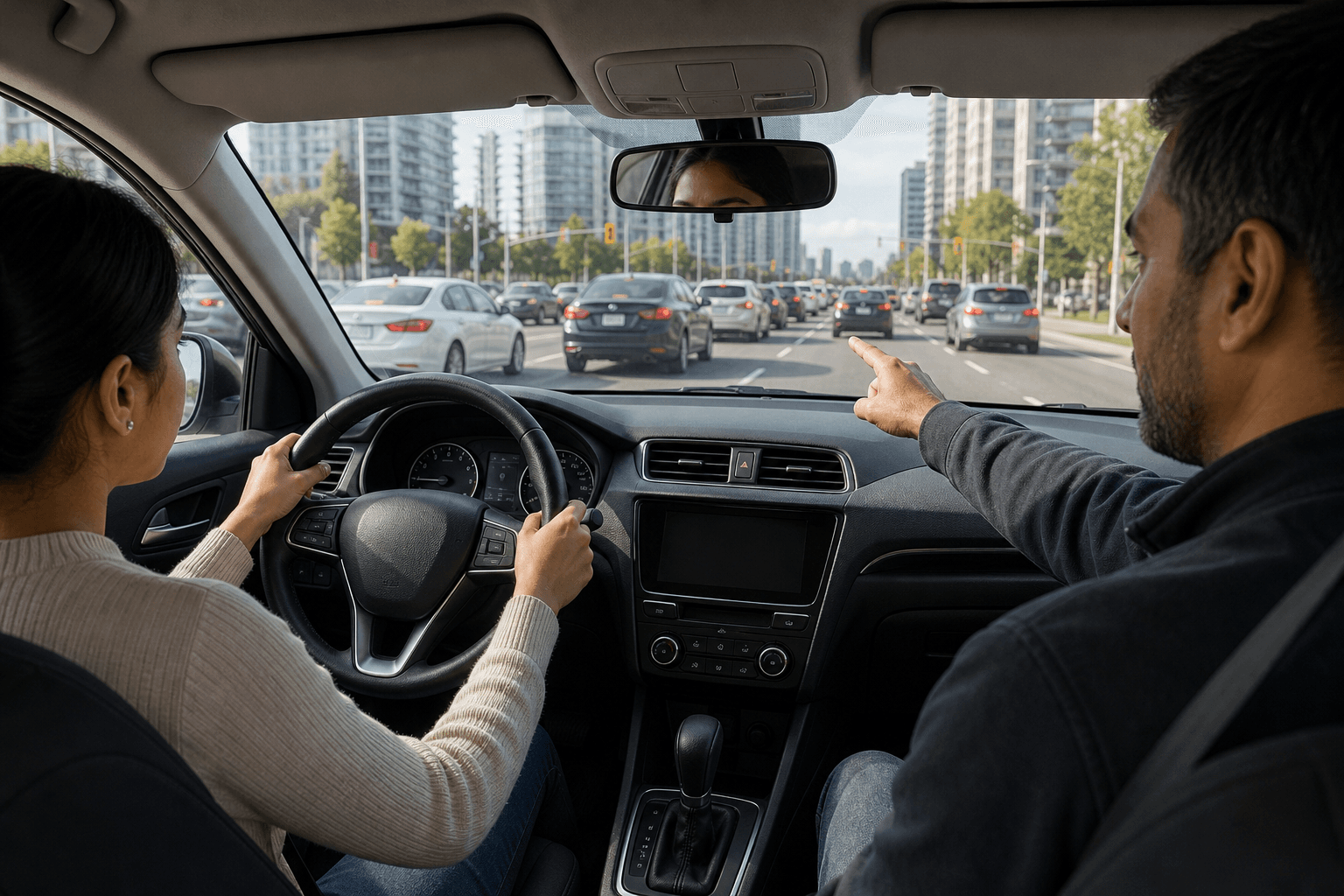
Heavy-traffic driving lessons should progress from basic vehicle control on quiet roads to signalized intersections, multi-lane roads, merging and stop-and-go traffic. You are ready for a busier setting when you can control speed and lane position, scan consistently, leave space and make decisions without rushing. No universal lesson count, including 20 lessons, guarantees readiness or a road-test pass.
In Ontario, “driving in heavy traffic lessons” describes targeted in-vehicle practice, not a separate licence category. Effective instruction builds control, observation, space management, predictable communication and traffic judgement. Ontario’s driver-training guidance includes strategic driving, risk perception, freeway driving and adverse conditions. Ontario’s driver-training guidance provides the wider licensing context.
Progress from quiet roads to congested traffic
A useful lesson increases complexity only after you can manage the current environment. Complete beginners should not enter the busiest roads immediately because traffic can overwhelm steering, braking, mirror use and decision-making at once.
Stage 1: Assessment and basic control
An instructor should first observe your seating position, pedal control, steering, speed choice, stopping, mirror use and lane position.
- Focus: smooth starts and stops, controlled steering, stable speed and simple observation routines.
- Ready to progress when: you hold your lane, stop without harsh braking and respond to instructions without losing control.
Stage 2: Quiet streets and simple intersections
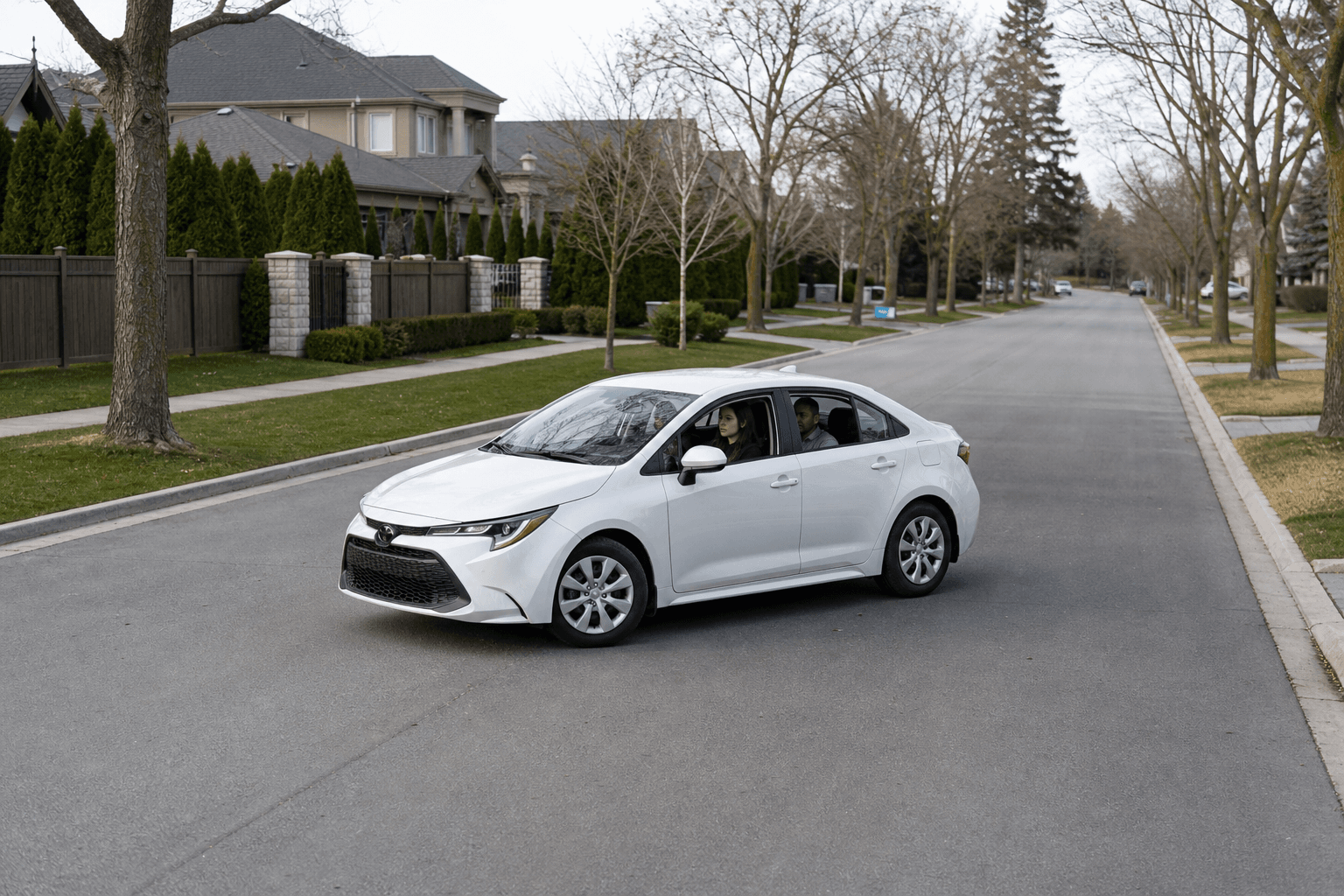
Quiet roads provide room to practise scanning, signs, turns and lane position before more vehicles and shorter decision windows are introduced. Practise checking mirrors before slowing, signalling early, looking through intersections and choosing a speed that leaves time to stop.
Stage 3: Signalized intersections and multi-lane roads
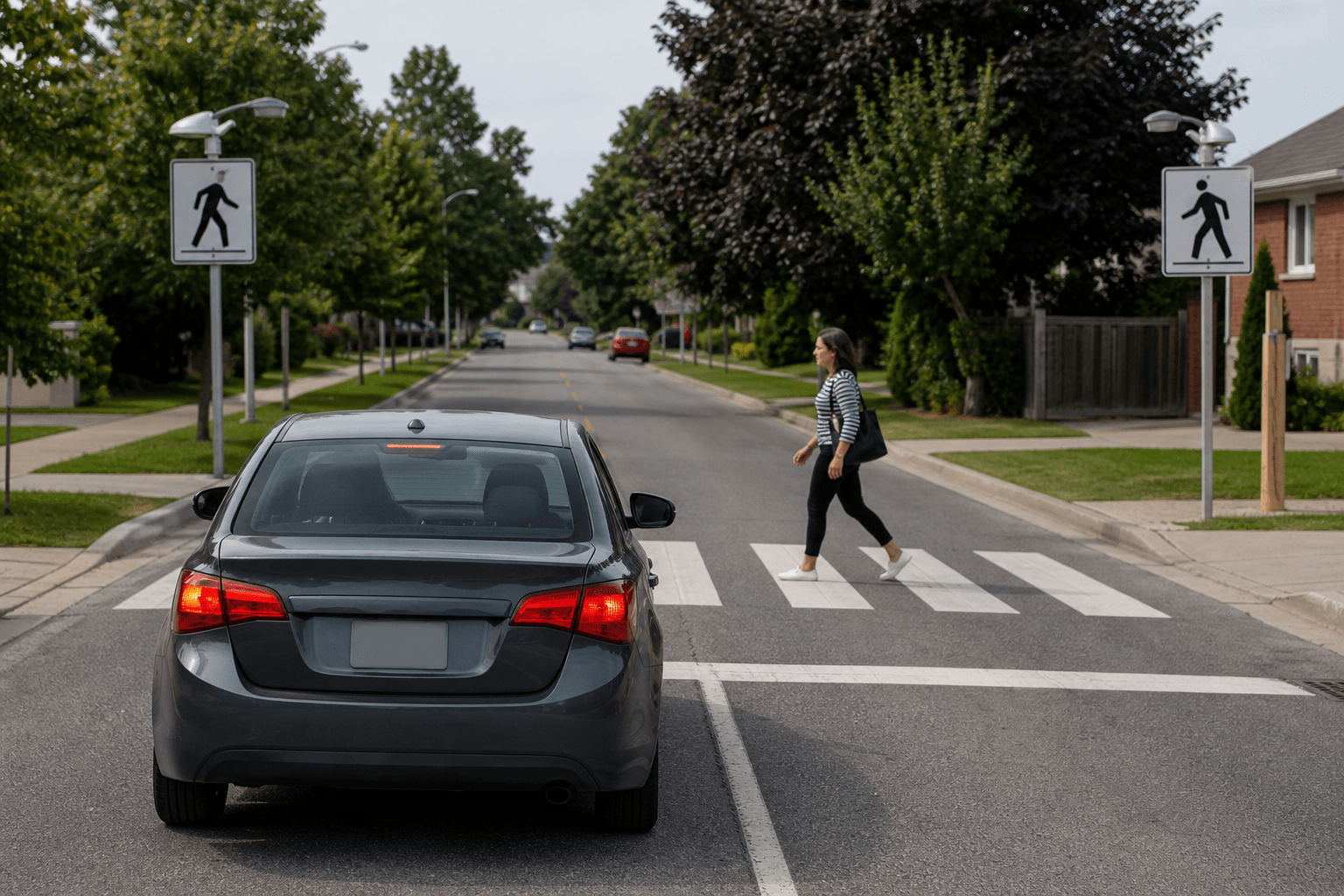
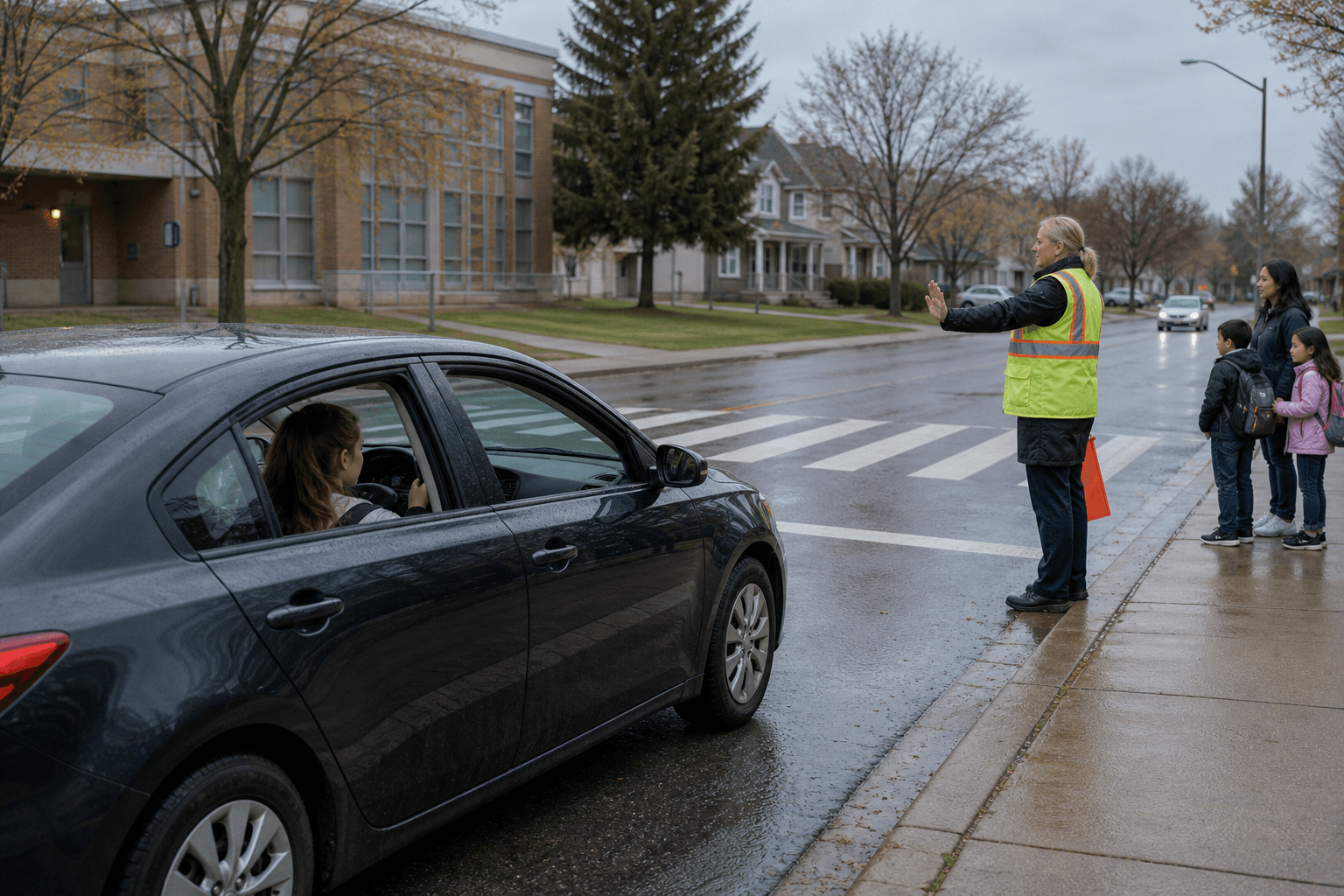
Lessons now add traffic lights, turning lanes, pedestrians, buses, parked vehicles and multiple lanes. Look past the vehicle directly ahead, choose your lane early, maintain steady speed and avoid last-second corrections.
- Look for changing lights, queues and blocked lanes.
- Watch vehicles beside and behind you.
- Do not accelerate into every opening.
- Leave time to respond to pedestrians and turning traffic.
The hardest part of learning to drive is often coordinating vehicle control, observation and judgement while the road changes. That is why staged exposure is more useful than repeating one manoeuvre while ignoring busy intersections.
Stage 4: Peak-hour traffic and lane changes
Once ordinary urban traffic feels manageable, practise denser conditions with queues, frequent lane changes and vehicles entering from side streets. Readiness means repeatable habits under pressure, not instant comfort.
- Scan ahead instead of reacting only to brake lights.
- Leave space to slow without striking the vehicle ahead.
- Signal and check mirrors and blind spots before changing position.
- Abandon a lane change when the gap is unsafe.
- Correct mistakes with calm, legal adjustments.
Stage 5: Merging and stop-and-go traffic
Merging practice teaches speed matching, gap selection, communication and smooth movement. Stop-and-go practice adds controlled rolling, early observation and gentle braking.
Choose a speed that allows you to stop safely, including driving below the posted maximum when traffic or conditions require it. The MTO’s driving guidance supports adjusting speed to the actual road situation.
The traffic habits that keep decisions manageable
Heavy traffic becomes easier when you protect time and space around the vehicle. Start with a two-second following gap in good conditions, increase it when visibility or traction worsens, scan well ahead and keep checking surrounding traffic.
Build a usable space cushion
Choose a fixed roadside object and count at least two seconds from when the vehicle ahead passes it until you reach the same point. Rain, snow, darkness, spray, hills, curves, blocked visibility and dense traffic justify a larger gap.
Practising following distance helps preserve a braking cushion when traffic slows or vehicles merge. If another driver fills the gap, ease off and rebuild space instead of defending your position.
Scan beyond the nearest vehicle
Look for brake lights, lane closures, pedestrians, turning vehicles and queues several vehicles ahead. In stop-and-go conditions, lifting off early often gives you more control than accelerating toward a closing gap and braking sharply.
Check mirrors before slowing, changing lanes or entering a queue. Ontario guidance also emphasizes surrounding traffic and adaptable spacing. The official handbook’s traffic guidance explains why spacing and all-around awareness matter.
How to handle common heavy-traffic situations
Drive safely in heavy traffic by making one predictable decision at a time: scan ahead, preserve space, communicate early and choose a safe response instead of reacting to pressure.
Entering a busy road
Reduce speed enough to see the traffic pattern, identify a gap that gives you room to accelerate and check both directions. Watch the traffic farther forward for vehicles approaching behind the first car. If the first gap is too small, wait.
Changing lanes
Check mirrors, signal, check the blind spot, confirm the gap and move smoothly while maintaining a suitable speed. A signal communicates intention, but it does not give priority in an occupied space.
If the gap closes, cancel the move and continue in your lane. Missing a turn is safer than making a sudden lateral movement. The MTO’s changing-position guidance explains why space is especially important in heavy traffic and poor weather.
Merging onto a faster road
Use the acceleration lane to build an appropriate speed, scan for a gap and signal before merging. Keep watching the traffic you will join, not only the end of the lane. Highway merging involves speed matching, observation, gap selection and controlled movement.
Responding to a sudden stop
Look beyond the vehicle ahead so you can lift off early when a queue slows. If it stops suddenly, brake firmly and progressively while keeping the vehicle straight. Do not change lanes automatically because the next lane may also be slowing or may contain a vehicle in your blind spot.
When another driver cuts you off
Release the accelerator, increase your following distance and return your attention to the road. Do not chase the vehicle, repeatedly sound the horn or make a retaliatory lane change.
When you miss a turn or someone honks
Continue straight and use the next safe opportunity to reroute. Do not stop in a live lane, reverse unexpectedly or cross several lanes at once. A horn is not an instruction to rush. If you stall or hesitate, secure the vehicle, restart or continue only when you have control.
There is no single universal reason for failing a driving test. Repeated weaknesses often involve poor observation, unsafe following distance, missed signals, weak lane position, poor gap judgement or rushed decisions. Heavy-traffic practice should identify the habit affecting your drive and measure improvement through repetition.
How defensive driving lessons improve traffic judgement
Defensive driving lessons teach you to notice hazards early, preserve visibility and space, communicate predictably and plan for what other road users may do. The aim is not timid driving. It is avoiding surprises from slowing vehicles, blocked views, sudden merges and changing intersections.
- See: scan ahead, check mirrors and identify changes in speed, direction and space.
- Assess: decide whether the hazard affects your lane, stopping distance or escape space.
- Communicate: use signals, lane position and smooth speed changes.
- Act: make the safest available move without rushing.
- Recheck: return to the wider scan after the manoeuvre.
For safer driving in heavy traffic, defensive driving lessons can help you recognize hazards early, maintain space and make predictable decisions.
Specific strategies for nervous drivers
Reduce the task to the next safe action. After a missed turn, continue straight. After being cut off, create space. After a horn, focus on control and observation. Confidence grows from completing these decisions safely, not from pretending difficult traffic is easy.
Choose the lesson focus that matches your goal
Choose general lessons for broad skill development, focused heavy-traffic practice for congestion-specific weaknesses, defensive driving training for hazard and space judgement, G2 lessons for urban-road and test skills, and G preparation when full-licence highway skills are relevant.
| Your situation | Useful focus | Practise |
|---|---|---|
| Starting from scratch | General beginner lessons | Control, observation, quiet roads and gradual exposure |
| Comfortable on quiet roads but anxious in congestion | Focused heavy-traffic practice | Queues, intersections, lane changes, gaps and recovery |
| Following too closely or reacting late | Defensive driving training | Scanning, space cushions, hazards and smooth speed control |
| Preparing for the G2 test | G2 driving lessons | Urban traffic, intersections, merging, parking and mock-test habits |
| Preparing for the full G test | G preparation | Highway entry and exit, speed management and lane discipline |
| Experienced elsewhere but new to Ontario | Assessment and targeted lessons | Local road practices and licence-stage skills |
You may still benefit from lessons if you already have driving experience. Previous driving does not automatically mean comfort with Ontario traffic, local signs, multi-lane roads or road-test expectations.
If heavy traffic is part of your G2 preparation, G2 driving lessons can build confidence with lane changes, intersections, merging and road-test skills.
How many lessons might you need?
Twenty lessons may be enough for one learner and insufficient for another. The answer depends on starting experience, practice between lessons, traffic exposure, anxiety, vehicle control, observation, decision-making and whether your goal is general driving, G2 or G preparation.
Do not confuse Ontario’s approved Beginner Driver Education structure with a universal private-lesson requirement. An approved BDE course includes at least 20 hours of classroom instruction and 10 hours of in-vehicle training. Ontario’s approved-school information explains that structure.
Judge private heavy-traffic readiness by repeated performance rather than purchased sessions. You should be able to:
- Maintain speed and lane position without constant prompting.
- Scan ahead and check mirrors before traffic changes become urgent.
- Keep a suitable gap and rebuild it after a merge.
- Choose safe gaps for entering, merging and changing lanes.
- Wait without rushing when a move is unsafe.
- Recover from a missed turn, sudden stop or unexpected driver without losing control.
Automatic or manual: what changes in heavy traffic?
Manual vehicles can feel more demanding because you coordinate clutch control, gear selection, low-speed movement and traffic decisions simultaneously. Automatics reduce the clutch and gear workload, but still require precise speed control, scanning, spacing and lane judgement.
| Practice area | Automatic | Manual |
|---|---|---|
| Stop-and-go queues | Manage rolling speed, braking and space. | Coordinate clutch, gear choice and gentle movement. |
| Low-speed turns | Control acceleration and braking smoothly. | Balance clutch release, throttle and steering. |
| Hill starts | Control rollback and acceleration. | Coordinate clutch and brake release. |
| Attention demands | More attention remains for scanning. | More attention goes to vehicle coordination. |
The best focus depends on the vehicle you will drive. Ask which transmission is available if that detail matters.
Prepare for a useful heavy-traffic lesson
Arrive with one or two specific goals. Tell the instructor whether your main concern is merging, lane changes, queues, busy intersections, being cut off, navigation or anxiety.
- State your licence stage and previous experience.
- Name the traffic situation causing the most difficulty.
- Allow enough time and arrive rested.
- Wear footwear that permits controlled pedal movement.
- Ask for feedback on one observable habit, such as mirror checks or following distance.
- Discuss whether the next lesson should repeat the same environment or add complexity.
Do not enter demanding traffic independently until you can control the vehicle and follow the rules that apply to your licence.
What to include when booking targeted instruction
Tell the instructor your licence stage, experience, vehicle needs, traffic concerns, test goal and schedule before booking. Include:
- Licence stage: G1, G2 or full G, plus your planned test.
- Experience: beginner, newcomer, returning or experienced driver with a specific weakness.
- Traffic situations: intersections, lane changes, merging, queues, highway entry or navigation.
- Vehicle needs: automatic or manual preference.
- Objective: confidence, defensive driving, general development, G2 or G preparation.
- Schedule: preferred frequency and evening or weekend availability.
- Terms: session length, active coaching time, meeting arrangements, vehicle details, price and cancellation policy.
A staged progressive lesson plan is useful when difficulty changes as traffic becomes more complex. Confirm the exact lesson arrangements before paying.
A practical next step for Mississauga-area learners
Write down the traffic situation causing the most difficulty, such as choosing a gap, changing lanes, stopping in a queue or recovering after a missed turn. Ask for an assessment and a progression connected to your licence stage.
Khurana Driving School is based in Mississauga and offers individual lessons, packages, defensive driving instruction, G2 and G preparation, with evening and weekend scheduling. Review its driving lesson services and confirm the vehicle, timing and terms that fit your situation.