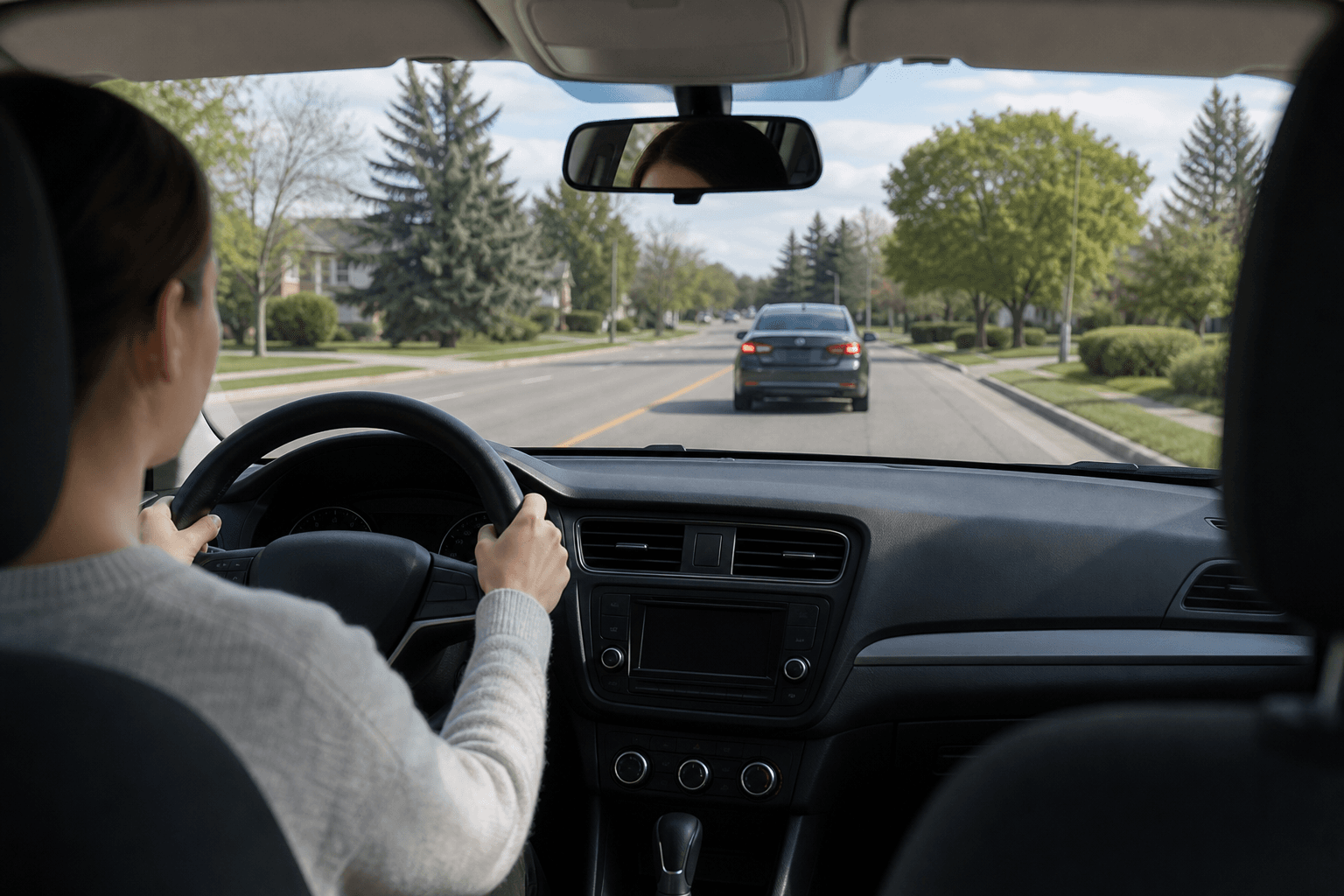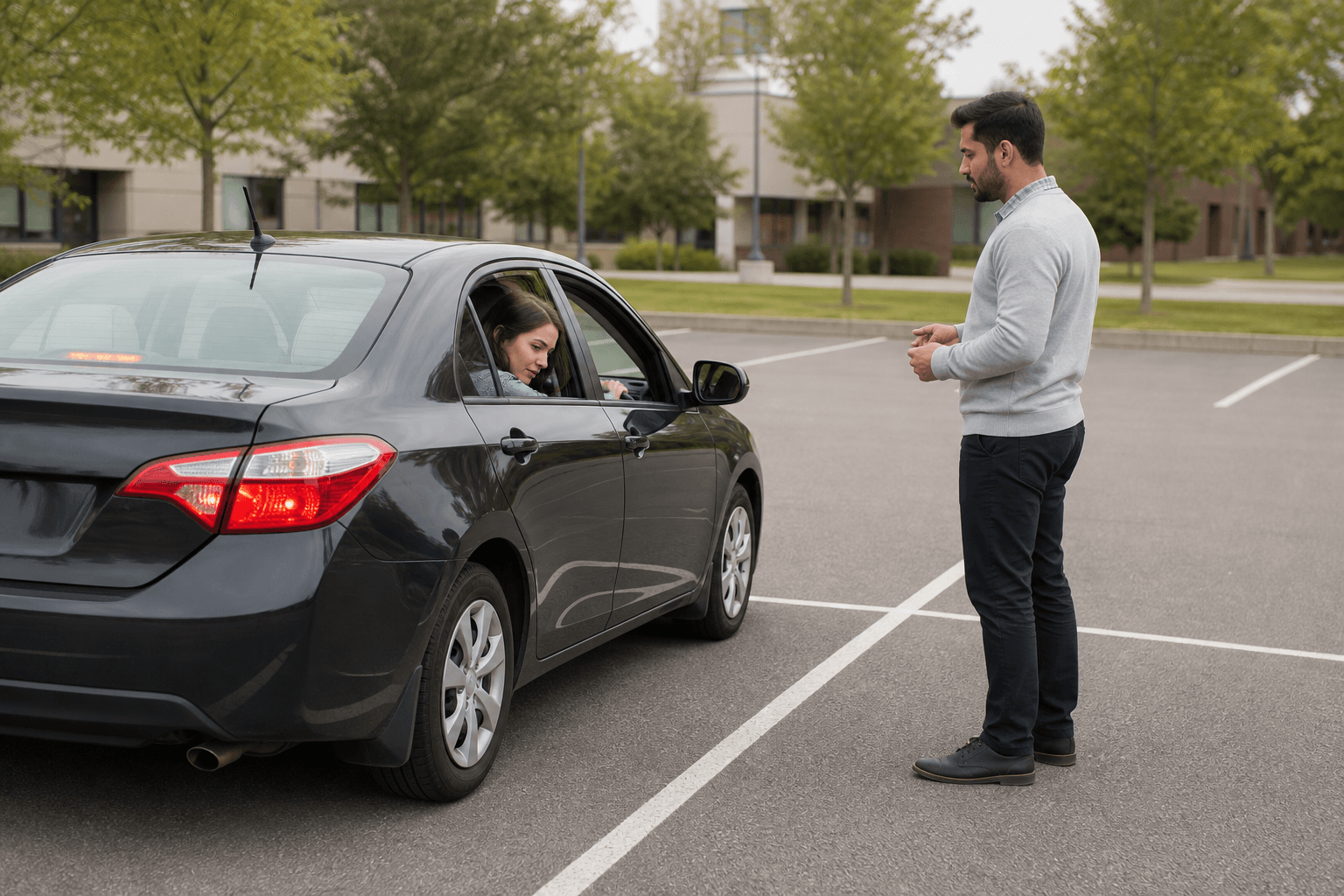

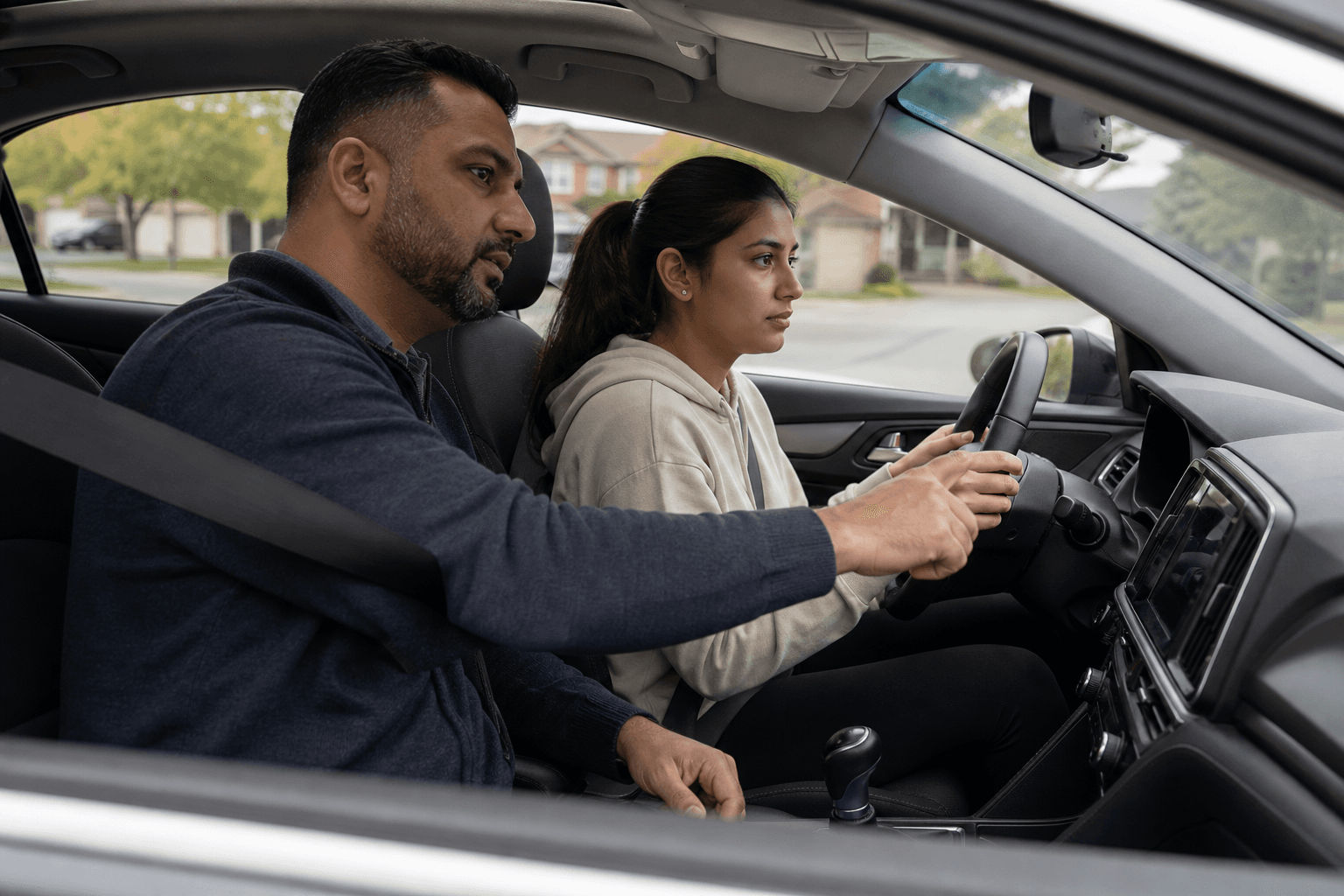
A progressive exposure lesson plan builds driving skills in deliberate stages. Instead of placing a beginner in difficult traffic immediately, it starts with vehicle control and gradually adds traffic, speed, unfamiliar routes, and test-specific demands as the learner becomes more consistent.
“Progressive exposure lesson plan” is not the name of an official Ontario programme. It is a practical instructional approach that fits Ontario’s emphasis on gaining skills gradually, managing risk, and developing sound driving habits. The goal is not simply to buy more lesson hours. It is to know what each lesson should improve and when the learner is ready for the next challenge.
Quick summary

- Start with an assessment of control, observation, confidence, experience, and the learner’s G2 or G goal.
- Change one meaningful variable at a time, such as traffic, speed, route familiarity, or weather.
- Advance when the learner performs the current skill consistently with limited prompting.
- Repeat a stage when decisions become rushed, observation breaks down, or intervention is frequent.
- Add highway practice, route work, and a mock test after core control and traffic skills are reliable.
What progressive exposure means in driving lessons
Progressive exposure means moving from predictable, lower-risk conditions to more complex driving situations in a planned sequence. A learner might begin in a quiet area, then practise busier intersections, multi-lane roads, parking, highway merging, and eventually a realistic mock test.
Each stage should have a practice goal, a readiness check, and a decision about what comes next. If a learner can brake smoothly on a quiet road but struggles to scan at busy intersections, the next lesson should target observation and decision-making rather than introduce highway driving simply to fill the schedule.
This approach also reflects the purpose of Ontario’s graduated licensing system, which helps new drivers gain experience progressively. The province identifies risk perception and management, distraction avoidance, freeway driving, night driving, and adverse conditions as important areas of driver development. Ontario’s official Driver’s Handbook provides the wider context.
Stage 1: Start with an assessment and realistic baseline

An initial assessment should establish where the learner is starting, not determine how many lessons they must purchase. A complete beginner may need an introduction to the controls, while a newcomer to Ontario or returning driver may already have vehicle control but need help with local rules, test tasks, or highway decisions.
The instructor should consider steering, acceleration, braking, mirror use, signalling, lane position, observation, gap judgement, and the learner’s response to pressure. The discussion should also cover the intended licence goal, prior experience, preferred lesson times, nervousness, and conditions that make practice more difficult.
A useful assessment ends with a progress plan. It should identify the first skill to practise, how improvement will be measured, and what would justify moving forward. A checklist focused on an initial assessment and progress plan can help learners ask for this specificity before booking.
Stages 2 to 6: From basic control to road-test readiness
| Stage | Practice goal | Readiness signs | Pause or repeat when |
|---|---|---|---|
| Basic control | Starts, stops, steering, lane position, mirrors, and signals | Fundamentals are smooth on quiet roads | Braking, steering, or observation remains unpredictable |
| Traffic and intersections | Turns, gap judgement, lane selection, and busier roads | The learner scans and responds without rushing | Traffic causes missed signals, late braking, or poor lane choices |
| Parking and manoeuvres | Parallel parking, reversing, turns, and positioning | Manoeuvres include deliberate observation | The learner relies on memorized steps without checking surroundings |
| Highway driving | Merging, lane changes, following distance, speed, and exits | Decisions remain controlled at higher speeds | Speed, gaps, or lane changes overwhelm attention |
| Mock-test preparation | Test sequence, route demands, corrections, and timing | Core skills hold up with mild pressure | Repeated faults show that an earlier stage needs work |
Stage 2: Master basic control in low-risk settings
The first practical stage is about making the vehicle predictable. Lessons may focus on smooth starts and stops, steering accuracy, lane position, mirror checks, signalling, controlled turns, and steady speed on quiet roads.
Readiness does not mean the learner never makes a mistake. It means they can repeat basic actions consistently enough to divide attention between vehicle control and the surrounding road. If the instructor must frequently correct steering, braking, or lane position, adding heavy traffic will increase workload without strengthening the foundation.
Stage 3: Add quiet roads, traffic, and complex intersections
Once fundamentals are reasonably stable, introduce one new difficulty at a time. For example, keep the route familiar while adding traffic, or use a busier route while keeping speed and manoeuvres straightforward.
Practice should include lane selection, left turns across traffic, controlled stops, gap judgement, mirror scanning, and early observation of pedestrians, cyclists, signs, and changing signals. The learner should be able to explain what they saw, what they expected other road users to do, and why they chose to wait or proceed.
This is where defensive driving becomes more than a slogan. The learner is practising anticipation, space management, and decisions that leave time to respond. If busy intersections cause hurried decisions, return briefly to a simpler route, isolate the difficult skill, and build back up.
Stage 4: Practise parking and low-speed manoeuvres
Parking and other low-speed tasks deserve focused repetition rather than hurried inclusion at the end of a lesson. Practise parallel parking, reversing, three-point turns, parking-lot exits, and accurate positioning while maintaining observation around the vehicle.
A learner should not depend entirely on a steering formula or fixed landmarks. Conditions vary, so the more useful goal is to check mirrors and blind spots, control speed, recognize the vehicle’s position, and make small corrections safely. A manoeuvre is ready for the next stage when it is repeatable, not when it works once by chance.
Stage 5: Introduce highway driving and merging
Highway practice should be added after the learner has enough control and observation capacity to manage higher speeds. Before moving, discuss the route, entry point, acceleration, mirror and blind-spot checks, following distance, lane changes, exits, and what to do if a gap does not develop.
For a G2-focused plan, highway experience and merging are important milestones before the exit test. For G preparation, practice may need to include sustained lane discipline, speed management, route planning, and decisions around entrances and exits. Ontario’s training framework also treats freeway driving and risk management as relevant driver-training areas.
Do not treat one successful merge as proof that highway driving is complete. Repeat the skill in different traffic conditions and confirm that the learner can maintain observation, space, and calm decisions throughout the session.
Stage 6: Shift from skill building to mock-test preparation
Mock-test preparation belongs near the end of the progression, but it should not be the learner’s first exposure to every required skill. Before scheduling a mock test, practise core manoeuvres, intersections, lane changes, and required highway skills often enough to identify specific weaknesses.
A useful pre-test lesson plan adds focused highway practice, route-specific work where appropriate, a mock test, and test-day routines. The mock test should produce an action list, such as improving shoulder checks, braking earlier, choosing lanes sooner, or maintaining a safer following distance.
G2 preparation and G preparation are not identical. Ask the instructor to explain which skills are being practised for the chosen test and which weaknesses must be corrected before the appointment.
Readiness checks: when to repeat or move forward
Use these questions after each lesson instead of measuring progress only by hours:
- What specific skill was the lesson designed to improve?
- Which parts were completed consistently without prompting?
- Where did the learner become rushed, uncertain, or dependent on intervention?
- Was the difficulty caused by the skill or by a new variable, such as darkness, traffic, speed, or an unfamiliar route?
- What is the smallest useful challenge to add next?
Repeat the stage when a weakness is frequent, affects safety, or appears as soon as mild pressure is added. Progress when the learner can perform the current skill consistently, observe effectively, and make decisions without constant instructions. This is more meaningful than reaching an arbitrary lesson number.
How to adapt progressive exposure for nervous learners
Nervous learners often benefit from shorter, focused sessions with a predictable objective. Start on a familiar route, explain the plan before moving, and change one major variable at a time. For example, add moderate traffic while keeping the route familiar, then add an unfamiliar intersection in a later session.
Calm debriefing matters. After a difficult manoeuvre, identify what the learner noticed, what went well, and what one adjustment would make the next attempt safer. Repeating a manageable task can be more productive than immediately moving to a harder road.
The plan can also account for time of day, weather, route familiarity, and the learner’s normal driving needs. Someone who expects to drive to work in the evening should eventually practise appropriate conditions, but only after the underlying skills are stable enough to support that exposure.
How this approach fits Ontario BDE and private lessons
Progressive exposure does not replace an Ontario-approved Beginner Driver Education course. It describes how instruction can be sequenced. If you want the formal BDE option, verify that the provider and course appear on Ontario’s official approved-school information before paying.
Ontario’s approved-course structure includes at least 20 hours of classroom or digital instruction, 10 hours of in-vehicle instruction, and 10 hours of flexible instruction. The province also states that in-vehicle training must be delivered by a licensed instructor. These requirements describe the course framework, while the pacing and lesson focus still need to be discussed with the provider.
Questions to ask a driving school before booking
- Do you begin with an assessment, and what will you evaluate?
- Can you provide a clear progression of milestones?
- How do you decide whether to repeat a stage or introduce a harder condition?
- Will the learner receive active coaching and feedback throughout the paid lesson?
- Can lessons focus on nervous-driver confidence, defensive driving, or a specific skill gap?
- When will highway practice and merging be added for a G2 or G plan?
- Does the plan include a mock test and targeted correction lessons?
- Who will teach the lessons, and can instructor continuity be requested?
- Are evening and weekend lessons available, and how are lesson duration and package terms documented?
- If the school claims BDE approval, where can that approval be verified through Ontario?
Also ask for lesson length, price, cancellation terms, pickup arrangements, and package inclusions in writing. Clear details make it easier to compare value and avoid confusing a large package with a well-structured plan. Questions about flexible lesson scheduling can help you test whether advertised availability fits your routine.
A five-minute self-check after every lesson
- What skill did I practise?
- What did I complete smoothly and repeatedly?
- What required a prompt or correction?
- What condition made the task harder?
- Should the next lesson repeat the skill, add one variable, or target a different gap?
Use the result to choose one of three actions: repeat if consistency is not there, progress if the skill is stable, or request targeted coaching if one problem is holding you back. This record gives the instructor useful information and prevents lessons from becoming disconnected practice sessions.
Applying the framework with a Mississauga driving school
Khurana Driving School’s supplied information describes personalized G2 and G training, a defensive driving approach, and evening and weekend lessons for learners in Mississauga, Brampton, and the GTA. Those services may suit learners who want a staged plan, but ask how the school would assess your starting point, document milestones, and adapt practice to your test goal.
If you are nervous or starting with little experience, discuss the order of lessons before choosing between individual lessons and a multi-lesson package. The key question is not whether the package contains many hours. It is whether each hour has a clear purpose and whether the plan can change as your progress and skill gaps become clearer.
FAQ
Can a complete beginner use a progressive exposure lesson plan?
Yes. Beginners can start with vehicle orientation, steering, braking, mirror use, signalling, and quiet-road practice. The instructor should keep the first tasks manageable and advance only when the learner can perform the basics consistently enough to pay attention to the surrounding road.
How many driving lessons does a progressive exposure plan usually require?
There is no reliable fixed number for every learner. The total depends on previous experience, confidence, practice between lessons, the G2 or G goal, and performance at each milestone. An assessment and progress checks are more useful than a universal lesson promise.
Does progressive exposure replace an Ontario-approved BDE course?
No. It is an instructional method, not a replacement for BDE. If you want an approved course, confirm the provider’s status and course structure through Ontario. Progressive sequencing can still be used within private lessons or as part of a broader training plan.
When should highway practice be added to a G2 or G preparation plan?
Add it after basic control, observation, intersections, and lane discipline are sufficiently reliable to support higher-speed decisions. Begin with a planned route and clear coaching, then repeat merging, lane changes, following distance, and exit planning until they remain controlled under realistic conditions.
Conclusion: Build the next safe step, not just a bigger lesson package
A strong progressive exposure lesson plan begins with an assessment, moves through defined driving stages, and uses readiness checks to decide whether to repeat or advance. It treats confidence as something supported by preparation and manageable practice, not as a substitute for observation, judgement, and vehicle control.
For Ontario learners, the most useful plan connects gradual skill development with defensive driving, risk management, G2 or G requirements, and targeted mock-test preparation. Compare schools by asking how they assess progress, structure lessons, support nervous learners, and explain package terms. For personalized G2 and G training, defensive driving instruction, and evening or weekend lesson options in the Mississauga area, contact Khurana Driving School to discuss a plan suited to your starting point and licence goal.