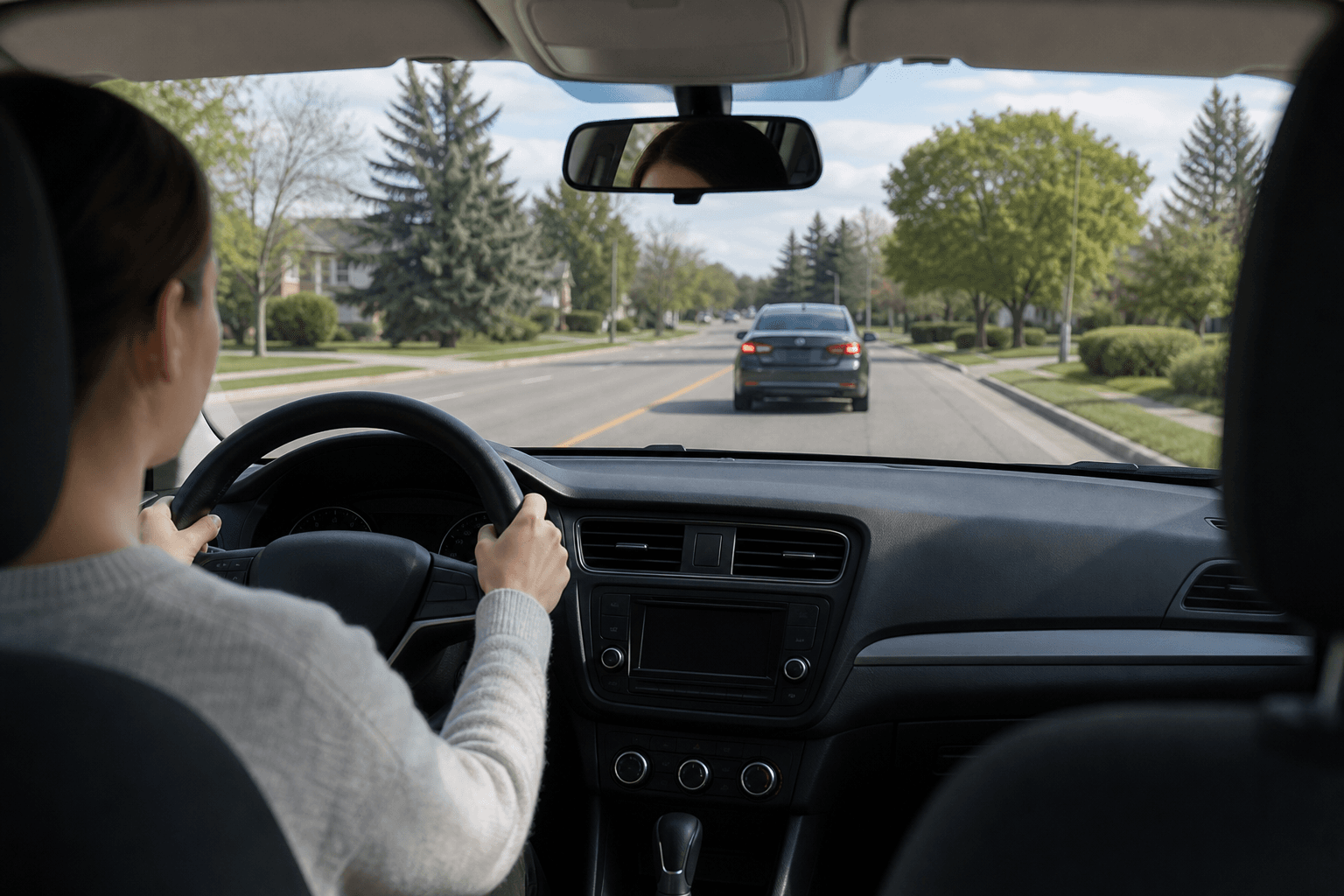


Effective highway merging lessons should do more than take you onto a faster road. They should provide supervised practice with ramp entry, acceleration, gap selection, mirror and blind-spot checks, merging, lane changes, following distance, speed control, and safe exits.
The right lesson depends on whether you are building confidence, preparing for Ontario’s G road test, or refreshing a skill you have not used recently. Khurana Driving School offers highway-focused G lessons, defensive driving training, tailored coaching, and evening and weekend options for learners in Mississauga, Brampton, and the GTA.
Quick summary
- Choose highway practice based on your licence stage and goal, not price alone.
- Effective lessons progress from ramp entry and acceleration to merging, lane changes, space management, and exits.
- Ontario’s G preparation includes expressway merging, signalling, speed, space, and lane discipline.
- Ask whether the instructor provides active feedback and how lesson time is used.
- There is no universal number of lessons. Your experience, confidence, practice, and test goal all matter.
Choose the right type of highway instruction
Highway merging lessons can support several goals. A beginner may need a gradual introduction to speed and traffic flow. A G2 holder may need structured G road test preparation. A nervous driver may need manageable exposure and calm coaching, while an experienced driver may need targeted correction after time away from driving.
General highway confidence practice and G road test preparation overlap, but they are not identical. Confidence practice focuses on making safe, consistent decisions in real traffic. Test preparation adds structured review of behaviours assessed during the test, including merging, lane changes, signalling, speed control, and space management.
Before choosing a provider, compare highway driving lessons in the GTA by skill coverage, instructor feedback, licence goals, scheduling, and package terms.
Compare lesson needs by learner

Tell the instructor where you are in Ontario’s licensing process, what makes you uncomfortable, and whether you have a test date. This helps determine whether you need gradual instruction, a focused skills session, or a broader preparation plan.
| Learner | Main priorities | Question to ask |
|---|---|---|
| Beginner | Vehicle control, observation, speed awareness, and gradual exposure to ramps and traffic. | How will you build up to highway merging? |
| Nervous driver | Calm explanations, manageable exercises, repetition, and specific feedback. | What happens if I become overwhelmed? |
| G2 holder preparing for the G test | Merging, lane changes, following distance, speed, exits, and test-focused assessment. | How does this practice support my G preparation? |
| Newcomer to Ontario | Ontario road rules, local traffic expectations, and clear explanations. | Which Ontario driving behaviours must I demonstrate? |
| Refresher learner | Assessment of weak areas and efficient correction. | Can we identify the skills I need to refresh? |
What effective highway merging lessons should cover
A useful lesson follows a progression. The instructor should explain the task, break it into steps when needed, and provide repeated opportunities to practise while correcting errors in real time.
Ramp entry and observation
Learn to read the ramp, acceleration lane, traffic behind you, and space available. Scan ahead, use your mirrors, monitor surrounding vehicles, and identify potential gaps before reaching the end of the acceleration lane.
Acceleration and speed matching
Ontario’s Driver’s Handbook guidance says to check mirrors and blind spots, increase speed to match freeway traffic while in the acceleration lane, and merge smoothly into the nearest lane. The goal is controlled speed that fits traffic flow, not rushed acceleration or entering too slowly.
Gap selection and the merge
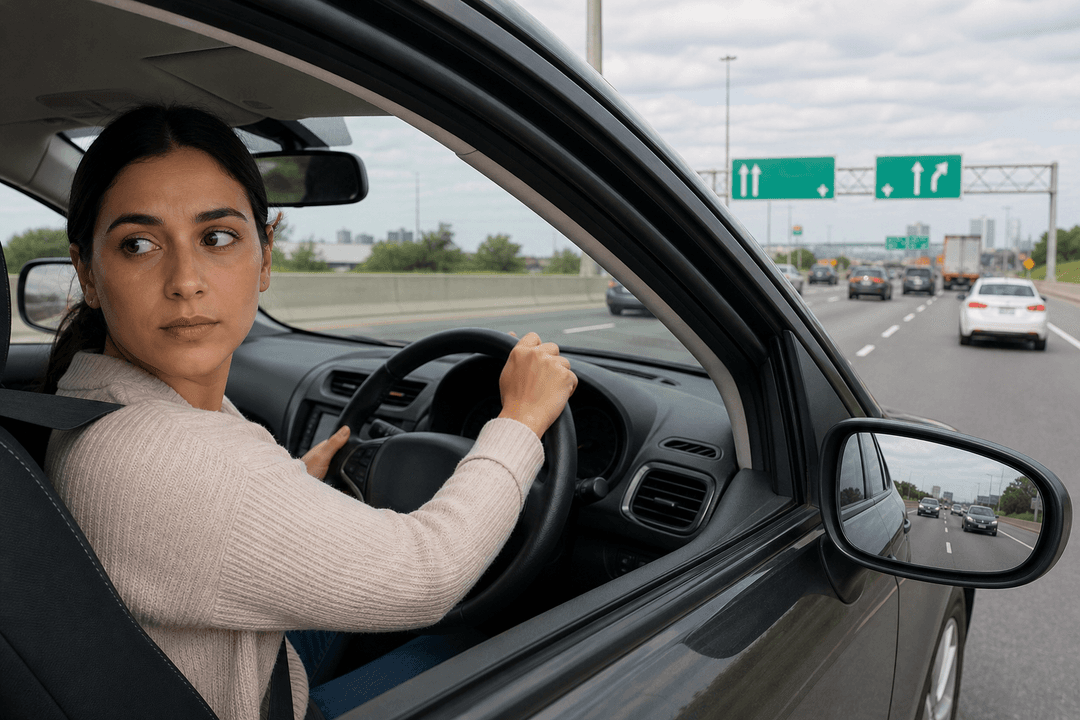
Gap judgement means looking ahead and behind, identifying the space you intend to use, and avoiding a move beside another vehicle or into its blind spot. Signal, check the relevant mirrors and blind spot, and move steadily when the gap is suitable.
The merge should be deliberate, smooth, and gradual. The official Ontario handbook guidance explains the importance of checking traffic, accelerating appropriately, and joining the nearest freeway lane safely.
Lane changes and space management
After merging, practise maintaining a stable lane position before changing lanes. Check mirrors, signal, check the blind spot, confirm a safe space, and move smoothly. Following distance should account for speed, visibility, weather, traffic density, and nearby drivers.
Exits and route planning
Highway practice should include reading signs early, planning your exit, changing lanes only when safe, and avoiding last-second decisions. The instructor should help connect observation, signalling, speed control, and lane positioning into one repeatable process.
How Ontario’s G test relates to highway practice
Ontario’s G road test assesses advanced driving skills on highways or expressways. Requirements include merging on and off, maintaining appropriate speed and space, signalling, turns, curves, lane changes, intersections, and driving in business areas. Review the current Ontario G licence test requirements before planning your preparation.
Highway experience also matters for the Level Two road test. The MTO handbook states that the G2 road test includes an expressway component and asks applicants about recent freeway or highway experience on roads with speed limits of at least 80 km/h. It also warns drivers to time a merge so they do not move beside another vehicle or into its blind spot.
These requirements do not mean every learner needs the same plan. A driver who merges smoothly may need work on exits, lane changes, or test routines. Someone still uncomfortable judging gaps may need progressive practice before a mock test.
Support for nervous or inexperienced drivers
Confidence improves when highway driving is divided into manageable decisions. A lesson might begin with mirror and blind-spot checks, continue with observation on a quieter road, and progress to a short highway entry when the learner is ready.
Look for an instructor who explains what to observe, gives directions early enough to act safely, and provides specific feedback. “Be more confident” is not useful correction. “Check the left mirror earlier, match traffic speed, and identify the gap before the acceleration lane ends” gives you something practical to repeat.
Learners who need targeted feedback may benefit from one-on-one driving lessons focused on gap judgement, lane changes, and highway merging skills.
How to evaluate an instructor
- Active coaching: Does the instructor give timely directions and specific corrections?
- Complete coverage: Will you practise entry, acceleration, gap selection, merging, lane changes, following distance, speed, and exits?
- Personalized progression: Can the pace change for beginners, nervous drivers, newcomers, or refresher learners?
- Defensive driving: Does coaching include anticipation, space management, hazard awareness, and responses to other drivers?
- Clear milestones: Will you know what to improve before the next lesson?
Passive supervision is not the same as instruction. The instructor should remain engaged with your decisions while allowing enough independent practice to build reliable habits.
Highway merging lesson booking checklist
- Is your goal confidence building, G2 preparation, G preparation, or a refresher?
- Which skills will the lesson cover, and how much time is devoted to merging?
- What are the lesson duration and price? Are individual lessons or packages available?
- What are the package terms, including changes, cancellations, refunds, or expiry dates?
- Where will the lesson begin, and which highway environments may be used?
- Will you use the school’s vehicle or your own?
- How will progress be assessed?
- Are evening or weekend appointments available, and how is the appointment confirmed?
- What happens if you need more practice?
Flexible scheduling can help learners balancing work, school, or family responsibilities. However, 24/7 booking support means you can make enquiries and discuss scheduling at any time. It does not mean driving instruction is available continuously or that every requested time is guaranteed. Confirm the exact appointment before treating it as booked. See how booking support works for Mississauga driving lessons.
What to discuss with Khurana Driving School
Khurana Driving School describes its G driving lessons as highway-focused training for merging, speed, and lane discipline. The school also offers G2 and G road test training, defensive driving instruction, tailored lessons, and confidence-building support for nervous learners.
When you enquire, explain your licence stage, highway experience, test goal, main concern, and preferred times. The school serves learners in Mississauga, Brampton, and the broader GTA, with evening and weekend options. Confirm the lesson format, duration, price, package terms, and appointment details before committing.
Frequently asked questions
Are highway merging lessons only for Ontario G test preparation?
No. They can help G2 holders, beginners, nervous drivers, and experienced drivers seeking a refresher. The exercises and pace should match your experience and goal.
What should a highway merging lesson include?
It should cover ramp entry, observation, acceleration, speed matching, gap selection, mirror and blind-spot checks, signalling, merging, lane changes, following distance, space management, and exits.
Do G2 drivers need highway practice?
Ontario’s official guidance says the Level Two road test includes expressway driving and asks applicants about recent freeway or highway experience. Review current MTO requirements and practise under appropriate supervision.
How can nervous drivers build confidence?
Use gradual exposure. Begin with explanations and manageable observation exercises, then progress to acceleration, gap selection, highway entries, lane changes, and exits as decisions become more consistent.
How many lessons will I need?
There is no reliable fixed number. Your current skill, highway experience, confidence, practice between lessons, test date, and areas needing improvement all affect the answer.
Choose practice that matches your goal
The best highway merging lessons are structured around your actual need. A nervous beginner may require gradual exposure, while a G2 holder may need focused practice with merging, lane changes, exits, and test routines. In every case, look for active coaching and a complete progression from ramp entry to safe exit.
Before booking, confirm how progress will be measured and clarify timing, pricing, packages, and cancellations. For tailored highway-focused G lessons and flexible scheduling in Mississauga, Brampton, and the GTA, discuss your needs with Khurana Driving School.