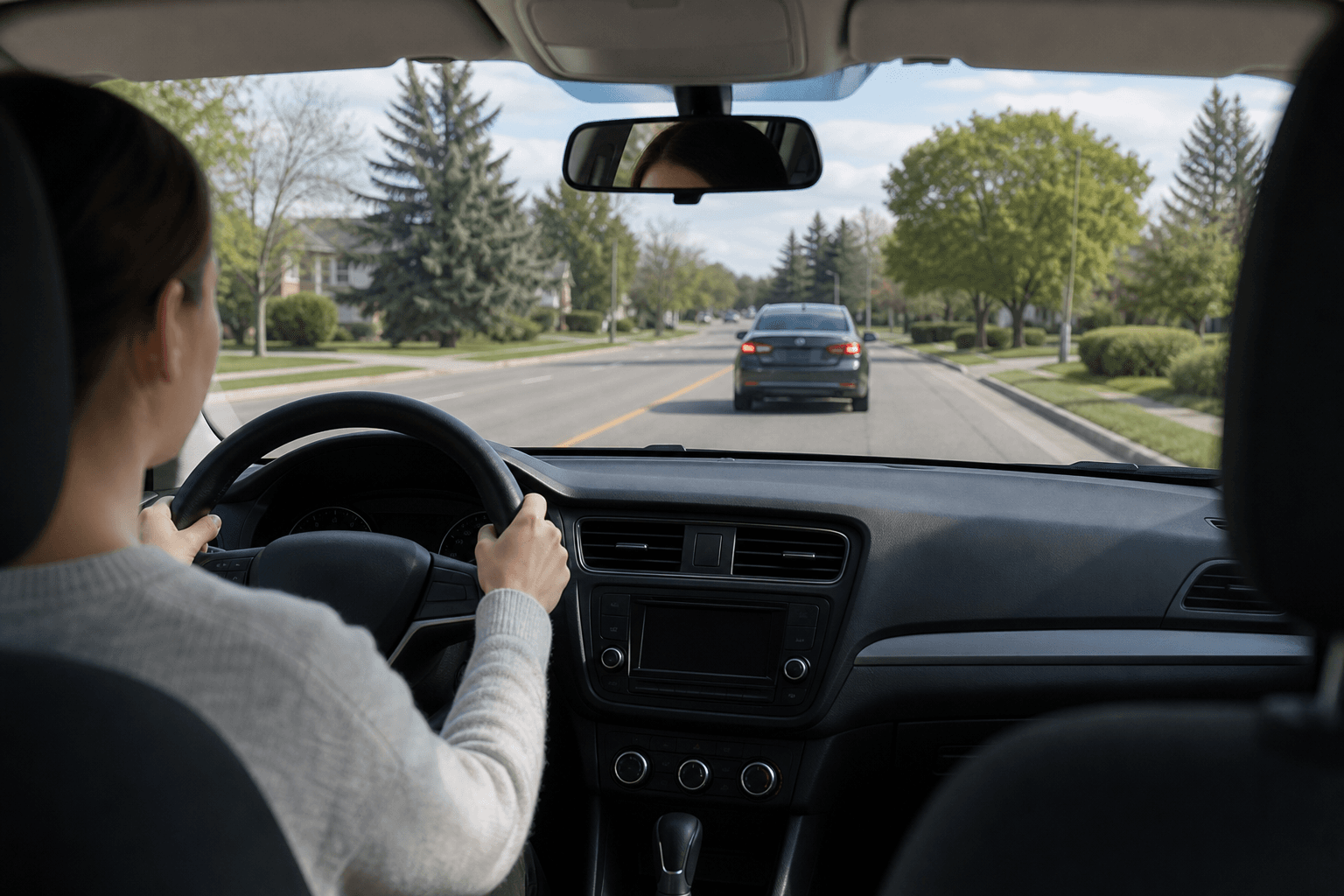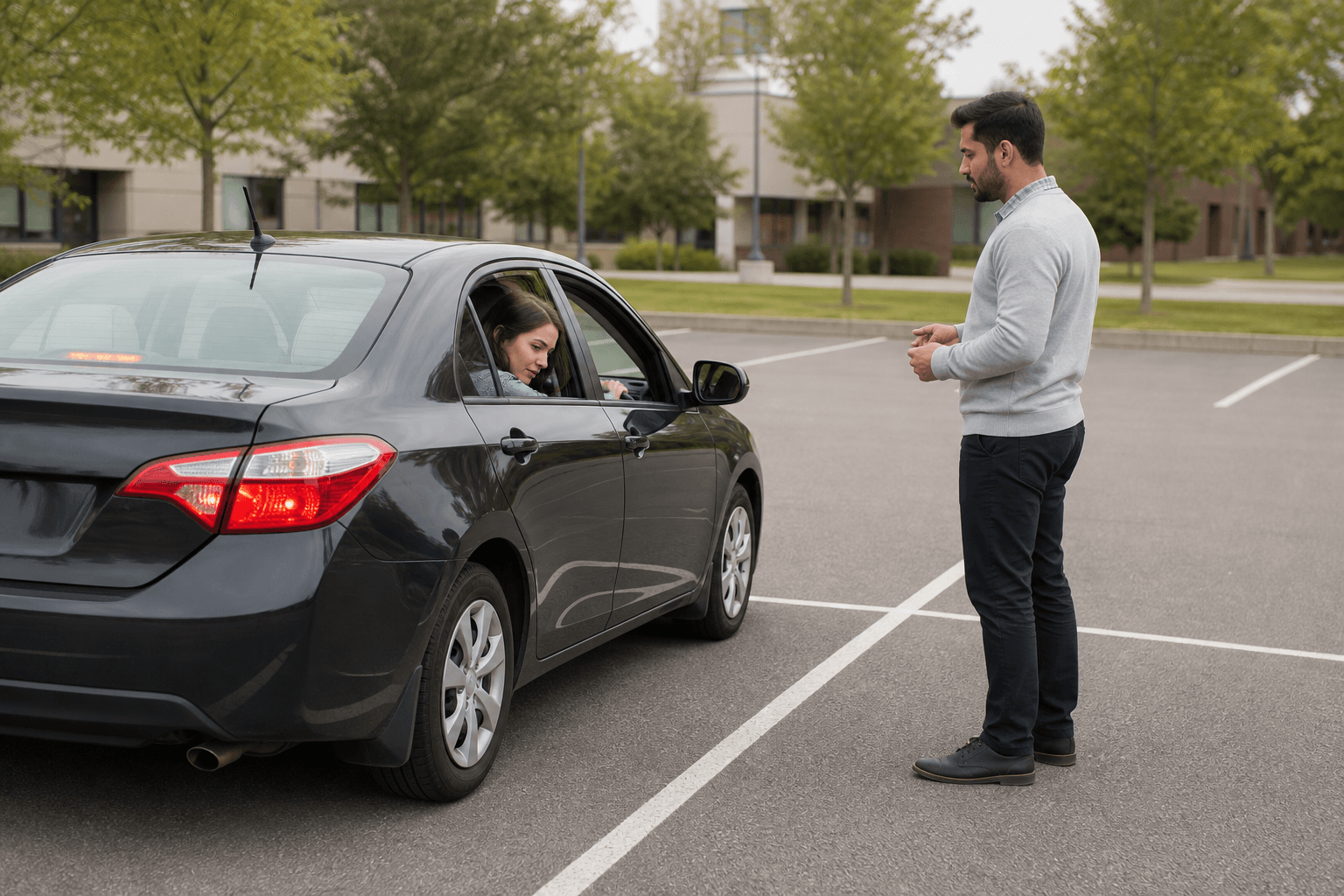

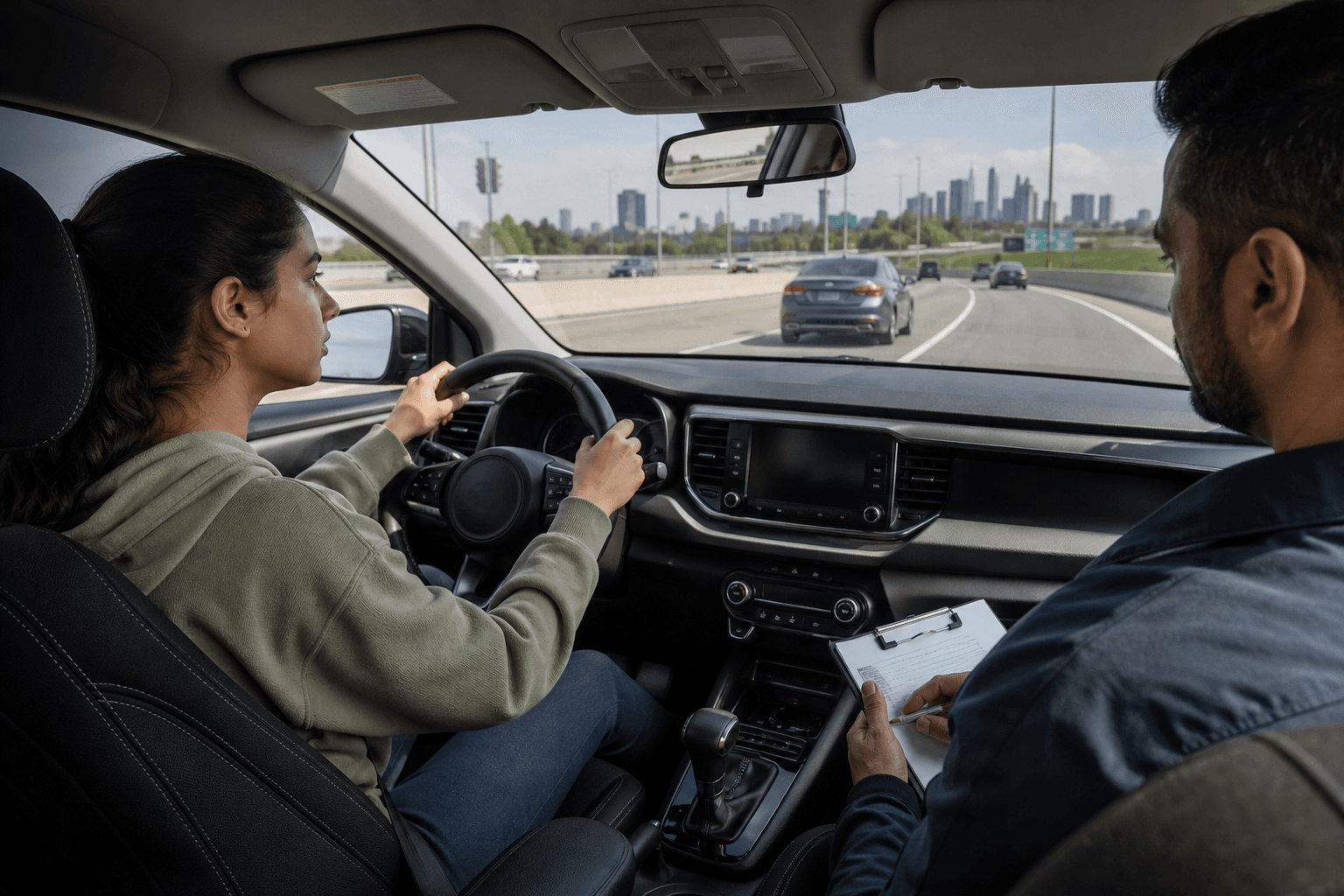
A mock G test is most useful when it reveals more than whether you feel confident. It should closely simulate the current Ontario G road test and show how consistently you manage expressway driving, merging, lane changes, observation, speed control, and independent decisions.
A school-run mock G test is not an official MTO or DriveTest examination, and it cannot guarantee a pass. Instead, treat it as a structured assessment that helps you choose between booking the test, taking targeted lessons, or completing a short practice block.
Quick summary
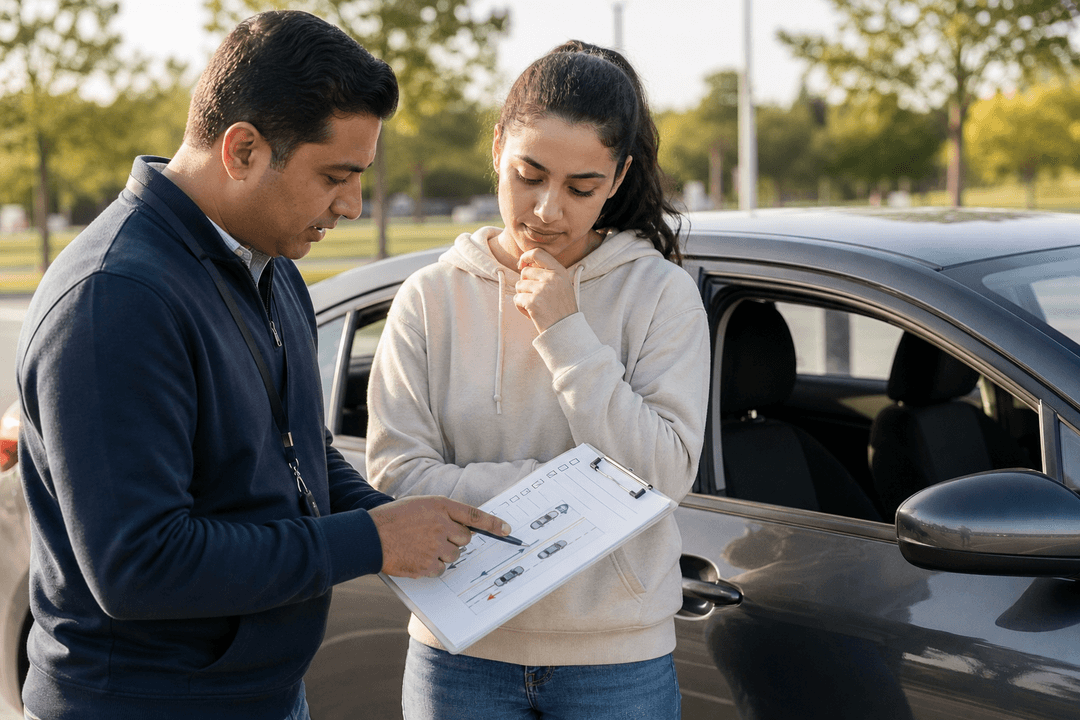
- A credible mock G test should include major roads, expressway entry and exit, merging, lane changes, intersections, speed and space management, and limited coaching.
- Judge readiness by repeated independent performance, not one easy drive or your confidence level.
- Use the result to choose assessment-only practice, targeted lessons, or a compact lesson block.
- The current G test does not include parallel parking, roadside stops, three-point turns, or residential-neighbourhood driving.
- Before test day, confirm your vehicle, documents, arrival time, and restrictions on electronic driving aids.
What a credible mock G test should tell you
A realistic mock test should begin with clear instructions, then limit coaching during the drive. This shows whether you can observe, make safe decisions, follow directions, and recover independently when traffic changes.
The route should include representative major-road and expressway conditions rather than only quiet streets. Afterward, you should receive specific feedback that identifies recurring errors, explains their safety impact, and ranks the corrections.
Before practising, run a mock G test covering highway, urban, and relevant parking tasks so your next lessons respond to actual weaknesses.
Mock G test checklist: skills to assess

Mark each item as consistent, inconsistent, or not yet demonstrated. One mistake does not automatically mean you are unready, but repeated patterns deserve focused practice.
Expressway entry, merging and exit
- Builds appropriate speed on the entry ramp.
- Checks mirrors and blind spots before moving into a gap.
- Merges without forcing another driver to brake or change lanes.
- Maintains appropriate speed, space, and following distance after merging.
- Changes lanes only after checking traffic, signalling, and confirming a suitable gap.
- Plans the exit early and leaves the expressway without rushing.
Ontario’s current G-test guidance emphasizes major roads and expressways, including merging on and off, appropriate speed and space, and signalling. Compare your practice with the official Ontario G-test guidance.
Observation, signalling and lane discipline
- Scans ahead and checks mirrors regularly.
- Signals early enough to communicate the intended manoeuvre.
- Completes appropriate blind-spot or shoulder checks before lateral movement.
- Maintains stable lane position without drifting.
- Turns into the correct lane and settles smoothly.
- Removes the signal after completing the manoeuvre.
Ask whether an error involved knowledge, timing, or habit. Late signalling may require a repeatable observation routine, while lane drift may require better visual focus and steering control.
Speed, space management and major-road intersections
- Chooses a safe speed for traffic, visibility, road layout, and weather.
- Adjusts speed early instead of braking sharply at the last moment.
- Leaves space around vehicles entering, exiting, or changing lanes.
- Approaches major intersections with a complete scan and clear plan.
- Yields appropriately rather than proceeding simply because movement is permitted.
- Anticipates pedestrians, cyclists, turning vehicles, stopped traffic, and sudden lane changes.
Good G road test preparation tests judgement, not just route completion. A useful mock drive includes realistic traffic decisions rather than only quiet stretches.
Independent, calm and defensive driving
Defensive driving means leaving space, anticipating other road users, and choosing responses that reduce risk. It does not mean driving unnecessarily slowly or hesitating at every decision.
A strong mock result shows calm control, clear observation, and predictable actions even when you are nervous. The instructor should give directions without narrating every decision or correcting every minor error immediately.
Do not practise the wrong G-test checklist
Many online checklists combine G2 and G requirements. The current Ontario handbook states that parallel parking, roadside stops, three-point turns, and residential-neighbourhood driving are not included in the present G-test format because those elements are covered in the G2 test.
These remain useful everyday driving skills, but they should not displace current G priorities when your test is approaching. Focus first on major roads, expressways, merging, lane changes, signalling, speed, space, intersections, and observation.
A practical readiness score based on repeated performance
Use a three-drive framework: complete one mock assessment, practise the highest-priority corrections, then repeat a similar assessment. If possible, include different traffic or weather conditions.
| Result | What it means | Best next step |
|---|---|---|
| Ready pattern | You complete major tasks independently without recurring safety or control issues across at least two drives. | Book the test or schedule one final tune-up. |
| Nearly ready | You are generally safe but repeat one or two issues, such as late checks, inconsistent speed, or rushed lane changes. | Book targeted pre-test lessons and repeat the relevant sections. |
| Needs focused practice | You need frequent prompts or struggle with expressway entry, speed, space, or lane position. | Take a compact lesson block before another mock test. |
Do not count an item as corrected because it went well once. A correction matters when you can repeat it without prompting in different situations.
What to book after the mock test
| Option | Best for | Tradeoff |
|---|---|---|
| Assessment only | Experienced drivers seeking an objective final check. | Identifies problems but provides little correction time. |
| Targeted lessons | Drivers with one or two clear weaknesses. | Efficient, but unsuitable when several foundational skills are missing. |
| Compact lesson block | Nervous drivers or learners with limited expressway experience. | Requires more time and money but allows development, practice, and reassessment. |
If your test is approaching and weekday availability is limited, a compact pre-test block can combine focused practice with a mock test session. Confirm lesson length, session count, instructor involvement, and included feedback before paying.
Ask providers whether the session includes expressway practice, how the mock drive is structured, and whether you receive written corrections. Khurana Driving School advertises G road-test preparation, highway-focused instruction, defensive driving training, and lesson packages for learners in Mississauga, Brampton, and the GTA.
Match practice to the actual weakness
- Weak merging: Practise entry speed, gap judgement, blind-spot checks, and joining without forcing another driver to react.
- Inconsistent lane changes: Repeat the sequence of mirrors, signal, blind-spot check, and smooth movement.
- Poor speed control: Scan farther ahead, ease off earlier, and avoid alternating between acceleration and heavy braking.
- Late observation: Use commentary during learning, then repeat the route silently to confirm independent scanning.
- Intersection hesitation: Review right-of-way decisions and practise approaching with time to observe, decide, and act.
- Difficulty driving independently: Request fewer prompts and practise adapting safely when traffic changes.
How nervous drivers can prepare without over-practising
Use a consistent routine: a short warm-up, one correction to focus on, and a review immediately afterward. Ask for practical feedback such as “check earlier before moving left,” rather than general advice to be more confident.
If a mock drive goes poorly, treat it as information. Repeat the specific skill in a controlled setting, then use a second mock test to check whether the correction holds under pressure.
Scheduling your final preparation in the GTA
A single session immediately before the test can help with a warm-up and final vehicle check, but it cannot replace learning expressway skills. Leave enough time to apply feedback.
Khurana Driving School advertises evening and weekend lessons and 24/7 support. Ask early about lesson duration, mock-test format, cancellation terms, and whether the instructor can address your specific weaknesses. Spaced lessons with independent practice may be more productive than one long block.
For additional scheduling context, review these road test booking tips, while confirming current requirements through Ontario’s official guidance.
Ontario G test day checklist
- Confirm the test location, appointment time, route, and arrival buffer.
- Bring required identification and current licence documentation.
- Use a vehicle in good working order with functioning lights, signals, and brakes.
- Adjust mirrors, seat, and controls before the test begins.
- Do not rely on automatic parking systems, lane-monitoring systems, cruise control, or back cameras during the road test.
- Complete a brief warm-up only if it helps you settle without creating fatigue.
Check the current MTO test-day guidance before attending. Official requirements take priority over any online checklist.
FAQ
How is a mock G test different from the official Ontario G road test?
A mock G test is an instructor-led practice assessment. It can imitate route types and test pressure, but it is not administered by MTO or DriveTest and does not issue a licence.
When should I book a mock G test?
Book it early enough to allow practice afterward. Experienced drivers may benefit from a mock test several days before the appointment, while drivers with recurring highway or observation problems should schedule it earlier.
Can a mock G test replace regular driving lessons?
Usually not. A mock test measures performance, while lessons develop the skills behind that performance. Assessment-only practice suits experienced drivers with consistent results.
What should I do if my result is weak?
Ask for the three highest-priority corrections and practise those first. Choose targeted lessons for a specific weakness or a compact block when several connected skills need development, then repeat the assessment.
Does the current Ontario G test include parallel parking or a three-point turn?
No. The current handbook states that parallel parking, roadside stops, three-point turns, and residential-neighbourhood driving are not included in the G-test format. Prioritize major roads, expressways, merging, lane changes, speed, space, signalling, and observation.
Use the result to choose your next step
The best mock G test checklist is a decision tool, not simply a list of manoeuvres. Use it to test whether you can manage expressway entry and exit, lane changes, observation, signalling, speed, space, intersections, and independent decisions consistently.
If the result shows one or two weaknesses, choose targeted lessons. If several skills break down under pressure, allow time for a compact practice block and another mock assessment. Make your test decision based on repeatable performance rather than confidence alone.
For G road-test preparation, mock-test practice, defensive driving instruction, and advertised evening or weekend scheduling in Mississauga, Brampton, and the GTA, contact Khurana Driving School.