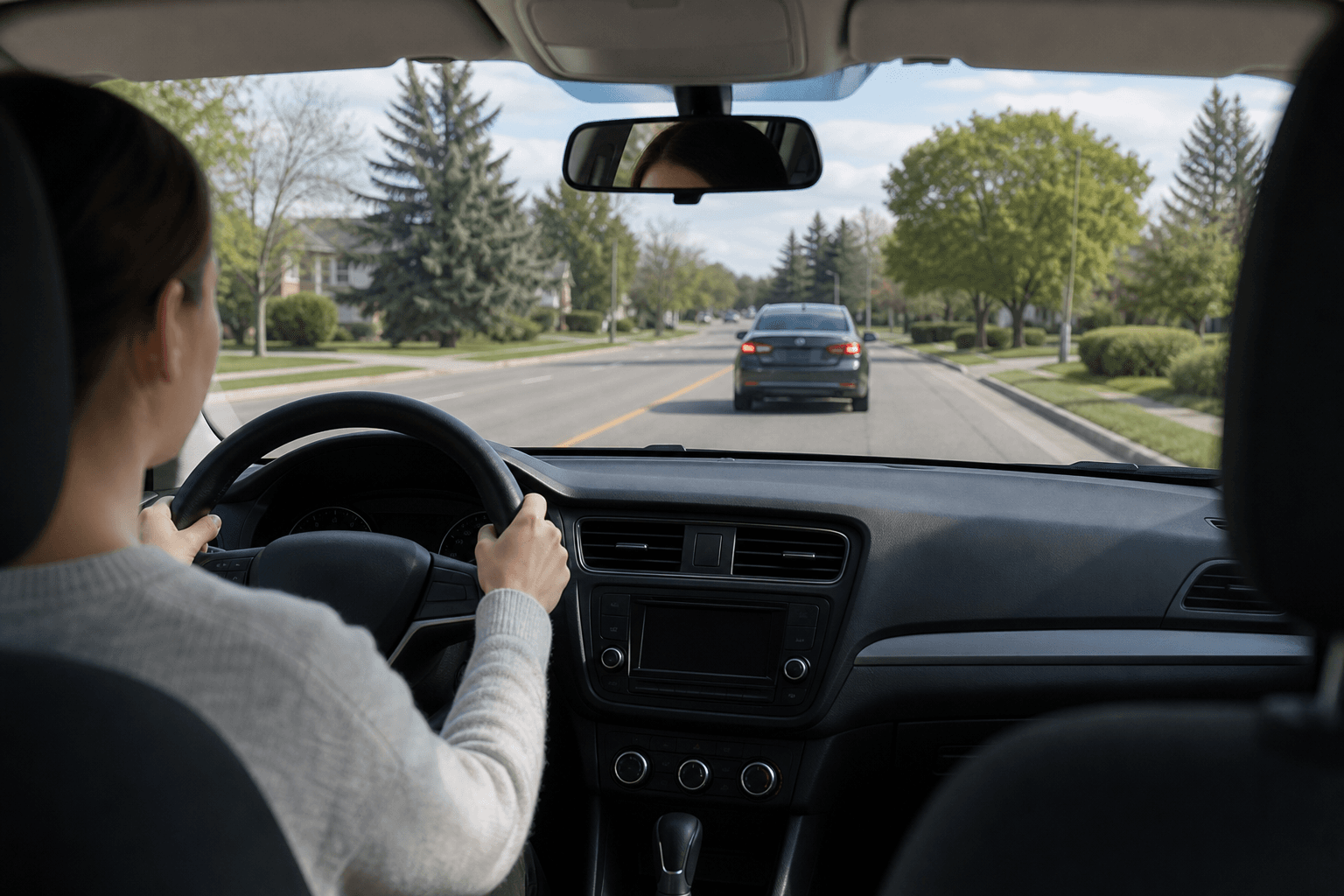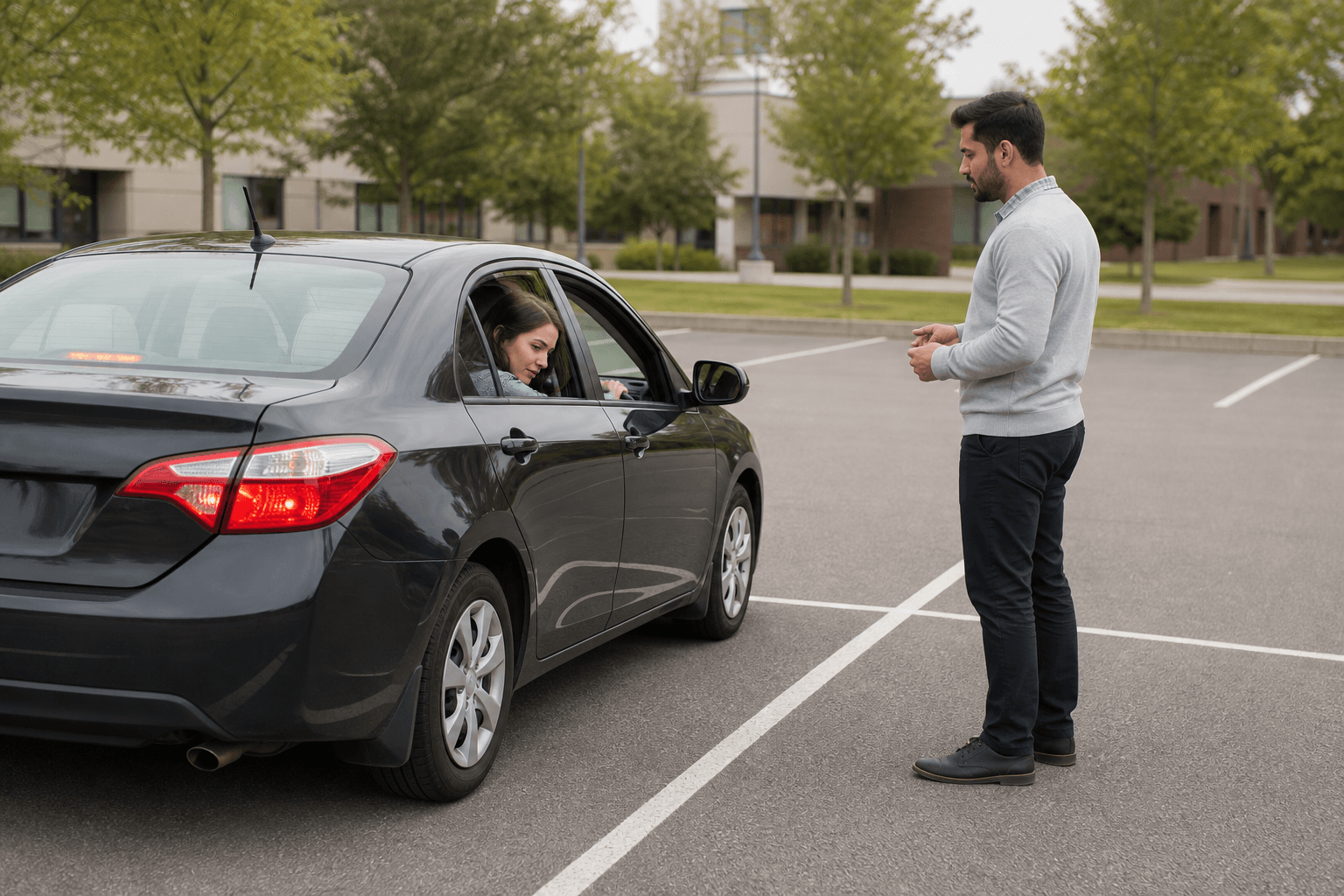

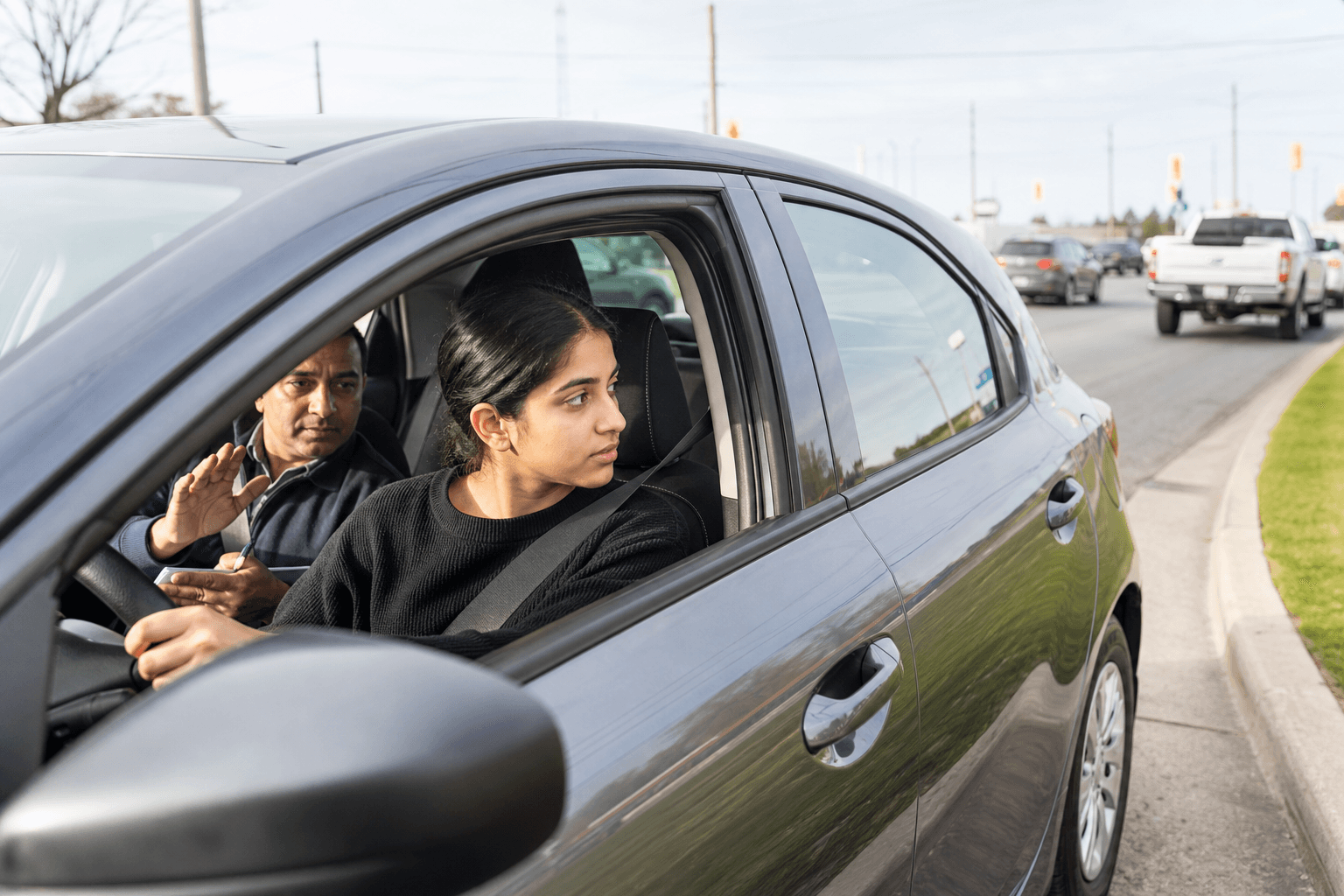
The best Brampton road test tips depend on which test you are taking. G2 candidates should prioritize foundational urban driving skills such as turns, stops, lane changes, parking, and residential driving. Full G candidates need those habits plus highway merging, speed management, lane discipline, and broader traffic judgement.
Practise repeatable driving routines rather than trying to memorize a predicted route. Local practice can prepare you for the types of roads and situations you may encounter, but it cannot guarantee an official route or a particular result.
Quick summary
- Confirm whether your priority is G2 fundamentals or full G highway readiness.
- Practise observation, controlled stops, turns, lane changes, parking, and residential driving until they are consistent.
- Add highway merging and multi-lane practice for the G test.
- Complete a realistic mock test, then use the feedback to correct recurring faults.
- Check your licence, booking information, vehicle, arrival plan, and test-day focus before the appointment.
Choose Your Preparation Focus: G2 or Full G
G2 and G preparation overlap, but they are not identical. The G2 test focuses on basic driving skills in urban and residential settings. Full G preparation requires a more developed ability to manage higher speeds, highway conditions, lane changes, and traffic decisions.
| Test | Prioritize | What good practice looks like |
|---|---|---|
| G2 | Turns, stops, observations, lane changes, parking, three-point turns, residential driving, traffic lights, stop signs, and yield signs. | You control the vehicle smoothly, scan consistently, signal properly, and respond calmly to changing traffic. |
| Full G | All core skills, plus highway merging, speed control, lane discipline, safe following distances, and multi-lane judgement. | You enter and leave higher-speed roads safely, choose lanes early, check blind spots, and make decisions without hesitation. |
Ontario-focused preparation guidance identifies the G2 skills above as key areas to practise. If you are preparing for the G2, use this G2 road test preparation plan to organize foundational practice. For a full G test, add highway and vehicle-readiness work rather than assuming G2 practice alone is enough.
The Brampton Road Test Practice Checklist
1. Build a consistent observation routine
Observation is not a single glance before a manoeuvre. Develop a repeatable pattern: scan ahead, check mirrors, identify hazards, signal when appropriate, and complete a shoulder check before moving into another lane or direction of travel.
Practise making your checks deliberate without becoming distracted. Your goal is to know what is around the vehicle before you turn, stop, change lanes, merge, or move away from the curb.
2. Make stops and turns controlled
Approach stop signs, red lights, and intersections at a speed that gives you time to assess the situation. Stop where required, look for pedestrians and cyclists, and proceed only when it is safe and legal.
For turns, enter the correct lane, signal in good time, maintain an appropriate speed, and finish in the correct lane. Practise left and right turns at signalized intersections, stop-controlled intersections, and quieter residential streets.
3. Practise lane changes as a complete sequence
A safe lane change involves more than turning on the signal. Check your mirrors, assess the adjacent lane, complete a shoulder check, move smoothly when there is a safe gap, and cancel the signal when the manoeuvre is complete.
Practise on both quieter roads and busier multi-lane streets. Work on choosing your lane early, especially before an intersection or turn, so you are not making a rushed decision at the last moment.
4. Refresh parking and low-speed control
G2 learners should practise parallel parking, three-point turns, stopping at the roadside, and other low-speed manoeuvres until they can perform them without losing awareness of nearby traffic. Use reference points if they help, but do not rely on a rigid script that stops you from checking the actual space.
Good low-speed control means smooth steering, gentle braking, correct signalling, and continuous observation. If a manoeuvre does not go as planned, remain calm, control the vehicle, and make a safe correction rather than rushing.
5. Add highway work for the G test
Full G candidates should practise entering a highway or other higher-speed road, building speed appropriately, selecting a safe gap, checking mirrors and blind spots, and settling into the correct lane. Continue to monitor following distance and traffic conditions after the merge.
Also practise changing lanes at higher speeds, maintaining a steady pace, preparing for exits, and leaving enough time to make decisions. Highway practice should be supervised and progressive. Start with manageable conditions and increase complexity as your control and confidence improve.
How to Practise in Brampton Without Relying on a Fixed Test Route
Use a variety of representative situations instead of chasing a route shared online. Include residential streets, signalized intersections, stop signs, parking areas, multi-lane roads, lane changes, and highway entrances where relevant to your test.
This approach makes your skills transferable. Official sources do not provide a guaranteed public Brampton test route, and a route guide cannot replace the ability to observe, respond to instructions, and drive safely in unfamiliar surroundings.
Ask a supervising driver or instructor to vary the starting point, direction, and sequence of manoeuvres. You can also practise at different traffic levels, provided the conditions match your ability and the drive remains safe. The aim is to build judgement, not memorized turns.
A Simple Pre-Test Timeline
Two or more weeks before the test
Assess your current driving honestly. List the skills that feel automatic, the skills that require reminders, and the situations that cause hesitation. Schedule practice around the weaknesses rather than spending every session repeating what you already do comfortably.
During the main practice period
Work on one priority at a time, then combine skills. For example, practise shoulder checks first, then add lane changes in moderate traffic. Keep a short progress log after each drive with one improvement and one next step.
Within the final week
Complete a realistic mock test. It should include a range of relevant manoeuvres, normal road interactions, and limited coaching during the drive. Afterwards, identify recurring faults and book targeted practice for those issues.
Khurana Driving School describes its preparation process as including mock road tests, targeted feedback, test preparation, and guidance on booking a road test. When comparing providers, look for this kind of specific feedback rather than a lesson that simply ends with general encouragement.
The day before
Review your routines briefly, but avoid trying to learn every skill in one long session. Confirm the appointment details, plan your travel time, prepare any required identification, and get enough rest to arrive alert.
Test-Day Checks: Documents, Vehicle and Arrival
Bring your current Ontario driver licence and the information associated with your booking. Check the current requirements before leaving because identification and booking procedures can change. Ontario’s official handbook is the appropriate reference for current road-test information and licensing guidance.
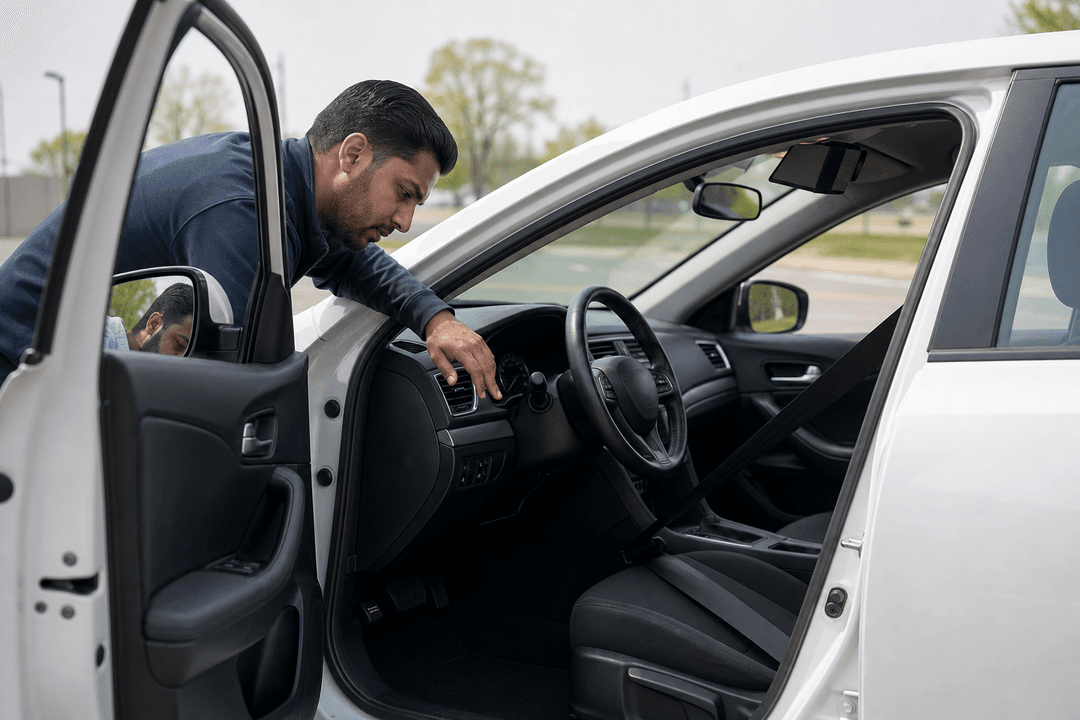
Use a safe, legally drivable vehicle with working lights, signals, mirrors, seatbelts, horn, brakes, and other required equipment. Make sure it is fuelled, unlocked, and free of loose items that could obstruct the controls or the examiner’s view.
Arrive early enough to check in without rushing. Before the drive begins, listen carefully to the instructions. If you do not understand an instruction, ask for clarification rather than guessing. For current official information, consult The Official Ministry of Transportation Driver’s Handbook.
Be cautious of any service that promises a licence or guarantees a successful road test. The official handbook specifically warns against those claims. A driving school can provide instruction and feedback, but your result depends on your performance and the current test requirements.
A Calmer Practice Plan for Nervous Drivers
Nervousness often becomes easier to manage when the practice environment progresses in small steps. Begin with vehicle controls and quiet streets, then add intersections, lane changes, busier roads, parking, and highway work when your foundation is reliable.
Use the same short routine before every drive: adjust the seat and mirrors, fasten your seatbelt, silence your phone, take two slow breaths, and identify the first skill you will focus on. During the drive, return your attention to the next safe decision instead of predicting the examiner’s reaction.
Supportive feedback should be clear and specific. “Check earlier” is less useful than “check the mirror, signal, shoulder check, then move when the gap is safe.” A calm instructor can help you turn vague anxiety into a small number of repeatable actions.
How to Choose Brampton Driving Lessons or a Mock Test
Before booking, ask the provider to explain exactly what the lesson or package includes. Useful questions include:
- How long is each lesson, and how much of that time is active driving instruction?
- Will the session include a full mock test, or only selected manoeuvres?
- How will the instructor record and explain recurring errors?
- Can the practice include Brampton-style urban traffic, multi-lane roads, and highway merging when relevant?
- Which vehicle will be used for practice or the test, and what arrangements apply?
- What are the total prices, package inclusions, cancellation terms, and rescheduling requirements?
- Are evening or weekend times available if your schedule is limited?
Ask for lesson length, pricing, vehicle arrangements, and package terms in writing. This protects both sides and helps you compare value fairly. A lower advertised price is not necessarily better if the lesson is short, the feedback is vague, or important arrangements are unclear.
For full G candidates, ask specifically about G road test preparation, including highway merging practice, vehicle checks, mock-test feedback, and test-day planning. For nervous learners, ask how the instructor adjusts the pace when a skill needs more repetition.
Frequently Asked Questions
Can I practise an official Brampton road test route?
You can practise the types of roads and situations that may appear in Brampton, but you should not rely on a guaranteed official route. Fixed public routes are not a substitute for observation, safe decision-making, and the ability to follow instructions in unfamiliar surroundings.
How many driving lessons should I take before a Brampton G2 or G test?
There is no universal number that guarantees readiness. The right amount depends on your experience, practice between lessons, current weaknesses, and whether you are preparing for the G2 or full G test. A skills assessment and mock test can help identify what remains.
What should a mock road test include?
It should resemble the demands of the relevant test, include realistic traffic situations and manoeuvres, and provide specific feedback afterwards. The most useful mock test identifies repeated faults and turns them into a targeted practice plan.
What vehicle checks should I complete before the test?
Check that the vehicle is legally drivable and that its lights, signals, mirrors, seatbelts, horn, brakes, and other safety equipment work properly. Remove loose items, ensure the vehicle is accessible to the examiner, and verify any current requirements before your appointment.
What is the main difference between G2 and full G preparation?
G2 preparation centres on foundational urban driving, including turns, stops, lane changes, parking, and residential driving. Full G preparation adds highway merging, higher-speed lane changes, speed management, and more advanced traffic judgement.
Is one last-minute driving lesson enough?
A final lesson can be useful for checking vehicle readiness, calming nerves, or correcting one specific weakness. It is unlikely to replace several sessions of deliberate practice if you still struggle with core skills or highway driving.
Conclusion: Practise the Skills, Not a Predicted Route
Effective Brampton road test preparation starts by matching your practice to the test level. Build consistent observation, turns, stops, lane changes, parking, and residential driving for the G2. For the full G, add highway merging, speed control, lane discipline, and broader traffic judgement.
Use a mock test to find recurring faults, practise those faults deliberately, and complete your document and vehicle checks before test day. This gives you a practical plan without depending on route rumours or unsupported promises.
For G2 and G road-test training, defensive driving instruction, mock tests, and evening or weekend lessons across Brampton and the surrounding area, visit Khurana Driving School.